Andy Burnham’s Brexit Gamble: Can the Prime Minister Take the UK Back Into the EU or Is He Merely Deluded?
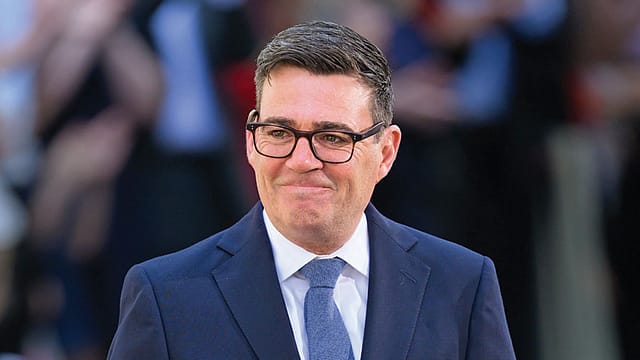
Andy Burnham wants Britain back in Europe. He has all but said so. What he has not said is how, when or on what terms, and that studied vagueness is the key to his strategy, if it can be called one.
Last Friday’s (November 20) Brussels summit was the visible part: lighter checks on food exports in return for following EU rules, a linked carbon market, and a youth scheme admitting up to 100,000 young people in each direction. If we strip away the fanfare, this is largely the reset Keir Starmer began, delayed by his June resignation. Burnham’s own contribution was the epilogue. Incremental deals, he conceded, have reached their limit this side of an election; what can follow is only an “informal brainstorming process” about the longer-term relationship.
Burnham’s motives are best read in layers. There is conviction: he has never disguised his regret about Brexit and has said he would like Britain to rejoin in his lifetime. There is economics: the Treasury credits the deal with up to £17bn a year, a figure Tory leader Kemi Badenoch dismisses as unsupported. And there is politics. Rejoin is the one cause that could bind Labour’s progressive vote together and blunt the appeal of the Liberal Democrats, Greens and SNP. Against that stands a hard fact of arithmetic in Labour’s former industrial seats, where many voters backed Leave.
The Wealth Issue 2026
06 Nov 2026 - Vol 05 | Issue 45
Portraits of Dreamers and Doers under 35
Burnham himself said in June that rerunning Brexit would entrench division. That explains the fog. He is keeping every door ajar, waiting to see what Brussels will offer and how the public responds before committing a manifesto.
His predecessors are, unsurprisingly, unimpressed. Theresa May’s instruction is blunt: “Move on!” She argues that the 2016 verdict deserves respect rather than a patronising invitation to try again, and that renegotiation would swallow everybody’s time across Whitehall. David Cameron expects any such conversation to be slow and agonising; Tony Blair would return only if the EU reformed, such as supporting technological innovation as he told The Sunday Times. Their warnings merit a hearing, not least May’s point about bandwidth when defence and youth unemployment press.
And yet, the claim that Brexit is done is a political preference, not a law of nature. Article 49 remains open to any European state, and a democracy that may leave may also reconsider. Governments change their minds. The honest objection is not that return is impossible but that it is hard, slow and costly.
Would a return have been good for Britain? In theory yes, and on the economics, very likely yes. Most economists judge that leaving reduced trade and investment, and public opinion has soured accordingly. Wolfgang Munchau, writing in UnHerd, takes the opposite view. He argues that the EU Britain left no longer exists: its budget is strained, France and Germany cannot cover the shortfall, and a returning Britain, bereft of its rebate, would be asked to pay perhaps £30-40bn a year. Britain’s technology and capital markets, he adds, make it more attractive than a bloc he considers over-regulated and in decline.
Now, that is a contestable claim. UK growth since 2016 has hardly been dazzling, and Munchau’s bleak forecast for the EU is just that—a forecast rather than a settled fact. But his key insight is sound: Brussels offers a short menu of external relationships, and circling it yields the same dishes. A former negotiator told the BBC much the same: beyond this deal, the choice narrows to in or out.
So what might come of it? Realistically, something modest but not trivial. Brussels prizes its own cohesion above any partner’s convenience, and the tuition-fee dispute (the EU wants its students to pay domestic “home” rates at British universities rather than full international fees), costing Britain around €500m on Munchau’s estimate, shows how quickly goodwill sours into haggling. A Marine Le Pen presidency in France could rewrite the script entirely. Burnham has said nothing more can happen before the next general election, due by August 2029; his manifesto will be the true test.
The likeliest outcome is a hedged pledge of far deeper alignment, perhaps a customs arrangement rather than membership. That would be worthwhile if it delivered trade gains, but wasteful if it merely consumed government attention.
Burnham is betting Brexit can be unpicked by conversation. His predecessors’ experience suggests it can be unpicked, if at all, by patience and a good deal of luck.