New US Arms Export Order Ties Defence Sales to Economic Security, India Deal in Spotlight
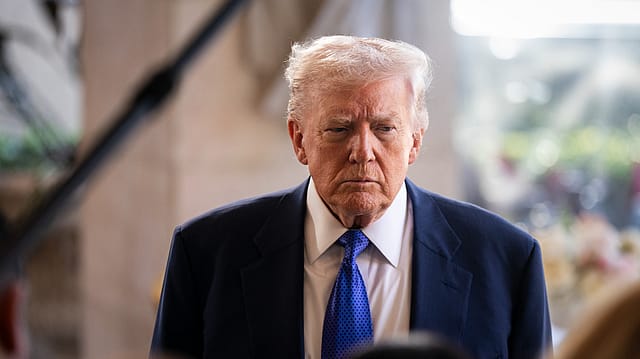
US President Donald Trump has signed an executive order reshaping the framework for overseas arms sales, directing the United States government to prioritise weapons transfers to countries that have invested in their own defence capabilities and contribute to US economic security.
Trump described the move as the “America First Arms Transfer Strategy”.
“The United States will prioritize arms sales and transfers to partners that have invested in their own self-defence and capabilities, have a critical role or geography in United States plans and operations, or contribute to our economic security," the document said.
According to the order, the strategy seeks to strengthen the US defence industrial base to ensure it has the capacity to support the US military as well as its allies and partners.
The executive order lays out a new framework for arms exports and stresses that American-made military equipment should be used more deliberately as a tool of foreign policy, while simultaneously strengthening domestic industrial capacity.
Arms Exports Framed as Tool of Foreign Policy and Industrial Expansion
“American-manufactured military equipment is the best in the world, resulting in American dominance across international defence exports," the order said. “It is critical that the United States fully use this comparative advantage in arms transfers as both a tool of foreign policy and a tool to expand domestic production and transfer."

Bengal Thriller 2026: The Plot Thickens
17 Apr 2026 - Vol 04 | Issue 67
Mamata Banerjee faces her toughest battle
The order states that the strategy is meant to ensure arms sales “prioritise American interests by using foreign purchases and capital to build American production and capacity”.
It adds that this approach will help the US advance “a technologically superior, ready, and resilient national security industrial enterprise”.
Under the new policy, the United States will “intentionally use arms transfers as a tool of American foreign policy” while also expanding “strategically relevant industrial production capacity in the United States”.
A key provision of the executive order gives preference to partners that shoulder more of their own defence burden.
Cabinet Tasked With Drawing Up Priority Weapons Sales Catalogue
It reiterates that, consistent with a previous executive order, “the United States will prioritize arms sales and transfers to partners that have invested in their own self-defence and capabilities, have a critical role or geography in United States plans and operations, or contribute to our economic security."
The order also links arms exports directly to strengthening the US defence industrial base. “The United States will use foreign purchases and capital to support domestic reindustrialisation, expand production capacity, and improve the resilience of the United States defence industrial base," it said.
At the same time, the order cautions that arms sales should not place additional pressure on existing supply chains or undermine US military readiness.
According to the document, arms transfers will support acquisition and sustainment efforts by building critical supply chain resilience and avoiding the creation of backlogs in priority components and end-items that could affect the readiness of the United States or its allies and partners.
The executive order assigns multiple responsibilities to senior cabinet officials. Within 120 days, the Secretary of War, in coordination with the Secretaries of State and Commerce, is required to submit a sales catalogue of “prioritised platforms and systems that the United States shall encourage our allies and partners to acquire”.
The catalogue will be based on the criteria laid out in the new strategy.
Commerce Department Role, Export Reforms and Compliance Measures Outlined
The Secretary of Commerce has also been tasked with providing recommendations to promote foreign procurement of US-made defence equipment, with the order stating that these efforts are intended “for the purpose of supporting an America First Arms Transfer Strategy”.
In addition, the administration has directed relevant departments to identify Foreign Military Sales and Direct Commercial Sales opportunities that align with the strategy and contribute to the growth of the US defence industrial base.
The order also focuses on reducing inefficiencies in arms transfers. It calls for clearer criteria on end-use monitoring and a review of third-party transfer processes.
According to the document, these measures are meant to “improve information sharing and efficiencies to ensure allies and partners are complying with United States requirements and to reduce risk of diversion."
As the new American weapons export reform takes effect, it is notable that a prior statement on the proposed US-India trade deal highlighted a framework for an interim agreement between the two countries, in which India has “intended” to purchase USD 500 billion worth of US aircraft and aircraft parts.
The parts include power plants for India’s homegrown Tejas programme.
(With inputs from ANI)