India-US Trade Framework Explained: How the New Deal Will Transform Bilateral Ties
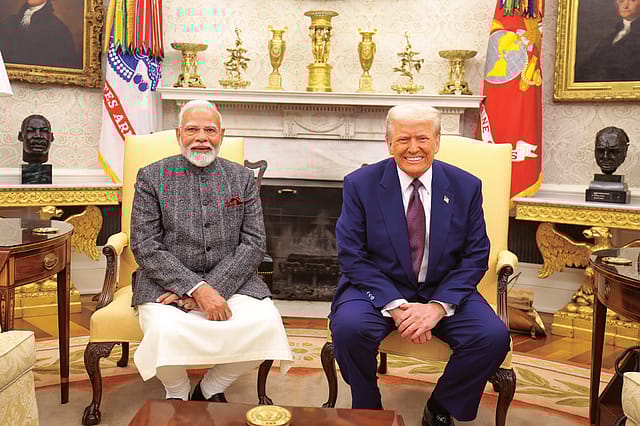
India and the United States have taken a major step toward strengthening their economic and strategic partnership by announcing a framework for an Interim Trade Agreement, drawing praise from political leaders, industry bodies, and global experts for its far-reaching impact.
Separately, U.S. President Donald Trump issued an executive order lifting the additional 25% tariff on Indian goods after New Delhi committed to ending direct and indirect imports of Russian oil.
Leadership and Diplomacy Drive a Breakthrough
The trade framework has been widely credited to the leadership of Prime Minister Narendra Modi and US President Donald Trump. US Ambassador Sergio Gor praised both leaders for their vision in finalising the joint statement, calling it a “new day” for bilateral ties.
US Trade Representative Ambassador Greer said the agreement would unlock India’s vast market for American producers by lowering tariff and non-tariff barriers. He noted that the deal would benefit US workers, farmers, and manufacturers while reinforcing Washington’s economic engagement with New Delhi.

Losing Memory
16 Oct 2026 - Vol 05 | Issue 42
The making of a medical and social emergency
Prime Minister Modi described the framework as a reflection of growing trust, depth, and dynamism in the partnership. He said the agreement would strengthen Make in India, promote innovation, and generate large-scale employment, particularly for women and youth. Union Commerce Minister Piyush Goyal echoed these sentiments, calling the deal a gateway to a $30 trillion market for Indian exporters.
Lower Tariffs, Wider Markets, and Trade Expansion
At the core of the framework is a significant reduction in trade barriers. The United States has agreed to slash reciprocal tariffs on Indian goods from 50 per cent to 18 per cent, covering sectors such as textiles, apparel, leather, footwear, plastics, rubber, chemicals, home décor, and machinery.
In return, India will eliminate or reduce tariffs on a wide range of US industrial and agricultural products. Subject to further negotiations, tariffs on generic pharmaceuticals, gems and diamonds, and aircraft parts may eventually be brought down to zero.
The agreement also aims to boost bilateral trade from the current $191 billion to $500 billion by 2030. India has expressed its intention to purchase $500 billion worth of US energy, technology, aircraft, and raw materials over the next five years, further deepening economic integration.
Industry, Experts, and Political Leaders Applaud the Deal
The framework has received strong backing from business groups and policy experts. The US-India Strategic Partnership Forum described it as a milestone that signals clear political intent and pragmatic trade policy.
The Indian Pharmaceutical Alliance welcomed provisions protecting generic medicines, calling medicine security a key element of national security. FICCI said the agreement would enhance competitiveness, technology access, and supply chain resilience.
Former NITI Aayog CEO Amitabh Kant highlighted that the tariff cuts give India a competitive edge over rivals like Vietnam and Bangladesh while safeguarding agriculture and dairy sectors. BJP President Nitin Nabin said the deal would attract investment, expand market access, and generate employment for youth and entrepreneurs.
Economists and analysts have described the easing of trade barriers as a major breakthrough that could reshape India’s export landscape.
Strategic Dimensions: Energy, Technology, and Supply Chains
Beyond trade, the framework carries major strategic implications. The White House announced that India’s commitment to reduce Russian oil imports and increase purchases of US energy products led to the removal of an additional 25 per cent tariff on Indian goods.
The agreement also strengthens cooperation in technology, including data centre infrastructure and graphics processing units, and promotes joint innovation in digital trade, aerospace, and pharmaceuticals.
Both sides have committed to building resilient and trusted supply chains, aligning economic security policies, and addressing non-market practices by third parties. These measures are designed to reduce vulnerabilities and enhance long-term stability.
Towards a Comprehensive Bilateral Trade Agreement
The Interim Trade Agreement is seen as a stepping stone toward a full-fledged Bilateral Trade Agreement launched in 2025. It outlines mechanisms to address non-tariff barriers, improve regulatory transparency, align standards, and simplify conformity assessments.
The framework includes provisions for preferential market access, rules of origin, and dispute-resolution mechanisms to ensure that benefits flow primarily to both countries. It also establishes pathways for digital trade rules and investment cooperation.
Both governments have pledged to implement the framework swiftly and work toward a comprehensive agreement that can withstand political and economic shifts, reinforcing India-US ties for the long term.
(With inputs from ANI)