Naya Pakistan to Jail Cell: Inside Imran Khan’s Dramatic Political Saga
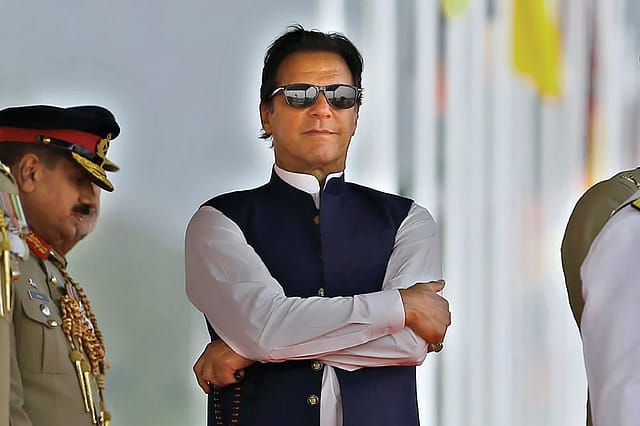
From founding a movement on justice to facing a barrage of legal cases, Imran Khan's political journey remains one of the most turbulent in Pakistan's history.
Khan entered politics in 1996, with a view to combat systemic corruption and social injustice. Motivated by his philanthropic work, he aimed to establish a welfare state with “independent accountability”.
After retiring from cricket and founding the Shaukat Khanum Memorial Cancer Hospital, Khan launched the Pakistan Tehreek-e-Insaf (PTI) in 1996, positioning it as an anti-corruption alternative to the entrenched PPP and PML-N parties.

The Health and Wellness Issue
25 Sep 2026 - Vol 05 | Issue 39
When PTI became a mainstream political force…
On October 30, 2011, a massive youth-driven rally in Lahore --- which Khan called a "tsunami" of support --- reportedly drew hundreds of thousands of attendees, establishing PTI as a mainstream political force for the first time.
A political statement made…
Although the PTI lost the 2013 national election, it emerged as the third-largest party and formed a government in Khyber Pakhtunkhwa (KPK). Khan used this platform to pursue reforms in policing and education, demonstrating his governance credentials.
What was the 2014 dharna and why does it matter to his political legacy?
Khan led a four-month sit-in in Islamabad, alleging widespread rigging in the 2013 elections by the PML-N government. While Nawaz Sharif remained in power, the protest cemented Khan's reputation as a relentless agitator against Pakistan's ruling elite.
How did Imran Khan win the 2018 general election?
Following Sharif's disqualification by Pakistan's Supreme Court, Khan won the 2018 election on a platform of "Naya Pakistan," promising accountability and systemic reform.
According to multiple political analysts, perceived backing from the military establishment also played a significant role in his victory.
How was Imran Khan removed from power in 2022?
In April 2022, Khan became the first Pakistani PM to be removed through a no-confidence motion.
He publicly alleged a US-backed conspiracy behind his ouster and adopted an increasingly fierce anti-establishment stance, directly blaming the military for his removal --- a significant rupture in what had previously been a close relationship.
What happened after Imran Khan's removal?
Khan survived a reported assassination attempt and was formally arrested in May 2023, triggering nationwide riots across Pakistan. According to Pakistani media reports, he faces over 100 legal cases, which he has consistently described as politically motivated.
What does Imran Khan's imprisonment mean for his political legacy?
His imprisonment has, according to observers, paradoxically strengthened his anti-establishment image among supporters.
Reportedly, PTI remains one of Pakistan's most popular political movements despite facing significant institutional pressure, making his legacy one of enduring polarisation --- as much defined by his fall as by his rise.
(With inputs from yMedia)