Moon Eclipse 2026: India to Witness Only Partial Phase, Totality Over North America and Australia
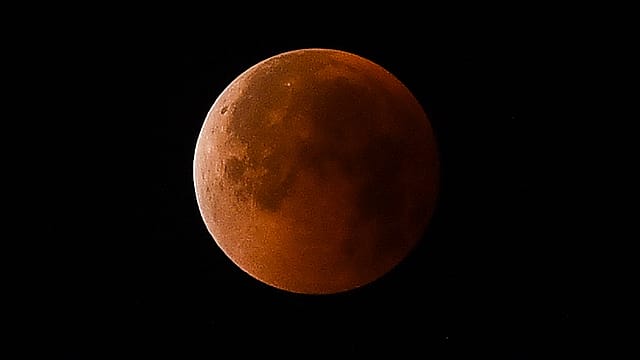
A total lunar eclipse will occur on Tuesday, March 3, 2026, but skywatchers in India will witness only a partial phase as the Moon will be below the horizon during totality, said MP Birla Planetarium’s former Director of Research and Academic, Debinrosad Duari.
Speaking to ANI, Former Director Dr Duari said, "From India, only a partial lunar eclipse will be visible... The full eclipse will mainly be visible from North America, Australia, and the Pacific."
According to the India Meteorological Department, a total lunar eclipse will take place on Tuesday, March 3, 2026, across several time zones.
In a post on X, the IMD stated that the total lunar eclipse on March 3 will have a magnitude of 1.155 and will be visible across India, as well as in parts of Eastern Asia, Australia and the Americas.
How Will the Lunar Eclipse Be Visible Across Different Regions of India?

I.N.D.I.A. Falling
12 Jun 2026 - Vol 04 | Issue 75
The Unravelling of an Alliance
In the Indian context, the visibility of the eclipse will vary by region. Most places in the country will observe the ending phase of the lunar eclipse at the time of moonrise.
However, in parts of North-East India and the Andaman and Nicobar Islands, the end of the totality phase will also be visible.
The phenomenon occurs when the entire Moon passes through the Earth's umbral shadow, while a partial lunar eclipse takes place when only a part of the Moon moves into the Earth's shadow.
The March 3 event will also be a blood Moon lunar eclipse. During this event, Earth will pass between the Moon and the Sun, causing Earth's shadow to be cast on the lunar surface.
What little sunlight reaches the Moon will travel through Earth's atmosphere first, being bent and refracted and casting a red, rusty hue on the Moon, which is why it is known as a blood Moon.
The lunar eclipse will not be visible in Europe or Africa and will be best seen in the western regions of North America, as well as eastern parts of Asia and Australia.
(With inputs from ANI)