From Sir CV Raman’s 1928 Discovery to 2026 Vision: The Significance of National Science Day
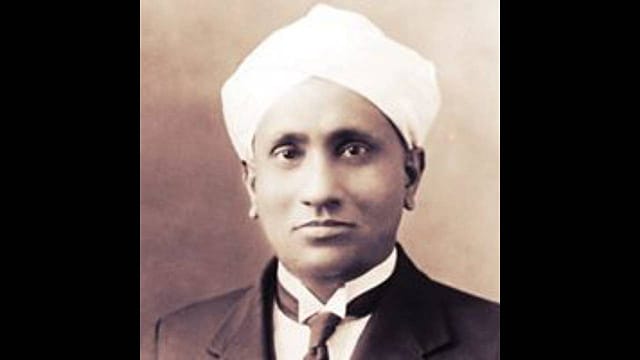
Every year on February 28, India pauses to celebrate scientific curiosity, innovation and research. The date marks a discovery that transformed modern physics and established India’s reputation in global science: the Raman Effect, discovered by C. V. Raman.
In 2026, the occasion drew greetings from Prime Minister Narendra Modi, who underlined the continuing importance of science in India’s national development journey.
Why Is February 28 Celebrated As National Science Day?
National Science Day is observed every year on February 28 to commemorate the announcement of the Raman Effect in 1928. Contrary to common belief, the date is not Raman’s birthday. It marks the exact day he revealed that light changes wavelength when it passes through a transparent material.
The Government of India designated February 28 as National Science Day in 1986 following a recommendation by the National Council for Science and Technology Communication (NCSTC). The first official celebration took place in 1987, with the aim of promoting scientific awareness and encouraging young minds to engage with research.
Today, the day is celebrated across schools, colleges, and scientific institutions, where students present projects and research organisations showcase their latest innovations.
What Did PM Narendra Modi Say On National Science Day 2026?
Marking the occasion, Prime Minister Narendra Modi highlighted how scientific inquiry drives India’s growth and global standing.

Global By Design
29 May 2026 - Vol 04 | Issue 73
Is the future of fashion Indian?
In a post on X, he wrote, “Today, on National Science Day, we celebrate the spirit of research, innovation and scientific curiosity that drives our nation forward. This day commemorates the groundbreaking discovery of the Raman Effect by Sir CV Raman. This discovery placed Indian research firmly on the global map. We reaffirm our resolve to empower our youth, strengthen research ecosystems and harness science and technology for national development and global good.”
His message linked the legacy of Raman’s discovery with India’s present-day push toward innovation, self-reliance, and youth-led scientific leadership.
What Is The Raman Effect And Why Was It Revolutionary?
The Raman Effect explains how light scatters after interacting with molecules, causing a change in its wavelength. In simple terms, when light passes through a substance, a small portion of it shifts in energy and frequency. This change reveals vital information about the material’s molecular structure.
The discovery earned C. V. Raman the Nobel Prize in Physics in 1930, India’s first Nobel Prize in the sciences and the second Nobel Prize for the country overall.
The principle forms the basis of Raman spectroscopy, now widely used in medicine, forensic science, chemistry, materials research, and environmental studies. One familiar example linked to light scattering phenomena is the blue appearance of the sky.
What makes Raman’s achievement especially inspiring is that he conducted his experiments with relatively modest laboratory equipment, relying largely on observation, persistence, and intellectual curiosity.
What Is Special About National Science Day 2026?
The theme for National Science Day 2026 is: “Empowering Indian Youth for Global Leadership in Science and Innovation for Viksit Bharat.”
The focus this year has been on young researchers and innovators. As India aims to become a developed nation through science and technology, the emphasis is on equipping students to lead globally while addressing domestic challenges.
The day is no longer just about commemorating a historic discovery. It is about building a scientific temper, encouraging questioning minds and connecting research with national progress.
Nearly a century after the Raman Effect was first announced, its legacy continues to shape how India views science, not merely as an academic pursuit, but as a foundation for development, self-reliance and global contribution.
(With inputs from ANI)