Missile Strikes to Market Meltdown: What Israel-US-Iran War Means For The World
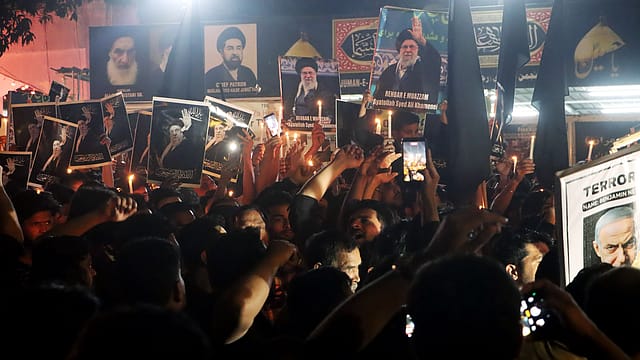
The Middle East changed forever on February 28, 2026. A joint US-Israel military operation targeted Iran's most critical assets - and killed its Supreme Leader Ayatollah Ali Khamenei. What followed was three days of missile fire, market panic and geopolitical shockwaves that are still rippling across the globe.
Here’s everything you need to know.
What happened on February 28?
The Israel-US-Iran war officially began when a coordinated military strike - jointly executed by American and Israeli forces (codenamed "Operation Epic Fury" by the US and "Operation Roaring Lion" by Israel) - hit multiple high-value targets inside Iran. The strikes reportedly focused on IRGC headquarters, ballistic missile sites, and nuclear facilities.

Zeroing In on ECI
09 Oct 2026 - Vol 05 | Issue 41
Constitutional legitimacy versus political opportunism
The most consequential outcome: Ayatollah Ali Khamenei, Iran's Supreme Leader for over three decades, was killed. Several other senior Iranian officials reportedly died in the same operation.
Who is running Iran now?
With Khamenei gone, Iran's political structure has been thrown into emergency mode. Ayatollah Alireza Arafi has been appointed to head a newly formed interim leadership council.
How many people have been affected?
The human cost has been swift and severe. Preliminary reports indicate over 200 deaths inside Iran following the initial strikes. In retaliation, Iranian missile attacks reportedly killed at least nine people in Israel and three US service members stationed in Kuwait. These are early numbers --- the toll is expected to rise as combat operations continue.
What did Donald Trump say?
US President Donald Trump has vowed that combat operations would continue "unabated," particularly in response to the deaths of American service members. At the same time, Trump left a diplomatic door slightly ajar, expressing what he called an "eventual" willingness to engage with Iran's new leadership.
How did other world leaders react?
The responses have been sharply divided. China issued one of the strongest condemnations, reportedly calling the strikes a "serious violation of sovereignty" and demanding an immediate halt to combat operations. The European Union urged "utmost restraint," warning that the entire region stands to lose from a prolonged war.
What happened to global markets?
The financial fallout has been brutal. On March 2, 2026 - the first major trading session after the escalation - markets went into freefall. India's Sensex crashed in pre-opening sessions alone. US and Asian futures reportedly dropped over 1%. Sectors with direct exposure - aviation, paints, and chemicals - faced the sharpest immediate pressure.
Analysts have described it as one of the most geopolitically driven single-day market shocks in recent memory.
What is happening to oil prices?
Brent crude reportedly surged nearly 12%, touching $82.37 per barrel - the highest level since January 2025. But that may only be the beginning. According to market analysts, if the Strait of Hormuz remains blocked, oil prices could spike to $108 per barrel. Energy-dependent economies, particularly in Asia, are bracing for a prolonged supply shock.
What is the Strait of Hormuz, and why does it matter so much?
The Strait of Hormuz is the narrow waterway between Iran and Oman through which a significant share of the world's oil passes. Iran has reportedly moved to effectively close the Strait, through which an estimated 20% of global oil supply and reportedly 40% of India's energy imports transit.
According to reports, over 200 vessels have dropped anchor in nearby waters due to safety concerns after at least three tankers were struck. A prolonged closure would send energy prices and inflation soaring worldwide.
Has the conflict spread beyond Iran and Israel?
Yes, and significantly so. The Israel-US-Iran war has already pulled in proxy forces. Hezbollah in Lebanon has reportedly launched rockets at northern Israel, reopening a front that had been relatively quiet.
Yemen’s Houthi rebels have pledged to resume attacks on Red Sea shipping lanes - a move that would compound the already severe pressure on global trade routes. The so-called "Axis of Resistance" appears to be activating in coordination.
What happens next?
Trump’s administration has signalled it will not stand down. Iran's new interim leadership has every incentive to project strength. With the Strait of Hormuz closed, oil prices climbing, markets in turmoil, and proxy groups entering the fray, the Israel-US-Iran war has moved from a bilateral strike into something far more complex - and far harder to stop.
(With inputs from yMedia)