Iran’s Digital Isolation Grows as US Blocks Maritime Trade Routes
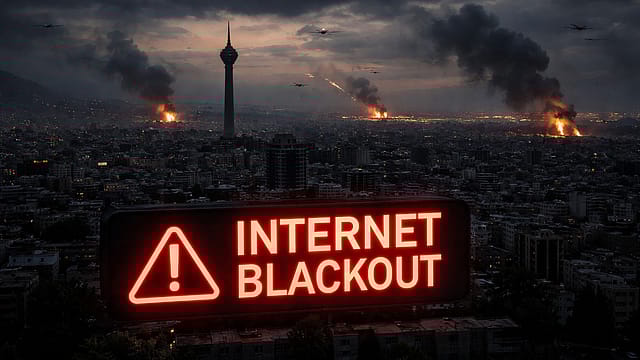
Iran is now enduring one of the longest and most severe digital blackouts in recent memory, with internet watchdog NetBlocks reporting that the country has crossed “1,104 hours without international connectivity for the general public.”
The disruption, which began after domestic protests in early January, has steadily worsened. According to monitoring groups, the blackout “is now entering its 47th day,” effectively cutting millions of Iranians off from the global internet. While limited internal networks remain functional, access to international platforms has been largely blocked, creating an information vacuum at a time of crisis.
Why has the blackout intensified now?
The restrictions escalated sharply after the outbreak of conflict involving the United States and Israel against Iran in late February. Authorities appear to have tightened digital controls as both internal unrest and external military pressure intensified.
This dual pressure—domestic protests and regional war—has made information control a key tool, effectively siloing Iran from global discourse during a volatile period.
How is the blackout affecting people inside Iran?
The prolonged shutdown has crippled communication channels for ordinary citizens. With global platforms inaccessible, Iranians face severe restrictions in sharing information, accessing independent news, or communicating with the outside world.
This digital isolation is being described as one of the most significant examples of state-imposed censorship in recent years, with the “1,104 hours” figure highlighting the scale and duration of the crisis.

Open Minds 2026
26 Jun 2026 - Vol 05 | Issue 26
The power of ideas and arguments in 50 portraits
What is Iran’s leadership saying?
Amid rising tensions, Iranian President Masoud Pezeshkian has taken a defiant stance, pushing back against what he described as external aggression.
“We emphasise constructive dialogue, but will not be forced to surrender. Any attempt to impose will or force Iran to surrender is doomed to failure, and the people will never accept such an approach. Iran is not seeking war,” he said.
He also questioned the legitimacy of military actions against Iran, asking, “With what authorisation and for what crime was the attack on our country carried out?”
Pezeshkian further raised concerns about civilian casualties and damage to infrastructure, including schools and hospitals, arguing such actions violate international law and humanitarian principles.
What role does the US blockade play in this crisis?
The digital blackout is unfolding alongside a major economic escalation. The United States Central Command has announced a sweeping maritime blockade of Iran.
Commander Brad Cooper confirmed the scale and speed of the operation, stating: “A blockade of Iranian ports has been fully implemented as US forces maintain maritime superiority in the Middle East.”
He added, “An estimated 90 per cent of Iran's economy is fuelled by international trade by sea. In less than 36 hours since the blockade was implemented, US forces have completely halted economic trade going into and out of Iran by sea.”
The operation reportedly involves over 10,000 personnel, multiple warships, and dozens of aircraft, effectively choking off Iran’s maritime trade routes.
How are diplomacy and conflict evolving together?
Even as tensions escalate, diplomatic efforts continue in parallel. Reports suggest a possible second round of talks between Washington and Tehran, following an initial stalemate in Islamabad.
However, the combination of military pressure, economic blockade, and digital isolation underscores how fragile the situation remains. The blackout, in particular, limits transparency and complicates both domestic and international understanding of events on the ground.
Why does this blackout matter globally?
Iran’s prolonged internet shutdown is not just a domestic issue; it highlights how digital access is increasingly intertwined with geopolitics, conflict, and state control.
At a time when war, diplomacy, and public perception are deeply connected, the ability, or inability, to access information can shape both internal stability and international responses.
(With inputs from ANI)