Iran Says It May Act Alone If US Fails to Restrain Israel. Here's Why
Iran has issued a sharp warning over what it describes as the growing presence of Israeli military aircraft in the airspace of neighbouring countries, calling the activity a direct threat to its national security.
In a statement released on Friday by the IRGC Central Headquarters and carried by the Islamic Republic of Iran Broadcasting (IRIB), Tehran said it would reserve the right to respond independently if the United States failed to restrain Israel.
The warning comes amid heightened tensions between Iran and Israel following months of military confrontations, regional instability and growing concerns about a wider conflict in the Middle East.
What Triggered Iran's Warning?
According to Iranian authorities, the immediate concern is the movement of Israeli military aircraft in the skies of countries bordering Iran.
Tehran views these flights as a potential security risk and says they represent a direct threat to the Islamic Republic.
The Modi Years
02 Oct 2026 - Vol 05 | Issue 40
A Nation Rebuilt
"We consider the movements and presence of military aircraft of the terrorist Zionist regime in the skies of some neighbouring countries towards Iran to be a dangerous act and a threat against the Islamic Republic of Iran. We declare that if America is unable to contain and control the Zionist regime, the Islamic Republic of Iran will not tolerate any threat against it and considers it its right to respond to these dangerous actions," the statement read.
Why Is The US Being Drawn Into The Dispute?
Iran's statement places responsibility on Washington to restrain Israel, reflecting Tehran's long-held belief that the US has significant influence over Israeli military and security policies.
By warning that it could act unilaterally if the US fails to "contain and control" Israel, Iran is signalling that it may not wait for diplomatic intervention if it perceives a direct threat.
The remarks also underscore the broader geopolitical rivalry involving Iran, Israel and the United States, which has intensified in recent years.
Netanyahu Pushes For Greater Military Independence
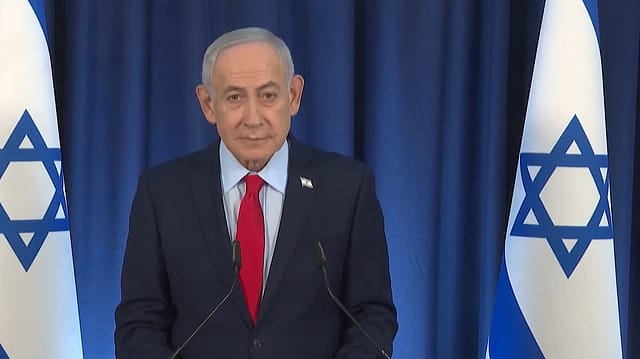
Iran's warning comes just days after Israeli Prime Minister Benjamin Netanyahu called for Israel to reduce its dependence on American military assistance and strengthen its domestic weapons industry.
Speaking during a meeting with reserve combat officers in Gush Etzion in the West Bank, Netanyahu argued that Israel must build a more self-reliant defence infrastructure.
"I greatly appreciate the support we have received - and that I have secured over the years -- from our American friends. But today I say, we need our own independent weapons-production system. We must manufacture our own armaments."
The Israeli Prime Minister said the country's future security would depend on its ability to strengthen its military capabilities and technological edge.
"We are now confronting Iran and its proxies. We have struck them hard. It is not over yet, but it depends on our strength. Where we will be in 30 years depends on our strength. That is why what we are doing now is building even greater strength," noting his ambition for Israel "to have an independent armaments capability".
Growing Differences Between Washington And Jerusalem
Netanyahu's comments come at a time when Israel is increasingly concerned that US diplomatic engagement with Iran could limit Israeli military options.
Jerusalem has voiced reservations about any potential agreement between Washington and Tehran, fearing it could constrain Israel's operational freedom in dealing with Iranian threats.
Highlighting the need for greater strategic autonomy, Netanyahu said:
"We need to free ourselves from dependence, continue building more and more strength, incorporate more and more technology, and train more and more generations of commanders like you -- because ultimately that is what will determine our position."
What Happens Next?
Iran's warning and Israel's push for greater military self-sufficiency reflect the deepening strategic rivalry between the two countries.
While neither side has announced immediate military action, the rhetoric signals continuing tensions that could influence regional security calculations, US diplomacy and future military deployments across the Middle East.
(With inputs from ANI)