“Homeland or Death”: Cuba Slams Trump’s Tariffs Targeting Oil Suppliers
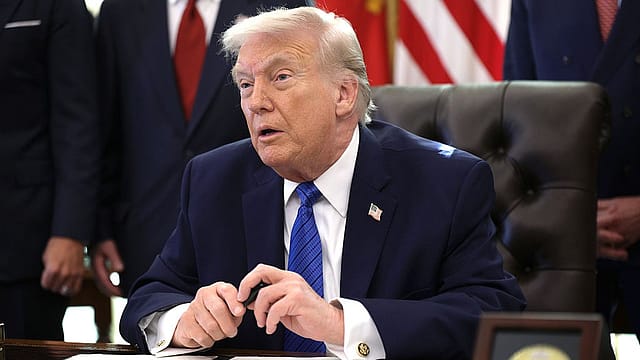
Cuba has hit back sharply at the United States after President Donald Trump moved to tighten economic pressure on the island, this time by threatening tariffs on countries that supply oil to Havana.
In a series of forceful posts on X, Cuban President Miguel Díaz-Canel Bermúdez accused the Trump administration of attempting to “strangle” Cuba’s economy, framing the move as part of a broader effort to enforce US power through coercion rather than diplomacy.
“We condemn in the strongest terms this new escalation,” Díaz-Canel wrote, warning that Washington was claiming the right to dictate who sovereign nations can trade with. The message was unmistakably defiant. “The decision is one: Homeland or Death! We shall overcome!”
Zeroing In on ECI
09 Oct 2026 - Vol 05 | Issue 41
Constitutional legitimacy versus political opportunism
Trump’s oil squeeze
The latest confrontation follows an executive order signed by Trump on Thursday, authorising additional tariffs on imports from any country that directly or indirectly sells oil to Cuba. Issued under the International Emergency Economic Powers Act, the order designates the Cuban government an “extraordinary threat” to US national security.
The White House accused Havana of aligning with hostile powers including Russia, China, and Iran, as well as groups such as Hamas and Hezbollah, claims Cuba has long rejected as politically motivated.
Earlier this year, Trump signalled his intent bluntly on Truth Social: “THERE WILL BE NO MORE OIL OR MONEY GOING TO CUBA – ZERO!” He added that Cuba had survived for years on oil and financial support from Venezuela, a lifeline Washington now appears determined to sever.
A familiar standoff
For Havana, the move revives memories of decades-long sanctions that have shaped the island’s economy and politics. Díaz-Canel described Trump’s actions as driven by a “mendacious and empty pretext” and accused the US leadership of pursuing personal and political gain at the expense of ordinary Cubans.
Relations between the two countries remain deeply strained. A brief thaw during Barack Obama’s presidency in 2014 was decisively reversed under Trump, who reinstated sanctions, restricted travel, and banned cruise ships from docking in Cuba in 2019.
US Secretary of State Marco Rubio, himself of Cuban heritage, has repeatedly labelled the Havana government a “huge problem,” while Trump has gone so far as to suggest Rubio could one day lead Cuba, remarks that only deepened tensions.
According to Al Jazeera, Cuba is currently facing its worst economic crisis since 1959, marked by acute fuel shortages, rolling power cuts, and disruptions to food and water supplies. Any further tightening of oil access risks worsening an already fragile situation.
While for Washington, the new tariffs are leverage, for Havana, they are an existential threat. And once again, the US–Cuba relationship appears locked in a familiar cycle: pressure from afar, defiance from the island, and a standoff with no easy exit.
(With inputs from ANI)