From Cuba’s Oil to Canada’s Jets: How Donald Trump Is Rewriting US Power Politics
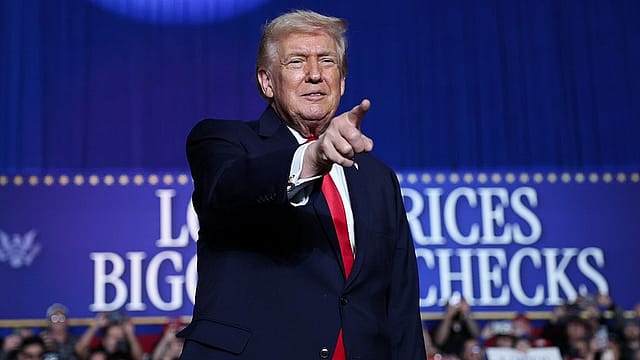
Donald Trump is back in a familiar mode: governing through confrontation, spectacle, and sweeping executive action. In a single day, the US president opened three distinct fronts, tightening the economic noose around Cuba, escalating trade threats against Canada, and launching a nationwide drug recovery initiative at home.
Individually, each move signals a policy priority. Together, they reveal a presidency once again defined by pressure: on allies, adversaries, and institutions alike.
Cuba: Turning Oil Into a Weapon
Trump’s sharpest foreign policy escalation came via an executive order threatening fresh tariffs on countries that supply oil to Cuba. Issued under the International Emergency Economic Powers Act, the order authorises additional duties on imports from nations that “directly or indirectly” provide oil to Havana, branding the Cuban government an “extraordinary threat” to US national security.

Zeroing In on ECI
09 Oct 2026 - Vol 05 | Issue 41
Constitutional legitimacy versus political opportunism
The language is vintage Trump. The White House accuses Cuba of aligning with hostile states such as Russia, China and Iran, and of supporting transnational militant groups including Hamas and Hezbollah. The objective is unmistakable: choke off energy supplies and force economic capitulation.
The immediate fallout has been tangible. Mexico, one of Cuba’s key oil suppliers, has temporarily suspended shipments. Mexican President Claudia Sheinbaum insisted the move was a “sovereign decision,” not the result of US pressure, but the timing underscored Washington’s growing leverage. Until recently, Mexico accounted for about 44 per cent of Cuba’s oil imports, with Venezuela and Russia filling much of the rest.
Venezuela’s supply line has already collapsed after former president Nicolás Maduro was captured in a US military operation earlier this month. That has left Cuba increasingly isolated, and vulnerable.
Trump has amplified the pressure through public threats. “THERE WILL BE NO MORE OIL OR MONEY GOING TO CUBA – ZERO!” he wrote on Truth Social, urging Havana to “make a deal, BEFORE IT IS TOO LATE.” On the campaign trail in Iowa, he went further, describing Cuba as “really a nation that’s very close to failing.”
Havana has pushed back. President Miguel Díaz-Canel rejected Washington’s tactics, reiterating Cuba’s willingness for dialogue “on the basis of sovereign equality and mutual respect.” Cuban officials have gone further, accusing the US of “international piracy” in the Caribbean.
The stakes are high. Cuba is already facing its worst economic crisis since the 1959 revolution, marked by fuel shortages, power cuts, and disruptions to food and water supplies. Tourism revenues have plunged nearly 70 per cent since 2018. If oil flows dry up further, the humanitarian impact could be severe.
Canada: Tariffs, Jets, and a Trade Ultimatum
Even as he squeezed Cuba, Trump turned north, issuing a blunt warning to Canada. In another Truth Social post, the president announced plans to decertify all Canada-made aircraft and threatened a 50 per cent tariff on such planes until American-made Gulfstream jets receive certification in Canada.
The target was explicit: Bombardier’s Global Express business jets, produced in Quebec. Trump accused Ottawa of using certification rules to block US aircraft, calling the process unfair and retaliatory. “If this situation is not immediately corrected,” he warned, “I am going to charge Canada a 50% Tariff on any and all Aircraft sold into the United States of America.”
The aviation dispute is only one layer of a rapidly deteriorating relationship. Trump has repeatedly threatened Canada, America’s second-largest trading partner, with even harsher penalties. Days earlier, he warned of a sweeping 100 per cent tariff if Ottawa proceeded with a trade agreement with China.
That warning has been repeated, sharpened, and personalised. Referring to Canadian Prime Minister Mark Carney dismissively as “Governor,” Trump accused him of turning Canada into a “drop-off port” for Chinese goods entering the US. “China will eat Canada alive,” he wrote, claiming Beijing would destroy Canada’s businesses and social fabric within a year.
The rhetoric comes amid mounting diplomatic strain. Carney recently urged Trump to “respect Canadian sovereignty” following reports of meetings between Alberta separatists and US officials. At the same time, Ottawa has been deepening economic engagement with Beijing, culminating in Carney’s visit to China, the first by a Canadian leader in nearly a decade.
That trip yielded agreements to lower tariffs on certain Canadian agricultural exports and impose quotas on Chinese electric vehicles. Carney described China as a more “predictable” partner, a comment widely read as a rebuke to Washington’s volatility.
Trump has framed Canada’s China outreach as a betrayal, especially as Ottawa opposes his proposed “Golden Dome” missile defence system over Greenland. For Trump, trade, defence, and loyalty are inseparable. And tariffs remain his weapon of choice.
At Home: The Great American Recovery Initiative
While Trump applied maximum pressure abroad, he struck a notably different tone at home, signing an executive order to launch the “Great American Recovery Initiative,” a nationwide programme aimed at tackling drug addiction.
Standing alongside Health and Human Services Secretary Robert F. Kennedy Jr., Trump called addiction a “tremendous plague” and pledged a government-wide response spanning prevention, treatment, recovery, and re-entry. The initiative will coordinate federal, state, local, and private-sector resources, with a new White House body advising agencies on funding and programme integration.
The effort arrives amid sobering statistics. More than 70,000 Americans died from drug overdoses in the past year, even as deaths have declined from pandemic-era peaks. Roughly 48 million Americans aged 12 and older—about 17 per cent of the population, are living with a substance use disorder.
White House data show a striking disconnect: while nearly three-quarters of adults who believe they had a substance problem consider themselves in recovery, more than 95 per cent of those with untreated disorders do not recognise they need help.
The administration has also reversed earlier plans to cut nearly USD 2 billion from federal mental health and addiction treatment programmes, a notable shift that underscores the political salience of the crisis.
The initiative is co-chaired by Kennedy Jr. and Kathryn Burgum, who has spoken publicly about her own recovery journey, adding a personal dimension to the programme.
From Havana to Ottawa to the Oval Office, the pattern is unmistakable. Trump governs through leverage: economic, rhetorical, and institutional. Tariffs double as diplomacy. Executive orders replace slow negotiation. And pressure is applied relentlessly, whether the target is a communist island, a longtime ally, or a domestic public health crisis.
What is clear is that Trump’s second act is not a departure from his first. It is a sharper, faster, and more expansive version of the same playbook.
(With inputs from ANI)