Havana Pushes Back as US Labels Cuba a National Security Threat
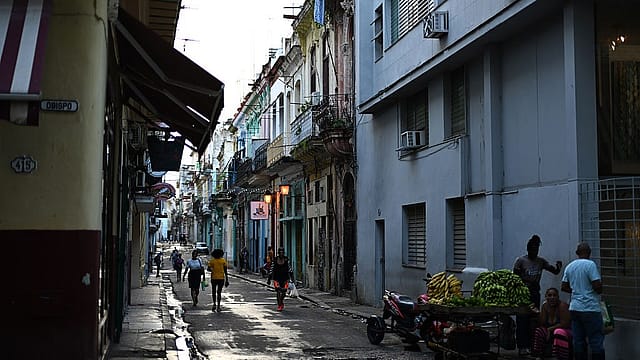
Cuba has flatly rejected US claims that it poses a national security threat, pushing back against what it calls an escalating campaign of political pressure and economic strangulation by Washington.
In a strongly worded statement, Cuba’s Ministry of Foreign Affairs said Havana remains open to dialogue and cooperation with the United States on counterterrorism, regional security and shared challenges—standing in stark contrast to the Trump administration’s increasingly hostile rhetoric.
“The Cuban people and the American people benefit from constructive engagement, lawful cooperation and peaceful coexistence,” the ministry said, calling for a **“respectful and reciprocal dialogue” grounded in international law.
Rise of the Pivotal Power
18 Sep 2026 - Vol 05 | Issue 38
The BRICS declaration is a strategic victory for Modi
The standoff has intensified following the US military operation in Venezuela last month, which led to the capture of President Nicolás Maduro. That intervention has reverberated across Latin America and the Caribbean, hitting Cuba particularly hard.
Venezuela, long Cuba’s primary oil supplier, has effectively halted shipments since Maduro’s ouster, deepening Havana’s energy crisis and economic distress. Washington, meanwhile, has framed the moment as proof of Cuba’s vulnerability.
“Cuba is a failing nation,” President Donald Trump said, arguing that without Venezuelan support, the island’s system is collapsing—a claim Havana strongly contests.
Beyond rhetoric, the Trump administration has formally escalated matters. A new US memorandum labels Cuba an “unusual and extraordinary threat” to American national security, accusing it of aligning with “malign actors” such as China and Russia and exporting communist ideology across the Western Hemisphere.
Cuba dismissed the accusations outright.
The foreign ministry insisted that the country does not support terrorism, does not host foreign military or intelligence bases, and poses no threat to regional stability, a direct rebuttal to Washington’s assertions.
The pressure is no longer bilateral. US officials are reportedly urging regional partners, including Mexico, to scale back oil supplies to Cuba, raising fears of a full-fledged energy blockade.
As tensions rise, calls for restraint are growing. Pope Leo urged both sides to pursue “sincere and effective dialogue,” warning that further escalation would only deepen suffering for ordinary Cubans.
For Havana, the message is clear: Cuba says it will defend its sovereignty and long-held principles of peaceful coexistence even as relations with Washington enter one of their most volatile phases in decades.
(With inputs from ANI)