Colonial Cousins at War: Suddenly Europe and America are culturally incompatible
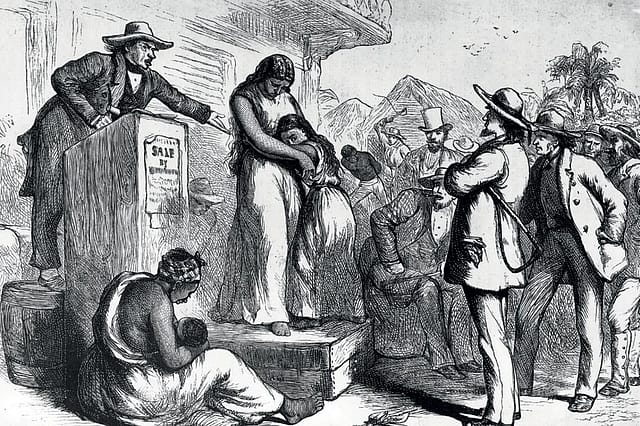
FOUR HUNDRED years ago, Europeans colonised America. The roles have since reversed. The US, which celebrates 250 years as an independent nation on July 4, 2026, has 40 major military bases and 84,000 troops stationed across Europe. Europe has neither military bases nor troops in the US. The asymmetry is striking.
US President Donald Trump has set off a US-Europe civil conflict that ironically could accelerate the decline of Western civilisation. When British historian Niall Ferguson wrote his landmark book Civilization: The West and the Rest in 2011, he could not have imagined just how quickly the West would splinter and the “Rest” rise. Nor would he have believed that an American real estate tycoon, Donald Trump, who had filed for bankruptcy four times in his career, could lead the US to a civilisationally damaging conflict with his colonial forbears across the North Atlantic.
The dislocation between the US and Europe may outlast Trump’s presidential term which ends in January 2029. His likely successor is JD Vance whose anti-Europeanism exceeds Trump’s. Even if Vance loses the next presidential election to a Democrat, the damage to the transatlantic relationship will not be easy to repair.
The damage is both structural and cultural. The US sees Europe as a burden. Its military bases and troops in Europe eat into America’s defence budget. Their decades-long presence was meant to deter the Soviet Union during the Cold War that ended in 1991.
Most European countries have since cut their armies to the bone. The British army, for example, has only 72,000 troops. They would not be able to sustain a land war against Russia. During the four-year-long Russia-Ukraine conflict, the three largest European powers— Germany, Britain and France—have not deployed a single soldier to the battlefront.
The US no longer regards Europe as a priority in the unfolding 21st century. The threat comes, principally, from China and, collaterally, from Russia. That is why Trump has positioned his narrative to buy Greenland, or seize it by force, as a matter of US national security against possible attempts to occupy the Arctic island by Russia or China.
That narrative is bogus. Trump knows it is. So do the Russians, Chinese, and Europeans. The US had 17 military bases in Greenland under a 1951 treaty with Denmark. It has over the years relinquished 16 of the 17 bases. Taking over Greenland is not a crucial national security issue for the US. It is Trump sending a message to Europe and the rest of the world: America can do what it wants, where it wants, when it wants.
The structural fracture between Europe and the US is deepened by culture. The US sees the two Americas as hemispherical priorities. With antagonistic countries like Venezuela, Cuba, and Colombia in the Western hemisphere, Trump will use strong-arm tactics. With friendly countries like Argentina, he will provide funding and tactical support.
Argentina has long sought the return of the Falkland Islands, which it calls the Malvinas. Britain occupied the islands that lie 300 miles from Argentina’s coast in the South Atlantic Ocean in 1765. Under a former dictator, General Galtieri, Argentina launched an invasion of the islands in 1982 but was defeated in a short, sharp war with Britain’s Royal Navy.
If the US can take Greenland from Denmark, and threaten to evict Britain from US-UK joint sovereignty over Diego Garcia in the Indian Ocean where the US and Britain have military bases, what prevents it from pressurising Britain to return the Falkland Islands to Argentina? They would give the US a military outpost in the southernmost part of the Western hemisphere which it claims as its own. That is unlikely though to happen given the special historical relationship between the US and Britain. But the very thought unsettles mandarins in London’s Whitehall.
The cultural disconnect between the US and Europe is growing. Europeans saw Americans as country cousins: brash and unsophisticated. Under Trump’s MAGA movement, Europe is no longer seen as America’s cultural temple. It is instead seen as a nanny state: weak on immigration control, defenceless against Russia, and in terminal civilisational decline.
As former colonial cousins fight a fratricidal battle, the “Rest”, which Ferguson once dismissively bracketed as a monolith, is regaining its historical place in the new world order.