Golan Heights: Why Has Colombia Recognised Israeli Sovereignty Over Occupied Syrian Territory?
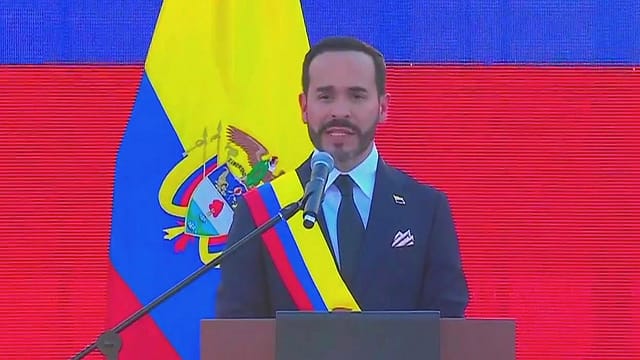
A piece of Syrian territory that Israel seized nearly six decades ago has suddenly become the centre of a major diplomatic shift.
Colombia has recognised Israeli sovereignty over the Golan Heights, becoming only the second country in the world after the United States to do so.
The decision came just days after newly elected President Abelardo de la Espriella took office and marks a sharp turn in Colombia’s foreign policy towards Israel. Israeli Foreign Minister Gideon Sa'ar welcomed the move, calling it a “historic” recognition. So, why is Colombia making this move now? And why does the Golan Heights matter so much?
What exactly has Colombia recognised?
Colombia has formally recognised Israeli sovereignty over the Golan Heights, a strategic plateau captured by Israel from Syria during the 1967 Six-Day War. Israel later extended its laws and administration to the territory in 1981, an action widely regarded internationally as an annexation. For decades, however, almost the entire international community has rejected Israeli sovereignty over the territory. Colombia's new position breaks with that consensus. The Colombian Foreign Ministry said the decision was driven by continuing instability in the Middle East and what it described as the Golan's strategic importance to Israel's security. It also linked the move to Israel's right to defend itself against external threats.

Look Who's Talking Regime Change
23 Oct 2026 - Vol 05 | Issue 43
Is Colombia now only the second country to recognise the Golan as Israeli?
Yes. The United States recognised Israeli sovereignty over the Golan Heights in 2019 during Donald Trump's first presidency. Until Colombia's decision, Washington stood alone among UN member states in formally recognising Israel's claim. Colombia has now joined it. That makes the move diplomatically significant well beyond the size of the territory itself.
Why is the Golan Heights so important to Israel?
Geography. The Golan is a high plateau overlooking northern Israel and southern Syria. Its elevated position gives it major military and strategic importance. Israel captured most of the territory from Syria during the 1967 war. Syria attempted to retake it during the 1973 Arab-Israeli war but failed. A 1974 disengagement agreement established a ceasefire and a UN-monitored buffer zone between the two sides. For Israel, control of the Heights is therefore closely tied to its security calculations along the Syrian border. Colombia explicitly cited that argument in announcing its recognition.
But doesn't the UN consider the Golan Syrian territory?
Yes. This is the crucial part. The United Nations continues to regard the Golan Heights as Syrian territory under Israeli occupation. UN Security Council Resolution 497, adopted in 1981 after Israel extended its laws to the territory, declared that move “null and void and without international legal effect”. That position has remained the basis of the international consensus. Colombia's decision therefore does not change the territory's status under international law or the UN position. It changes Colombia's diplomatic position.
Why has Colombia made the move now?
The timing is striking. Colombia's new president, Abelardo de la Espriella, took office only days before the announcement. His government has moved rapidly to strengthen relations with Israel after years of tension under former president Gustavo Petro. The Golan decision is therefore part of a broader foreign-policy realignment rather than an isolated declaration. Recent reporting describes the new administration as seeking closer diplomatic, trade and security ties with Israel. Bogota says its decision is rooted in regional security. The Foreign Ministry specifically referred to Israel's “persistent and existential security challenges” and the October 7, 2023, attacks as part of the context for its decision.
Does this mean Colombia recognises the Golan as part of Israel under international law?
No. Recognition by Colombia does not override the position of the United Nations or other countries. It simply means Colombia now accepts Israel's claim of sovereignty over the territory. That distinction matters because the vast majority of countries continue to regard the Golan as occupied Syrian territory. Colombia's move puts it in a very small diplomatic club with the United States.
Why does the decision matter for Syria?
Because Syria still claims the Golan Heights. The territory has remained one of the central unresolved issues between Syria and Israel for decades. The recognition comes at another particularly sensitive moment for Syria, which is undergoing a political transition following the fall of Bashar al-Assad's government in December 2024. For Damascus, the Colombian move represents another international endorsement of Israel's control over territory Syria claims as its own.
Could other countries follow Colombia?
That is the bigger question. For now, Colombia remains an outlier alongside the United States. But the significance of its decision lies partly in the possibility that the diplomatic consensus around the Golan could begin to fragment. Whether that happens will depend on how other governments respond and on the broader trajectory of Israel-Syria relations. For now, however, the map has not changed. The Golan remains under Israeli control. Syria still claims it. The UN still considers it occupied Syrian territory. But Colombia has now chosen a different position. And that makes a piece of land seized in a war nearly 60 years ago relevant to Middle East diplomacy all over again.
(With inputs from ANI)