Gate Of Tears: Why Bab el-Mandeb Is Emerging As The Next Global Chokepoint
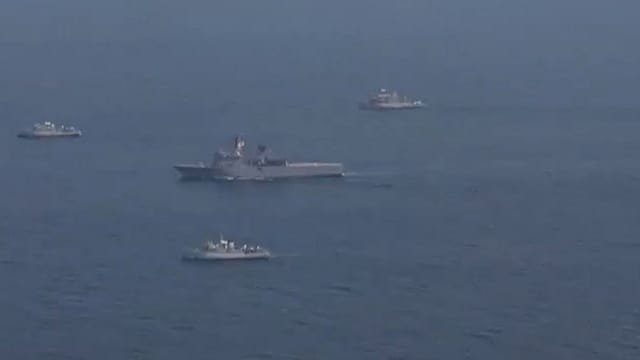
The focus of global energy markets has for weeks been fixed on the Strait of Hormuz. However, as the conflict between the United States, Israel and Iran deepens, attention is now shifting southwards to another critical maritime artery, the Bab el-Mandeb Strait in the Red Sea.
The Bab el-Mandeb Strait connects the Red Sea to the Arabian Sea, forming a vital corridor for ships heading to the Suez Canal.
Located at the southern tip of the Red Sea, it is emerging as a second front in what experts describe as the most severe disruption to global energy markets in modern history.
A significant portion of global trade and oil shipments passes through this narrow stretch, making it one of the most sensitive maritime choke points.
With Yemen's Iran-backed Houthis entering the ongoing war involving the United States, Israel and Iran, the risk of major disruptions has increased.
Why Does Iran’s Proxy Influence Matter In The Bab el-Mandeb Strait?
Unlike the Strait of Hormuz, Iran does not border the Bab el-Mandeb. However, through its backing of the Houthis in Yemen, Tehran exerts indirect pressure.
This proxy influence allows Iran to disrupt maritime traffic without direct confrontation, expanding its strategic footprint beyond its immediate geography.

Open Minds 2026
26 Jun 2026 - Vol 05 | Issue 26
The power of ideas and arguments in 50 portraits
The Bab el-Mandeb, Arabic for "Gate of Tears", connects the Red Sea to the Gulf of Aden and the Indian Ocean.
Stretching roughly 100 kilometres in length and 30 kilometres in width, it separates Yemen on the Arabian Peninsula from Djibouti and Eritrea in the Horn of Africa.
It is through this passage that a significant share of global trade flows. Ships travelling between Asia and Europe must pass through the strait en route to the Suez Canal, making it one of the busiest and most strategically important shipping lanes in the world.
What Is The “Double Disruption” Risk Linked To The Bab el-Mandeb Strait?
Rising attacks and threats in the Red Sea have increased risks for commercial shipping. Tankers and cargo vessels face delays, higher insurance costs and rerouting challenges.
This instability underscores how fragile global trade routes have become amid escalating geopolitical tensions in the region.
With influence over both the Strait of Hormuz and the Bab el-Mandeb, Iran is positioned across two critical choke points.
Around 10 to 12 per cent of global oil and natural gas shipments move through the Bab el-Mandeb.
This creates a potential "double disruption" scenario where energy flows and trade routes could be simultaneously affected, amplifying global economic risks.