Four Weeks In, Iran Is Still Fighting. Here Is What Both Sides Can Actually Do Next
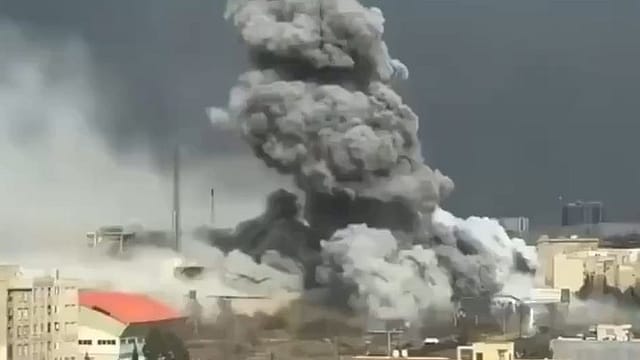
Iran lost its Supreme Leader a month ago, while its command structure was allegedly dismantled and its missile sites reportedly destroyed.
The whereabouts of the newly appointed Supreme Leader, Mojtaba Khamenei, remain unknown, and according to various reports, he sustained injuries during the Ramadan strikes.
And yet, Iran just fired missiles nearly 3,800 km towards a US-UK base, struck a site linked to Israel's nuclear programme, and threatened to mine the Persian Gulf.
Four weeks into this war, the country that was supposed to be on its knees is still swinging - and Washington and Tel Aviv are struggling to explain why their strategy hasn't delivered the collapse they promised.

Losing Memory
16 Oct 2026 - Vol 05 | Issue 42
The making of a medical and social emergency
Here’s a more detailed insight.
Has US and Israeli Strategy Actually Worked?
Trump and Defence Secretary Pete Hegseth have repeatedly claimed that sustained strikes have crippled Iran's command structure. Yet escalation continues, faster and sharper, with fewer exit points.
Who Is Running Iran Right Now?
Mojtaba Khamenei was reportedly named Supreme Leader after strikes killed his father. He has not appeared in public since. Beyond two written statements, there is silence.
Is Iran More Resilient Than Expected?
Iran launched missiles towards Diego Garcia, a US army base in the Indian Ocean, reportedly travelling around 3,800km - nearly double its previously estimated range of 2,000km.
Iran also struck Dimona nuclear site in Israel's Negev desert, linked to Israel's undeclared nuclear programme.
The core assumption behind US and Israeli strategy - that eliminating leadership causes paralysis - now looks seriously flawed.
Can Diplomacy Function Anymore?
According to Iranian officials, during Geneva talks on 27 February they had addressed most US concerns.
Strikes began the next day. For Iranian decision-makers, the conclusion is straightforward: negotiation doesn't prevent attacks. It may invite them.
What Does Trump's Ultimatum Achieve?
Trump issued a 48-hour ultimatum demanding Iran to reopen the Strait of Hormuz, warning of the "obliteration" of Iranian power plants.
Iran rejected it and reportedly raised the possibility of mining the Persian Gulf. Hours before his own deadline, Trump announced a five-day pause.
He is claiming "very good and productive conversations" with an unnamed Iranian official.
Tehran’s Foreign Ministry, however, officially denied these talks this morning, calling it "fake news" to manipulate oil prices.
What Happens If Hormuz Stays Closed?
Over 170 million people across the region could face serious disruption to electricity and essential services.
Without troops on the ground, the US and Israel can cause damage but cannot force compliance through air power alone.
What Options Are Actually Left?
Vanishingly few. Iran cannot back down without appearing defeated. The US and Israel cannot achieve a decisive outcome from the air.
Both sides are trapped in an escalation loop - and the most extreme options are edging closer to the table with every exchange.
(With inputs from yMedia)