Former CIA Officer Claims Decision Made for US Attack on Iran Early Next Week
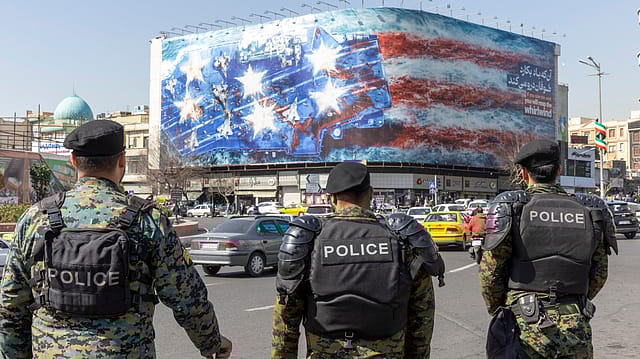
Former CIA officer John Kiriakou has claimed that a final decision has been reached by the United States to initiate a military strike against Iran early next week.
Speaking on the Julian Dorey Podcast, Kiriakou revealed that a fellow former intelligence official recently at the White House suggested that an attack could be imminent, despite public deadlines given by the administration.
Revealing the sensitive nature of the discussions, Kiriakou said, "I have a friend, former CIA officer, who was at the White House this morning talking to his friends, and he says that a decision has been made to attack Iran on Monday or Tuesday."

Losing Memory
16 Oct 2026 - Vol 05 | Issue 42
The making of a medical and social emergency
He noted that while the President yesterday publicly offered a 10-day window for the Islamic Republic to accept a comprehensive proposal, such timelines are often used as a tactical distraction.
How is the US strike on Iran being signaled through troop movements?
Explaining the strategy behind the shifting deadlines, he remarked, "Well, he'll give you 10 days, he'll give you two weeks, and then he'll just attack two days into it. He thinks that keeps people off balance."
Validating these claims of imminent action, the United States has already commenced the strategic movement of military personnel stationed at various installations across the Middle East for undisclosed missions.
As reported by The Jerusalem Post, a recent disclosure from The New York Times indicates that hundreds of servicemen have been transferred from the Al Udeid base in Qatar.
Similar logistical shifts have been identified across American facilities in Bahrain, the headquarters of the Navy's 5th Fleet, as well as in Iraq, Syria, Kuwait, Saudi Arabia, Jordan, and the United Arab Emirates.
Government officials are reportedly apprehensive that the 30,000 to 40,000 US troops currently deployed within the region could serve as the primary target of the Islamic Republic in the event of an all-out war.
Military experts suggested that such a confrontation would differ drastically from the strike on Al Udeid in June 2025, during which Iranian authorities provided the US with advance notice.
What threats has Tehran issued in response to a potential US strike on Iran?
The Jerusalem Post highlighted a stern warning from the Iranian mission to the UN, which stated that, in case of an American attack, "all bases, facilities, and assets of the hostile force in the region would constitute legitimate targets."
In light of these threats, the US is reportedly augmenting its regional posture by shifting air defence systems into the Middle East to safeguard its forces.
This defensive buildup accompanies a decision to maintain two aircraft carriers at a significant distance from Iranian territory to ensure they do not become easy targets for retaliation.
The former CIA officer also detailed the internal political divisions driving this escalation, identifying key figures on both sides of the intervention debate.
"He said that there are battle lines, that the anti-war forces are JD Vance and Tulsi Gabbard," Kiriakou stated, adding that the pro-war faction is reportedly "led by Marco Rubio and includes Pete Hegseth and now the Joint Chiefs of Staff."
Why has the Joint Chiefs of Staff shifted toward supporting a US strike on Iran?
Kiriakou expressed surprise at the inclusion of the Joint Chiefs of Staff in the pro-interventionist camp, noting a significant departure from historical military caution.
However, he pointed out that recent leadership changes at the Pentagon have reshaped the military's stance.
"Trump has replaced all of the Joint Chiefs this year, this past, in the past 12 months, which I had forgotten," Kiriakou explained. "He promoted people that he knew would be politically loyal."
While the Trump administration officially remains dedicated to seeking a diplomatic resolution, several insiders believe that current offers from Tehran are not enough to deter military strikes.
The Jerusalem Post further indicated that internal planning has become increasingly granular and ambitious, as the President has recently floated the idea of regime change in the Islamic Republic.
Could the release of UFO files be a distraction from a potential US strike on Iran?
The discussion also touched upon the potential timing of recent government disclosures, including the anticipated release of UFO-related documents, as a potential distraction. Kiriakou agreed, "Probably in part, yeah. About them saying they're going to release the UFO files last night, which I've wanted released forever, but the timing."
Iran's Foreign Ministry declared European Union member states' naval forces and air forces as "terrorist organisation" as a reciprocal action against the EU's recognition of Islamic Revolution Guard Corps (IRGC) as a terrorist entity.
The Ministry announced its decision in a statement while calling the EU's action against the IRGC "contrary to fundamental principles and rules" of the United Nations Charter and International Law.
Iran is seeking to negotiate an end to sanctions that have proven to be a massive drag on its economy, which played a role in sparking anti-government protests in December.
Western countries accuse the Islamic Republic of seeking to acquire nuclear weapons, which Tehran denies, though it insists on its right to enrichment for civilian purposes.
The US envoy, Steve Witkoff, confirmed in an interview that he had met with Reza Pahlavi, the exiled son of Iran's last shah and a critic of the current authorities, who has not returned to the country since before the 1979 Islamic Revolution that ousted the monarchy.
"I met him at the direction of the president," Witkoff said, without providing further details.
US envoy Steve Witkoff on Saturday said that President Donald Trump is questioning why Iran has not "capitulated" in the face of Washington's military build-up aimed at pressuring them into a nuclear deal.
In a Fox News interview, Witkoff said, "I don't want to use the word 'frustrated,' because he understands he has plenty of alternatives, but he's curious as to why they haven't... I don't want to use the word 'capitulated,' but why haven't they capitulated."
(With inputs from ANI)