Geneva Talks, Military Drills & Enriched Uranium: Is the US-Iran Conflict at a Breaking Point?
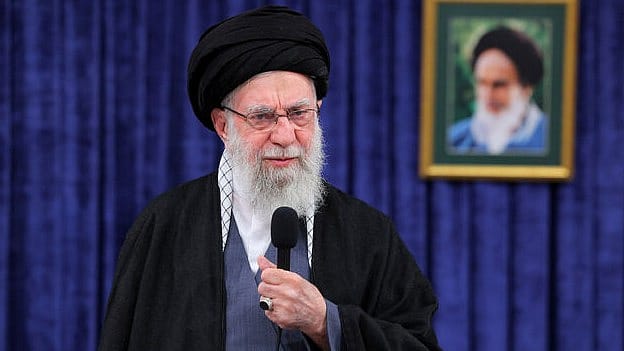
The Iran-US conflict entered a critical new phase this week as both nations completed a second round of indirect nuclear talks in Geneva under Omani mediation, even as military activity intensified in regional waters.
According to Iran International, Foreign Minister Abbas Araghchi described the discussions as “good progress," while warning that diplomacy cannot advance under military pressure.
How Did the Iran-US Nuclear Energy Dispute Begin?
Iran’s nuclear programme began in 1957 and expanded after the Iran-Iraq war. Hidden sites were exposed in 2002, leading to sanctions and UN resolutions. Intense diplomacy resulted in the 2015 Joint Comprehensive Plan of Action (JCPOA), which restricted enrichment in exchange for sanctions relief.
How Did the Iran-US Conflict Intensify?
In 2018, the Trump administration withdrew from the JCPOA and reimposed sanctions under a maximum pressure strategy. Iran reportedly breached enrichment limits, regional incidents escalated, and tensions peaked with the killing of Qassem Soleimani, pushing relations toward open confrontation.

Losing Memory
16 Oct 2026 - Vol 05 | Issue 42
The making of a medical and social emergency
What is the Core Dispute Over Nuclear Energy?
The crux of the dispute centers around uranium levels. Iran argues its nuclear energy programme is peaceful and has indicated openness to capping enrichment, but has rejected any demand for zero enrichment.
The International Atomic Energy Agency (IAEA) Director-General Rafael Grossi has warned that inspectors lack access to key sites, noting Iran’s 60 percent enriched stockpile is near weapons-grade levels.
Why are the Geneva Talks Significant?
The Geneva negotiations are the first structured diplomatic engagement in months. Oman’s mediation has helped maintain indirect communication despite sharp rhetoric.
The talks aim to explore enrichment caps and sanctions relief frameworks between both countries. However, no breakthrough has been announced yet. The significance lies less in immediate concessions and more in preventing further escalation of tensions between Iran and the US.
How Serious is the Iran-US Tension Beneath the Diplomatic Surface?
According to news agency Reuters, the Pentagon is preparing contingency plans for potential weeks-long operations. Simultaneously, Iran conducted military drills in the Strait of Hormuz, a route carrying roughly 20 percent of global oil trade.
Supreme Leader Ayatollah Ali Khamenei signalled that powerful militaries are not immune to damaging setbacks. The parallel military signalling reinforces the depth of the Iran-US tension.
Why is the US Military's Posture Complicating Diplomacy?
President Trump described a massive US naval presence, referencing past B-2 strikes. According to The Week’s defense analysis, any sustained US military campaign would likely target not only nuclear sites but also command infrastructure. Iran’s deterrence strategy relies on ballistic missiles, cruise systems, and drone swarms designed to prolong conflict and increase costs for adversaries. This asymmetric posture complicates diplomatic confidence-building.
How Could the Strait of Hormuz Become a Flashpoint?
The Strait of Hormuz carries about 20 per cent of the global oil trade. Military drills or miscalculations could disrupt these shipping lanes, immediately impacting energy prices and amplifying the global consequences of the Iran-US conflict.
What are the Broader Global Stakes of the Iran-US Conflict?
The ripple effects are significant. Escalation could disrupt Gulf aviation hubs and commercial shipping lanes, pushing energy prices higher. According to The Week’s defence analysis, Russia has limited incentive to see Washington prevail without challenge. China, heavily dependent on Gulf energy, prefers stability but could benefit strategically from prolonged American engagement in West Asia.
How the Iran-US conflict is hitting Indian OMC stocks?
The Iran-US conflict has already triggered a crude rally. Indian oil marketing companies such as BPCL, IOCL, and HPCL have faced selling pressure as investors factor in higher input costs. Historically, geopolitical shocks have pushed Brent crude toward the psychological $70 per barrel mark, increasing volatility across equity and commodity markets.
What comes next in the Iran-US conflict?
Both sides are expected to exchange draft frameworks and reconvene within two weeks. The path forward remains narrow. Iran seeks sanctions relief to stabilise its economy, while the United States demands verifiable nuclear limits.
The decisive factor is duration. If diplomacy sustains momentum, escalation may be contained. If signalling outpaces negotiation, the US-Iran conflict could enter a far more volatile phase.
(With inputs from yMedia)