US Weighs Military Action Against Iran Amid Escalating Tensions and Nuclear Talks
The United States is considering a strike on Iran as early as this weekend, although President Donald Trump has not yet made a final decision, according to reports by CNN and CBS.
The developments come amid ongoing diplomatic efforts and heightened tensions following a massive US military buildup in the Middle East.
White House Press Secretary Karoline Leavitt noted that progress had been made, but the two nations remain "far apart" on certain issues.

The Modi Years
02 Oct 2026 - Vol 05 | Issue 40
A Nation Rebuilt
Is US-Iran diplomacy still the first option?
Leavitt emphasized that diplomacy remains the first option for President Trump, while also warning them saying, "Iran would be very wise to make a deal."
The situation in Iran has been marked by widespread unrest since December 28, 2025, when protests erupted over a crippling economic crisis characterized by a sharply depreciating Rial and soaring inflation.
What began as demonstrations by shopkeepers and merchants quickly spread nationwide, evolving into one of the most significant challenges to the Islamic establishment since the 1979 revolution.
Economic grievances rapidly adopted political overtones, with many demonstrators demanding broader systemic change.
As protests intensified through December and into January, hard-line slogans targeting the regime’s leadership became widespread.
How has the United States responded to Iran’s crackdown and human-rights concerns?
The Iranian government responded with force, deploying security units and cutting off internet and telephone services nationwide on January 8, 2026, in an unprecedented communications blackout.
World leaders described the move as an effort to "limit the ability of journalists, activists, and families of victims to document and share evidence of killings."
Internationally, the United States expressed support for the Iranian people's right to peaceful protest while condemning Tehran's use of violence and expanded visa bans targeting Iranian officials over human-rights violations.
Iranian authorities dismissed foreign criticism as interference, accusing the United States, Israel, and European powers of exploiting the crisis to foment instability.
Reports indicate that the US military is prepared to strike Iran, with 13 warships in the Middle East, including the aircraft carrier USS Abraham Lincoln, nine destroyers, and three littoral combat ships, with more en route.
How has Trump’s stance on Iran evolved amid stalled nuclear deal talks?
The USS Gerald R. Ford, the world's largest aircraft carrier, is currently moving from the Caribbean to the region, accompanied by three destroyers.
This would mark the rare presence of two US aircraft carriers in the Middle East. A large fleet of aircraft, including F-22 Raptor stealth fighters, F-15 and F-16 warplanes, and KC-135 aerial refueling planes, has also been deployed.
Trump has repeatedly threatened Tehran with further military action if ongoing talks do not yield a replacement for the nuclear deal he withdrew from in 2018.
He had previously ordered strikes on Iran last year and came close to ordering attacks in early January over the regime’s killings of thousands of protesters.
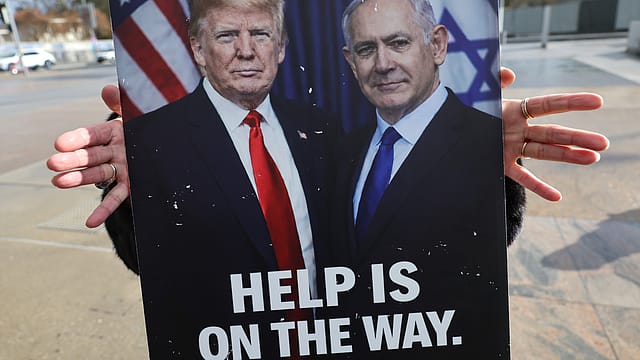
US and Israeli officials are coordinating closely amid the nuclear talks. Israeli Prime Minister Benjamin Netanyahu and Trump have agreed to apply new economic pressure on Iran.
Strategic factors also play a role, including a well-supplied oil market with relatively low prices and weakened Iranian proxy capabilities.
Officials reportedly believe retaliation from Iran would be more limited now than in the past, though any attack would almost certainly provoke a response.
Trump’s military buildup signals the possibility of a sustained campaign against Iran if a deal is not swiftly secured.
(With inputs from ANI)