Floods, Fuel Shocks, and a Gulf War: Why Sri Lanka Is Running Out of Time
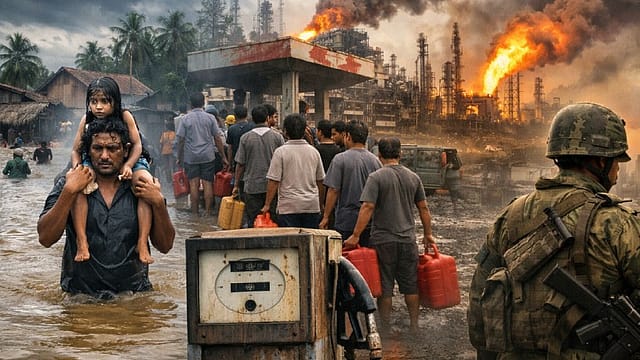
Sri Lanka is fighting on three fronts simultaneously. Cyclone Ditwah, which struck last November, caused catastrophic flooding and landslides that killed 643 people, left 173 missing, and displaced over 165,000 residents across all 25 districts.
Now, with the Iran war driving fuel prices higher and threatening Gulf remittances, a country that had barely escaped one economic collapse is staring down another.
Here’s what’s happening and why it matters.
What did Cyclone Ditwah destroy?
Parts of Sri Lanka's central uplands received up to 500mm of rain over just three days, sweeping away homes, businesses, and entire settlements.
The Modi Years
02 Oct 2026 - Vol 05 | Issue 40
A Nation Rebuilt
The World Bank estimates close to two million people and 500,000 families were affected.
The UN and other agencies put total damage at around $4 billion, equivalent to roughly 4% of Sri Lanka's GDP.
President Anura Kumara Dissanayake reportedly called it the country's worst-ever economic disaster.
How has the government responded to the cyclone's aftermath?
The government promised up to five million rupees for completely destroyed homes and one million rupees for families of those killed.
However, months after the disaster, over 165,000 people remain displaced.
The government has received barely a fifth of the $750 million needed for reconstruction and rehabilitation.
How is the Iran war delivering a second blow to Sri Lanka?
The Iran war has driven up global fuel prices, forcing the Sri Lankan government to ration fuel, raise prices, introduce a four-day working week, and increase electricity costs by up to 40%.
These developments have revived painful memories of the 2022 economic crisis, when the country defaulted on its foreign debt.
Why are economists calling this a triple shock?
According to Dr Ganeshan Wignaraja, a visiting senior fellow at ODI Global Institute in London, speaking to the BBC, Sri Lanka is experiencing a triple shock: devastating floods, soaring fuel prices, and an impending drought, all compounding simultaneously on an economy that had only recently begun stabilising.
What happens to remittances if the Gulf situation worsens?
Sri Lanka received approximately $7 billion in remittances last year, primarily from Gulf-based workers.
The Iran war now threatens both existing employment and new opportunities for Sri Lankans in Gulf countries, putting this critical income stream at serious risk.
Which country stepped up when international donors stayed silent?
India was the only country to respond immediately, launching Operation Sagar Bandhu.
It deployed two warships, flew rescue sorties, established field hospitals, and provided $450 million in grants and aid, making it by far the largest contributor.
China, reportedly a major investor and ally, provided less than $2 million in aid.
Can Sri Lanka's economy survive the combined pressure?
According to Dr Wignaraja, with foreign reserves currently at around $7 billion, the government should be able to manage if fiscal policy is tight.
However, he reportedly warned that a prolonged fallout from the Middle East crisis would place the economy under severe strain it may not be able to absorb.
How President Dissanayake navigates this convergence of natural disaster and geopolitical fallout may define both his tenure and Sri Lanka's next decade.
(With inputs from yMedia)