Know Why Sri Lanka Has Made Every Wednesday a Public Holiday
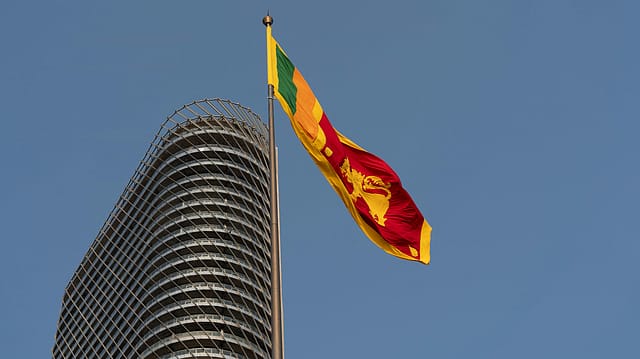
The island nation of Sri Lanka made a stunning announcement on March 16, 2026: every Wednesday is now a public holiday, effectively compressing the government workweek to just four days. It sounds like a dream - but the trigger is anything but.
Here’s a breakdown of what happened, why it happened, and what it means for Sri Lankans.
What exactly did Sri Lanka announce?
Sri Lanka declared every Wednesday a public holiday effective March 18, 2026. The measure applies to government institutions, schools, universities, and courts. The announcement followed an emergency meeting convened by President Anura Kumara Dissanayake with the full state machinery to discuss managing energy disruptions caused by the ongoing conflict in West Asia.
The Modi Years
02 Oct 2026 - Vol 05 | Issue 40
A Nation Rebuilt
Why did Sri Lanka take this step?
The US-Israel conflict with Iran has led to the destruction of oil facilities in the region and the effective closure of the Strait of Hormuz --- one of the world's most critical oil transit corridors. Sri Lanka, heavily dependent on imported fuel, is racing to manage existing reserves before supplies run out entirely.
Why does the Strait of Hormuz matter to Sri Lanka?
According to NewsBytesApp, approximately 90% of all oil and gas passing through the Strait of Hormuz was destined for Asia - the world's largest oil-importing region. Sri Lanka sits squarely in that supply chain. With its economy still recovering from a devastating 2022 crisis, it feels supply shocks faster than most nations in the region.
Why Wednesday specifically?
It is a deliberate calculation. Ministry of Public Administration Secretary S. Aloka Bandara reportedly explained that Friday was rejected because it would have resulted in a three-day shutdown -- Friday, Saturday, and Sunday -- disrupting work continuity. A mid-week holiday cuts commuting-related fuel consumption while keeping the administrative machinery broadly functional.
Which sectors are exempt?
Not everyone gets the day off. Commissioner General of Essential Services Prabath Chandrakeerthi confirmed that the Wednesday holiday does not apply to the health sector, ports, water supply, customs, or immigration authorities, preventing a total administrative standstill.
Is the private sector included?
Not mandatorily. Reportedly, the government has urged private businesses to voluntarily adopt the same four-day structure, making it a strong expectation rather than a legal obligation for now.
What other fuel-saving measures are in place?
Sri Lanka has reintroduced its QR-based fuel rationing system, first used during the 2022 economic crisis. According to NewsBytesApp, weekly fuel quotas by vehicle type are: motorcycles get five litres, motorcars and three-wheelers 15 litres, vans 40 litres, buses 60 litres, and motor lorries up to 200 litres. The low allotments have already sparked public frustration.
Reportedly, the government is also in active talks with India and Russia to secure alternative fuel supply arrangements.
Is this permanent?
No. The Wednesday holiday is explicitly a temporary contingency measure, in place "until further notice," and will be reviewed as the global supply situation evolves.
Is Sri Lanka alone in this?
Far from it. Thailand is urging citizens to ditch suits for short-sleeved shirts to reduce air conditioning use, Myanmar has introduced odd-even vehicle restrictions, Bangladesh has advanced university holidays and implemented planned blackouts, and Vietnam is encouraging citizens to cycle or stay home. Sri Lanka's Wednesday off is dramatic - but it is part of a much wider regional scramble to stretch every last drop of fuel.
(With inputs from yMedia)