Explained: Why Japan’s Snap Election Has Sparked a Constitutional Debate
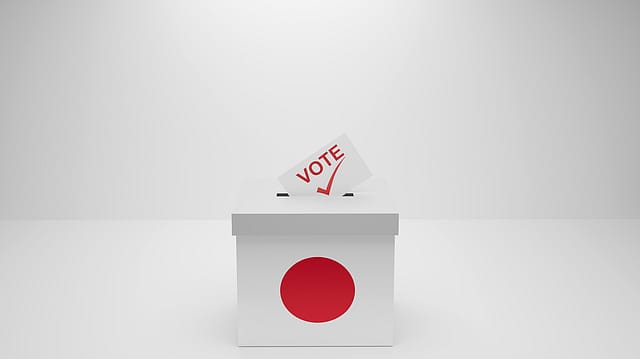
Japan is heading into a snap election but the real contest isn’t just at the ballot box. It’s over who truly controls the power to dissolve Parliament, and how far a prime minister can go.
What just happened in Japan?
Prime Minister Sanae Takaichi dissolved Japan’s House of Representatives on January 23, triggering a snap general election on February 8—less than 16 months after the last polls. The move abruptly cut short lawmakers’ four-year terms, which were due to run until 2028, and immediately sparked political and legal backlash.
Why is this dissolution controversial?
Because it happened without prior parliamentary debate, something that hasn’t occurred since 1966. Opposition parties say the decision was politically timed, aimed at exploiting Takaichi’s strong approval ratings to expand her razor-thin majority, rather than driven by a constitutional necessity.
The Modi Years
02 Oct 2026 - Vol 05 | Issue 40
A Nation Rebuilt
Does Japan’s Constitution allow the prime minister to do this?
That’s precisely the problem. It’s not explicit. Article 7 allows the emperor to dissolve the lower house with the advice and approval of the Cabinet. Over time, this has been interpreted as giving the prime minister effective control, since the emperor has no political role. Legal scholars argue this interpretation has become customary, not constitutional.
What about Article 69 and why does it matter?
Article 69 is clearer. It requires the Cabinet to resign unless the lower house is dissolved within 10 days of a no-confidence vote. Dissolutions under this article are widely seen as legitimate and necessary. Takaichi’s dissolution, however, was not linked to a no-confidence motion, making it far harder to justify under established constitutional logic.
Why are critics calling the power ‘arbitrary’?
Because Japan dissolves its lower house more frequently than any other democracy. “This power should be exercised with restraint,” said Satoshi Honjo of the newly formed Centrist Reform Alliance, which has pledged to clarify dissolution rules to prevent actions that “disregard public opinion.”
Legal experts warn that repeated, politically convenient dissolutions weaken parliamentary stability and undermine voters’ mandates.
How is Takaichi defending her decision?
Takaichi argues the opposite: that democratic legitimacy required it.
She said the ruling coalition formed in October and her “responsible yet aggressive” fiscal stance had not received a direct mandate from voters, making a fresh election necessary. In short: no new mandate, no legitimacy.
Has the judiciary weighed in on this before?
Only partially and cautiously. In 1960, Japan’s Supreme Court declined to rule on whether dissolutions outside Article 69 were unconstitutional, arguing that such decisions fall into the realm of “highly political acts” beyond judicial review. That reluctance has effectively left the issue unresolved for decades.
Are reforms to dissolution powers likely now?
Opposition parties think so and are campaigning on it.
Both the Centrist Reform Alliance and the Social Democratic Party want clearer limits on dissolution powers. But experts caution that reform is difficult, citing Britain’s failed attempt to restrict dissolution powers between 2011 and 2022, which ended in political paralysis.
For now, scholars say, the only real check on the prime minister’s power remains the voters themselves.
What’s really at stake here?
More than one election. This debate goes to the heart of Japan’s democracy by asking two critical questions. First, is dissolution a Cabinet power or a prime minister’s weapon? Second, should elections be a last resort or a political tool? Until the rules are clarified, every snap election will reopen the same constitutional fault line.
(With inputs from ANI)