Can China strike elsewhere, possibly India, amid Taiwan focus? Ex-US Marine intelligence officer sounds warning
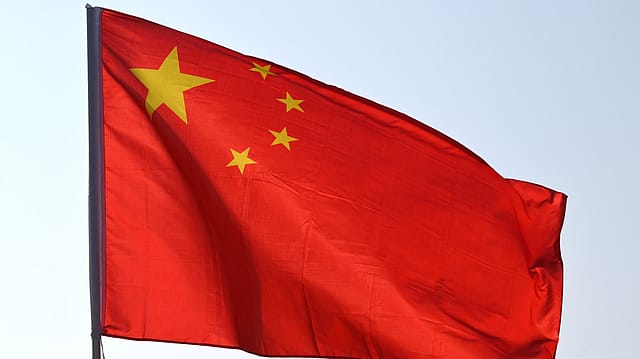
As global attention remains sharply focused on the Taiwan Strait, former US Marine intelligence officer Grant Newsham has cautioned India and the wider international community against underestimating China’s intentions and strategic deception, warning that Beijing could choose to strike elsewhere, including India, when least expected.
Newsham’s remarks come against the backdrop of a recent Pentagon report submitted to the US Congress, which flagged China’s claim over India’s Arunachal Pradesh as part of its stated “core interests”.
The report underscored Beijing’s broader national strategy aimed at achieving the “great rejuvenation of the Chinese nation” by 2049.

The Modi Years
02 Oct 2026 - Vol 05 | Issue 40
A Nation Rebuilt
In a conversation with ANI, Newsham said India must remain forewarned and vigilant, particularly as Chinese President Xi Jinping oversees major rejigs within the People’s Liberation Army.
According to him, these structural changes could prompt Beijing to test its military readiness through a limited or unexpected conflict.
“Look where everyone else isn’t”: Newsham warns against Taiwan tunnel vision
“I hope somebody’s ready for that. You know, years ago, a foreign reporter told me, this is back when foreign reporters were actually good, when the name meant something. And he said, you know, you should always look where everybody else isn’t. And when all the focus is on Taiwan, and that’s all the talk, and people are saying, well, we’ve got two years or 2027, or we have two weeks. But if you’re focusing on that, well, you do well to look in other places as well,” Newsham said.
He warned that Beijing’s public messaging should not be taken at face value, describing deception as intrinsic to the Chinese Communist system. While Taiwan dominates global strategic calculations, Newsham said China could attempt to surprise the world by opening a front elsewhere.
“Everything about the PR of the Chinese and not just the Chinese communist system is deceptive. And it’s part and parcel of how they operate. So while everyone’s looking at Taiwan, expecting them to do a certain thing at roughly a certain time, well, I wouldn’t be surprised to be surprised. And India is not a bad place to do that. It could be the Korean Peninsula, southern Japan, the Philippines. You can think of a few places,” he said.
He added that an excessive fixation on Taiwan could leave other vulnerable theatres exposed.
“But if you just think Taiwan and you get all greased up and everything’s looking at that, well, you’re setting yourself up. And that’s where the smart people can catch their breath and step back and look elsewhere, see where they might go. And India has got to be on that list or someplace that is of great interest to India,” Newsham said.
‘Don’t Fixate on One Flashpoint’: Newsham Warns Against Taiwan-Only Focus
“Looking somewhere where the world isn’t is the best advice to follow,” Newsham said.
He noted that human nature often leads policymakers to fixate on a single anticipated flashpoint, even though events may unfold very differently.
“And you’d have to do that. And I think that the US side, I think we’re fortunate, and I’m not being nice, it’s actually to have a country that is willing to look after itself. And we haven’t had many of those that are. And I don’t need to tell India what the China threat is. Although, like us, there’s plenty of people in India who would tell you there is no threat. But that’s certainly on the list. But don’t look where everyone else isn’t. Or how do I say it? Looking where everyone else isn’t is the best approach. And its sort of common sense, but human nature is what it is. And we tend to get a fixation on whatever we think is going to happen and where. But it could be wrong,” he said.
Addressing the argument that the Chinese military lacks recent combat experience, Newsham pointed to past confrontations to counter that perception. He recalled clashes with Vietnam and the violent face-off with Indian troops in eastern Ladakh’s Galwan Valley.
“I would also note, and it’s an important thing because you hear it all the time, that while the Chinese haven’t fought a war forever, a real war, or since maybe the Korean War, the Vietnam shoot-up, or gunning down some Vietnamese Marines and sailors on a standing knee-deep in water down in the Paracel Islands in the 80s. You had hand-to-hand combat with Indian troops. Oh, that’s true. The Chinese came out on the short end of that. Yes. And probably on the much shorter end than was announced. And a war against India, of course. But you hear it. They’re not a tested force,” he said.
PLA ‘Peace Disease’ No Comfort
Newsham cautioned against taking comfort in the absence of recent large-scale Chinese combat operations, stressing that sustained training could still enable the PLA to carry out specific objectives if called upon.
“If you know what you’re about, you train well, you can catch on to what needs done very quickly. So I tend to, I don’t take much comfort in that fact that the Chinese military hasn’t done, hasn’t fought an actual war for a long time. And the Chinese themselves talk about
the peace disease, which means that they haven’t fought. But the military really only has to be good enough to do a certain thing at a certain place at a certain time,” he said.
The Pentagon report, meanwhile, has added to concerns in New Delhi by formally highlighting China’s territorial claims over Arunachal Pradesh, placing them within the framework of Beijing’s long-term national rejuvenation strategy.
Together with Newsham’s warnings, the assessment reinforces calls for India to remain alert to threats that may emerge far from the world’s current strategic spotlight.
(With inputs from ANI)