Pakistan’s Debt Trap: Why Shehbaz Sharif Says the Country Is ‘Begging for Money’
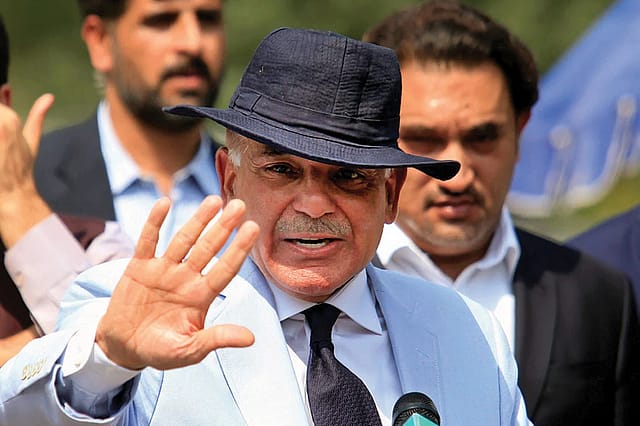
Pakistan’s Prime Minister Shehbaz Sharif rarely sounds this raw.
Standing before exporters and business leaders in Islamabad, Sharif laid bare a truth Pakistani leaders have long avoided saying aloud: that the country’s dependence on foreign loans has become a humiliation.
“We feel ashamed,” Sharif admitted, referring to himself and Army Chief Field Marshal Asim Munir. “We go around the world begging for money. Taking loans is a huge burden on our self-respect. Our heads bow down in shame.”
It was not just an expression of frustration. It was an acknowledgement of how deeply Pakistan’s economic crisis has eroded its sovereignty.
A country running on rollovers
Pakistan today survives on financial life support.
As Islamabad negotiates IMF programmes and debt rollovers, its economic stability rests largely on four capitals: Beijing, Riyadh, Abu Dhabi and Doha. These countries have stepped in repeatedly to prevent a balance-of-payments collapse—rolling over deposits, extending oil credit, and promising fresh investments.
The Modi Years
02 Oct 2026 - Vol 05 | Issue 40
A Nation Rebuilt
China alone has rolled over billions of dollars in deposits, with another $4 billion projected for 2024–25 under the broader umbrella of the China-Pakistan Economic Corridor (CPEC), a $60-billion bet on Pakistan’s infrastructure and energy backbone.
Saudi Arabia has extended deposits, deferred oil payments, and pledged investments potentially worth up to $25 billion. The UAE has rolled over loans and committed funds across energy, ports and wastewater treatment. Qatar, meanwhile, has signed protocols for $3 billion in investments and remains a crucial LNG supplier. But these inflows keep Pakistan afloat. They do not make it swim.
The crisis beneath the numbers
Sharif’s candour comes against a grim socioeconomic backdrop.
Poverty is surging. Estimates suggest up to 45% of Pakistan’s population now lives below the poverty line, nearly double the level seen in 2018. Extreme poverty has more than tripled, fuelled by inflation, devastating floods, and chronic macroeconomic instability.
Unemployment stands at around 7.1%, with over eight million people jobless. For many more, especially educated youth, underemployment in the informal sector has become the norm.
Exports remain trapped in low-value textiles and commodities. Sectors like software, agriculture and livestock hold promise, but productivity, innovation and R&D continue to lag.
Debt as destiny
Pakistan’s public debt has crossed Rs 76,000 billion, nearly doubling in just four years. The country is now on its 23rd IMF programme, a staggering statistic that underscores how borrowing has replaced reform.
Loans no longer fund growth. They service old loans.
Once, Pakistani leaders framed foreign aid as “brotherly support” or “strategic partnership.” For decades, the country monetised its geography—first during the Cold War, later during the War on Terror. That geopolitical rent has largely dried up.
Today, by involving the Army Chief in loan negotiations, Islamabad sends a stark signal to creditors: the military—the only institution widely seen as stable—stands behind the debt. Civilian and military lines blur, even as democratic credibility weakens.
The deeper irony
Perhaps the most jarring contradiction lies in priorities.
Even as citizens battle inflation, energy shortages and unemployment, reports suggest Pakistan spent heavily to secure influence on Donald Trump’s “Board of Peace”—a move that has raised uncomfortable questions about perception management versus public welfare.
Sharif’s admission, blunt and unsparing, confirms what many already feared: Pakistan’s crisis is no longer cyclical. It is structural.
And for the first time in years, the country’s leadership is saying so—without euphemism.
(With inputs from ANI)