Xi’s PLA Purge Explained: Power, Paranoia and the Taiwan Question
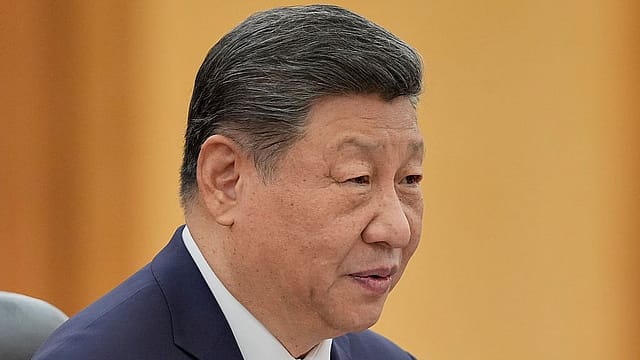
When Xi Jinping ordered the detention of two of China’s most powerful military figures, the shockwaves rippled far beyond Beijing’s barracks.
The arrests of General Zhang Youxia, vice chairman of the Central Military Commission (CMC), and General Liu Zhenli, chief of staff of the PLA’s Joint Staff Department, marked one of the most dramatic upheavals in the Chinese military since Mao’s era. Announced on January 24, the move immediately raised an unsettling question: does Xi still trust his own army?
Zhang was no marginal figure. As the highest-ranking uniformed officer in the PLA and a CMC vice chairman due to retire next year, he sat at the apex of China’s military power. Liu, a regular CMC member, was central to operational planning. Their sudden removal hollowed out the PLA’s professional leadership—and left the CMC with just two members. This is now the smallest CMC since the Cultural Revolution.
Rise of the Pivotal Power
18 Sep 2026 - Vol 05 | Issue 38
The BRICS declaration is a strategic victory for Modi
A military commission reduced to a shell
Xi’s consolidation has been methodical. When he assumed power in 2012, the CMC had 11 members. By 2022, it had been cut to six. Before this latest purge, He Weidong, Li Shangfu and Miao Hua had already fallen. Reports suggest He Weidong, a former vice chairman, later died by suicide.
What remains is a command structure stripped of operational depth.
The only uniformed officer left in the CMC is General Zhang Shengmin, promoted in October 2025. A lifelong political commissar and discipline inspector, Zhang has no combat experience and little operational expertise. What he does possess, according to insiders, is something else entirely: files on everyone.
Feared more than respected, Zhang oversees the PLA’s political security and internal purge machinery. His rise underscores a defining shift—from professional military leadership to political surveillance.
Loyalty to the man, not the institution
The official justification for the purge is that Zhang and Liu abused the “CMC chairman responsibility system.” But legal scholars say that phrase reveals more than it explains.
Under 2017 regulations, CMC members are required not just to obey orders, but to “reassure Xi”. As Henry Gao of Singapore Management University notes, this is loyalty not to an office, but to a person.
The implication is stark: the generals may not have failed militarily—they may have failed emotionally. They did not sufficiently reassure the chairman.
That reading lends weight to rumours that Xi’s commands were questioned, delayed, or insufficiently embraced. In today’s PLA, truth matters less than reassurance.
Politics, not espionage
Speculation initially swirled that Zhang had leaked nuclear secrets to the US. But former Canadian diplomat Michael Kovrig, who spent 1,019 days detained in China, dismissed that narrative.
“Operationally and politically, it doesn’t fit,” Kovrig said. “This looks far more like politics than espionage.”
Corruption, he argued, was likely a tool, not the cause. The PLA’s “pay-to-be-promoted” culture created vast patronage networks. Procurement corruption flourished while leaders were useful—and became actionable when they weren’t. Selective enforcement, not sudden morality, drove the purge.
Fear spreads through the ranks
As rumours raced through Chinese social media—claims of thwarted mutinies, mass arrests, and restricted troop movements—one thing became clear: fear has replaced confidence.
Even unverified, such whispers have consequences. Associates of Zhang and Liu are now watching doors nervously, aware that proximity to power can be a liability. In Xi’s China, the more capable and connected you are, the more dangerous you appear.
Since 1949, nine CMC vice chairmen have been purged—many branded traitors. Each removal further isolates Xi from the very institution meant to protect him.
What does this mean for Taiwan?
At first glance, the purge might look like preparation for war. But most analysts see the opposite.
Nathan Attrill and Andrew Wilford of the Australian Strategic Policy Institute (ASPI) argue the purge likely reduces the chances of imminent military action against Taiwan.
Their reasoning is blunt. First, Xi appears unconvinced of the PLA’s readiness. Second, leadership churn disrupts planning for complex joint operations. Third, anti-corruption campaigns breed risk aversion, not initiative. Fourth, the oft-cited 2027 Taiwan timeline is a capability target, not a deadline. “Purges at this level usually signal doubt, not confidence,” they wrote. That said, risk hasn’t vanished—it has shifted. To prove the PLA remains formidable, Beijing may step up coercive drills, air patrols and naval activity around Taiwan, raising the risk of miscalculation.
A force built on fear
Ultimately, Xi’s purge reflects a deeper dilemma.
He has concentrated power upward and personalised it, thinning institutional resilience in the process. The PLA increasingly functions not as a professional military, but as an extension of Xi’s will. Routine decision-making sinks downward. Trust evaporates. Autonomy disappears. Xi has no military background—and no safe exit. Every purge tightens control, but also raises personal risk.
As Dr Zi Yang of Singapore’s RSIS put it, January 24, 2026 will be remembered as a watershed moment when the PLA’s collective leadership became collective in name only.
The paradox is unavoidable: The more Xi tightens his grip on the PLA, the weaker it may become when tested.
(With inputs from ANI)