Big Relief or Respite? LPG Vessels Shivalik, Nanda Devi Pass the Hormuz Test
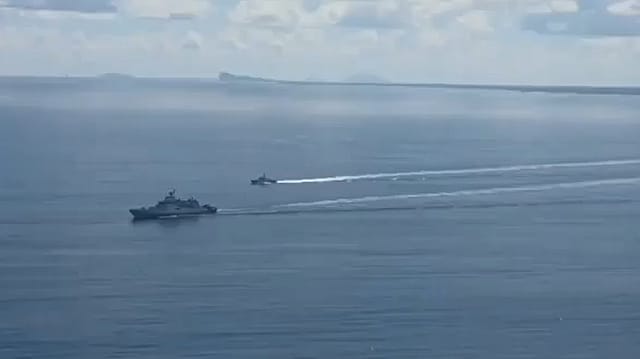
Two Indian-flagged vessels carrying liquefied petroleum gas (LPG) are on their way to India after being allowed to leave the Strait of Hormuz amid the ongoing tensions between Iran and the United States.
What comes as good news for people in India amid the ongoing LPG cylinder shortage across the country is that the LPG cargo vessel Shivalik, carrying over 45,000 metric tonnes of liquefied petroleum gas, is expected to reach India today.
Indian Navy’s stealth ship INS Trikand and CGS Valiant deployed in the Gulf and Oman are on their mission to jointly escort Shipping Corporation of India’s LPG tanker Shivalik in the Gulf of Oman and Arabian Sea amid heightened regional tensions.

Flood and Fury
04 Sep 2026 - Vol 05 | Issue 36
Devighat, Nepal, August 29, 2026
Rajesh Kumar, Special Secretary, Ministry of Ports, Shipping and Waterways, said during an inter-ministerial briefing on the West Asia war, “In the Persian Gulf, on the west of the Strait of Hormuz, there were 24 Indian-flag vessels, out of which, two vessels — Shivalik and Nanda Devi — carrying LPG crossed the Strait of Hormuz safely early morning on Saturday and are heading towards India.”
When will LPG vessel Shivalik reach Mundra port in India?
The vessels, Shivalik and Nanda Devi, were granted permission by Iran on March 14 to exit the strategic waterway, which has faced disruptions due to the conflict in the region.
The Indian vessels had been stuck near the Strait of Hormuz due to the ongoing conflict between the United States and Iran.
According to Rajesh Kumar, Special Secretary in the Ministry of Ports, Shipping and Waterways, the two vessels together are carrying about 92,700 metric tonnes of LPG.
Of this, the Shivalik is transporting around 45,000 metric tonnes and is heading towards Mundra Port in Gujarat, while the Nanda Devi, carrying roughly 47,700 metric tonnes, is expected to dock at Kandla Port.
The vessel Shivalik is expected to reach Gujarat’s Mundra port this afternoon, according to an India Today report.
How many Indian vessels remain stranded near the Strait of Hormuz?
Rajesh Kumar also said that all Indian seafarers in the Persian Gulf region are safe, and no untoward incidents involving them have been reported over the last 24 hours.
About 22 Indian-flagged ships remain stranded in the Persian Gulf and have not yet been able to exit the Strait of Hormuz.
Another vessel, Jag Ladki oil tanker, carrying approximately 80,800 tonnes of crude oil, has also exited the strait and is heading towards India.
According to External Affairs Minister S Jaishankar, the country does not have any blanket arrangement with war-torn Iran to allow Indian vessels to use the strategic waterway.
During an interview with the Financial Times, the EAM said that India has not offered any concessions to the Middle East country in exchange for shipping access through the Strait of Hormuz gateway.
Why has the Centre urged citizens not to panic-book LPG and fuel in India?
Jaishakkar said, “It’s not an exchange issue,” highlighting that the recent movement of Indian LPG vessels was the result of diplomatic talks rather than offering any kind of deal.
He added that he spoke to his Iranian counterpart Abbas Araghchi four times since tensions escalated. The EAM further talked about India’s stance that the country firmly believes that diplomatic talks are the best way to resolve the issue.
The Centre also urged citizens not to engage in panic booking of LPG and panic buying of petrol and diesel.
The Ministry of Petroleum said in a statement that fuel supplies are stable and sufficient across the country and advised citizens against storing fuel in loose containers as it could pose serious safety risks.
However, officials and experts note that the cargo carried by the two ships may provide only limited relief to India’s LPG supply.
India has nearly 330 million domestic LPG consumers and the country’s daily consumption exceeds 80,000 tonnes. Based on this demand, the combined cargo of the two ships would meet slightly more than a day’s national requirement.
Officials noted that the vessels take around three to four days to travel from the Strait of Hormuz to Indian ports, meaning the supply arriving through these ships is unlikely to significantly ease concerns over LPG availability in the immediate term.