Why India and Venezuela Are Deepening Energy Ties Amid Global Supply Challenges
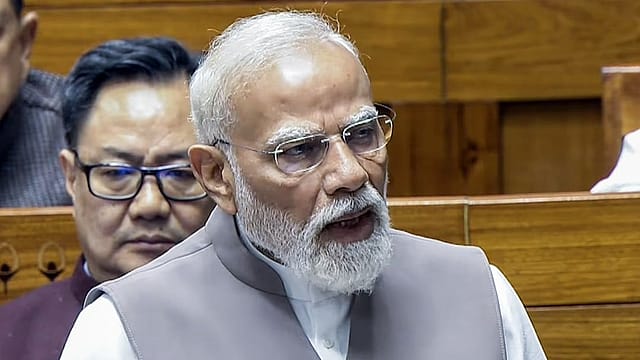
India and Venezuela are exploring new avenues of cooperation, with energy emerging as the centerpiece of discussions between Prime Minister Narendra Modi and Venezuelan Acting President Delcy Rodriguez during her visit to India. The talks come at a time when India is seeking to diversify its crude oil sources amid disruptions in global energy supplies caused by the ongoing crisis in West Asia.
According to the Ministry of External Affairs (MEA), the discussions extended beyond oil and gas to include sectors such as mining, pharmaceuticals, automobiles, agriculture, transportation and animal husbandry, reflecting a broader push to strengthen economic engagement between the two countries.
Why is energy cooperation at the heart of India-Venezuela relations?
The strongest area of convergence between India and Venezuela lies in the energy sector. Venezuela possesses some of the world's largest oil reserves, while India is one of the world's fastest-growing consumers of crude oil.

Look Who's Talking Regime Change
23 Oct 2026 - Vol 05 | Issue 43
Highlighting this synergy, MEA Secretary (East) Rudrendra Tandon said, "Venezuela has already emerged as the third largest supplier, this month, so naturally today's discussions focused on forging an energy partnership. They see India as a stable demander for many years to come. Therefore, there exists a perfect complementarity for India and Venezuela to work in the energy sector, both upstream and downstream."
Tandon explained that the relationship is built on complementary economic needs.
"This creates a strong natural complementarity between the two economies in the energy sector," he said.
He further noted, "Against this backdrop, discussions have focused on building a structured energy partnership. Although the details of the deliberations remain confidential, it is evident that Venezuela's energy sector is undergoing a significant transformation."
The reference to upstream and downstream cooperation suggests potential collaboration not only in oil production and exploration but also in refining, processing and related industrial activities.
Why is India looking to diversify its crude oil imports?
India imports the majority of its crude oil requirements and has increasingly sought to diversify suppliers to reduce risks associated with geopolitical tensions and supply disruptions.
The ongoing instability in West Asia has reinforced the importance of securing alternative and reliable energy partners. Venezuela's growing role as a crude supplier aligns with India's broader strategy of ensuring long-term energy security through diversified sourcing.
The emergence of Venezuela as India's third-largest crude supplier underscores the growing significance of the relationship.
Which sectors beyond energy were discussed?
While oil dominated the talks, both sides explored opportunities across a wide range of sectors.
Tandon said, "Venezuela is a very large country which is resource-rich has talented hardworking people that is now showing the first signs to moving to a path of sustained growth. So there are huge opportunities not just in the energy sector but also in areas like mining, in areas like animal husbandry, transportation, agriculture, equipment, the automotive sector and pharmaceuticals. These two were discussed and the whole idea was to try and work out ways in which Indian commercial entities can enter the Venezuelan market successfully and a new partnership in these areas can be forged."
The discussions focused on creating opportunities for Indian companies to establish a stronger presence in Venezuela, particularly in sectors where Indian expertise and manufacturing capabilities could complement Venezuelan resources and market requirements.
What investment opportunities are being explored?
The talks also examined possibilities for Indian investment in Venezuela's mining and critical minerals sectors, which are becoming increasingly important globally due to their role in clean energy technologies and advanced manufacturing.
According to the MEA, Prime Minister Modi and Rodriguez explored opportunities for Indian companies to invest in mining, critical minerals, pharmaceuticals and automobiles.
Indian public sector companies already have a presence in Venezuela's energy sector, and both sides are keen to explore avenues for expanding these investments.
Why does Venezuela consider India a preferred partner?
Officials indicated that the relationship is built on years of engagement and mutual support.
Tandon said, "Overall, I would say that the conversation was very business-like, very substantive. There was genuine warmth between the two delegations and an acknowledgment by the Venezuelan side that India has stood with Venezuela in bad times as well as in good times. It's a long relationship and we are a preferred partner for them going into the future."
He also noted that Venezuela sees India as a "preferred partner going into the future," reflecting confidence in the long-term trajectory of bilateral ties.
What is the significance of Delcy Rodriguez's India visit?
Rodriguez is on a working visit to India from June 3 to June 6 and is leading a high-level delegation.
"She is accompanied by a very large ministerial delegation that included ministers of foreign affairs, communication and information, economy and finance, science and technology and the minister of transportation," Tandon said.
The Acting President has held meetings with Prime Minister Narendra Modi, External Affairs Minister S. Jaishankar and Petroleum and Natural Gas Minister Hardeep Singh Puri.
"This morning she met Prime Minister Modi for official talks, which went over a working lunch as well. Earlier in the morning, External Affairs Minister Dr S Jaishankar called on her and later in the day as we speak today just now the minister of petroleum will be calling on her," Tandon said.
How is India showcasing its industrial capabilities to Venezuela?
A key objective of the visit is to expose Venezuelan policymakers to India's industrial and technological strengths.
Tandon said Rodriguez is "being exposed to Indian sophistication in the energy sector" so that she can get "a first hand view of the potential that exists on the indian side."
The Venezuelan delegation is expected to visit facilities linked to India's energy, pharmaceutical and automobile sectors. According to the MEA, these visits are intended to provide insights into India's technological capabilities and help identify new areas for commercial collaboration.
What could this mean for future India-Venezuela relations?
The discussions indicate a shared interest in moving beyond a traditional buyer-seller relationship in oil toward a broader strategic economic partnership. With Venezuela seeking investment and economic revival, and India looking for reliable energy sources and new overseas opportunities for its companies, both countries appear to see substantial mutual benefits.
If the plans discussed during Rodriguez's visit translate into concrete agreements, India-Venezuela ties could expand significantly across energy, mining, manufacturing, pharmaceuticals and infrastructure, creating a more diversified and resilient bilateral economic relationship.
(With inputs from ANI)