Nepal Foreign Minister Shisir Khanal to Visit India: What the High-Level Diplomatic Trip Means
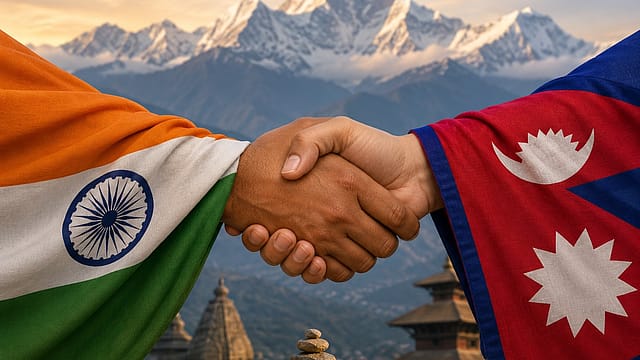
Nepal’s Minister for Foreign Affairs, Shisir Khanal, is set to undertake an official visit to India from June 5 to 7, marking the highest-level official engagement between the two countries since Nepal’s recent political transition.
The visit follows an invitation from India’s External Affairs Minister, S Jaishankar, and comes at a time when Kathmandu and New Delhi are seeking to strengthen cooperation across a wide range of sectors.
Why Is This Visit Significant?
The visit is the first major bilateral engagement since Nepal underwent a dramatic political transformation earlier this year. Prime Minister Balendra “Balen” Shah assumed office on March 27 after his party, the Rastriya Swatantra Party (RSP), secured a landslide victory in elections that followed a sweeping Gen-Z-led political uprising.
The political change has drawn considerable international attention, and India has moved quickly to engage with the new leadership in Kathmandu. Prime Minister Narendra Modi was the first global leader to congratulate Shah following his electoral victory, signalling New Delhi’s intent to maintain close ties with Nepal’s new government.
Against this backdrop, Khanal’s visit is being viewed as an opportunity to reaffirm strategic trust and establish the framework for future cooperation under Nepal’s new political leadership.
What Will Be Discussed During the Visit?
Foreign Minister Khanal is scheduled to hold formal talks with External Affairs Minister S Jaishankar in New Delhi. According to Nepal’s Foreign Ministry:

Exclusive: To the Heavens and Back
19 Jun 2026 - Vol 04 | Issue 76
Shubhanshu Shukla relives the space odyssey that put India into orbit
“During the visit, Minister for Foreign Affairs Mr Khanal will hold a formal meeting with Minister of External Affairs of India Dr Jaishankar in New Delhi. The two sides will discuss matters of mutual interest, with a view to enhancing cooperation across key areas including trade, investment, connectivity, energy and people-to-people ties.”
The discussions are expected to focus on expanding economic cooperation, boosting investment flows, improving physical and digital connectivity, strengthening energy partnerships, and further deepening the extensive social and cultural links that connect the two neighbouring countries.
How Does the Visit Fit Into Nepal-India Diplomatic Engagement?
The trip forms part of the regular exchange of high-level visits between the two countries. Nepal’s Foreign Ministry said:
“As part of regular exchange of high-level visits, this visit will further consolidate the enduring and multifaceted bilateral relations between Nepal and India.”
The visit is therefore intended not only to address current policy priorities but also to reinforce the broader diplomatic relationship that has evolved over decades.
What Other Political Developments Are Taking Place?
The announcement comes as another senior Nepalese political figure is engaging with Indian leadership. Rastriya Swatantra Party President Rabi Lamichhane is also visiting India and met Prime Minister Narendra Modi in New Delhi on Wednesday.
These parallel engagements indicate an active phase in Nepal-India diplomacy as both sides seek to establish strong working relationships with Nepal’s new political leadership.
Why Does India Remain an Important Partner for Nepal?
India continues to be one of Nepal’s most significant development partners. The relationship dates back to the early years of Nepal’s modern development journey.
Development cooperation began in 1951 with Indian support for infrastructure projects, including Kathmandu’s Gauchar Airport, which was completed in 1954. The establishment of the Indian Aid Mission in 1954 further expanded cooperation in sectors such as connectivity, healthcare, education, and power.
Over the decades, the partnership has broadened considerably to include agriculture, archaeology, archival preservation, cultural heritage conservation, capacity building, and other developmental initiatives.
What Could Be the Broader Impact of the Visit?
Khanal’s visit is expected to set the tone for Nepal-India relations under Nepal’s new government. With both countries prioritising economic growth, connectivity, energy security, and regional stability, the discussions could pave the way for fresh agreements and enhanced collaboration.
The visit also underscores the enduring importance of Nepal-India ties, which are rooted not only in diplomacy and economics but also in deep historical, cultural, and people-to-people connections. As Kathmandu’s new leadership charts its policy priorities, maintaining a strong and constructive partnership with New Delhi is likely to remain a key strategic objective.
(With inputs from ANI)