Awami League Leader Selina Hayat Ivy Walks Free Amid Debate Over Party Ban
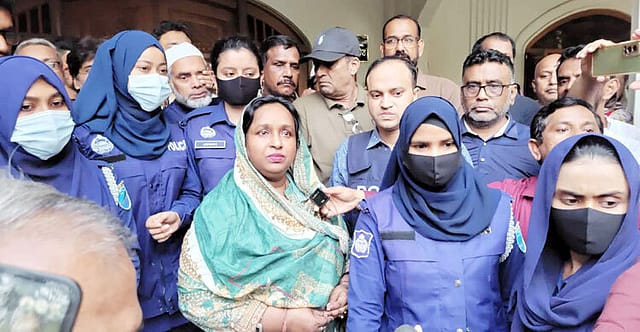
The release of prominent Awami League leader Selina Hayat Ivy has reignited discussion about the future of Bangladesh's oldest major political party and the sustainability of its continued political ban.
Ivy, the former mayor of Narayanganj City Corporation and one of the Awami League's most recognizable leaders, was released from Kashimpur jail on Wednesday night. Her release comes amid shifting political dynamics following Bangladesh's recent elections and the formation of a new government led by the Bangladesh Nationalist Party (BNP).
Who Is Selina Hayat Ivy and Why Was She Arrested?
Selina Hayat Ivy is a senior Awami League leader who served as the mayor of Narayanganj City Corporation and has long been regarded as one of the party's prominent grassroots figures.
She was arrested at her residence during an overnight operation in September last year. The arrest took place during the tenure of the interim government led by Nobel laureate Muhammad Yunus, which came to power after former Prime Minister Sheikh Hasina fled to India during the July-August 2024 student-led uprising.
Her detention became one of several high-profile cases involving Awami League leaders following the dramatic political changes that reshaped Bangladesh's political landscape.
What Did Ivy Say After Her Release?
After walking free from jail, Ivy struck a conciliatory tone and called for unity.
"I want everyone together to establish a humane government," Ivy told reporters.

Exclusive: To the Heavens and Back
19 Jun 2026 - Vol 04 | Issue 76
Shubhanshu Shukla relives the space odyssey that put India into orbit
She also appealed to the authorities to show compassion toward others who remain in custody, urging the government to extend mercy to innocent detainees.
Her remarks are being viewed as an attempt to emphasize reconciliation at a time when Bangladesh remains politically polarized.
Why Is Her Release Significant?
Ivy's release is significant because it marks another instance of a senior Awami League figure securing bail through the courts.
Earlier, former parliament speaker Shirin Sharmin Chaudhury had also been released. These developments have raised questions about whether more Awami League leaders could eventually return to public life despite the party's current political restrictions.
Notably, Ivy is among the few Awami League leaders to have successfully obtained bail since the BNP-led government assumed office following the February 12 election.
What Is the Current Status of the Awami League?
The Awami League remains barred from political activities despite being one of the most influential parties in Bangladesh's history.
The party dominated national politics for years under Sheikh Hasina and played a central role in Bangladesh's political evolution since independence. However, its position dramatically weakened after the 2024 political upheaval and the subsequent transition of power.
The question of whether the party should remain banned has become one of the most sensitive political issues facing the new administration.
Why Is the International Crisis Group Calling for a Reassessment?
The International Crisis Group (ICG) has argued that the government will eventually need to confront the issue of the Awami League's future.
Thomas Kean, Senior Consultant on Bangladesh and Myanmar at the International Crisis Group, said: "The BNP government will also have to address the politically sensitive question of the Awami League's future. Given its pivotal role in Bangladesh politics since independence, the party's temporary ban is not sustainable over the longer term."
The statement reflects growing international attention on Bangladesh's evolving democratic landscape and the long-term viability of excluding a historically dominant political force from the country's political process.
What Could Happen Next?
While the BNP government has not indicated any immediate change in policy regarding the Awami League, Ivy's release and the growing debate among international observers suggest that discussions about the party's future are likely to intensify.
The government faces the challenge of balancing political accountability, public sentiment, and democratic inclusiveness. As more senior Awami League figures secure legal relief, pressure may increase to define a long-term framework for the party's participation in Bangladesh's political system.
For now, Ivy's release represents both a personal legal victory and a symbolic moment in the broader debate over reconciliation, political inclusion, and the future direction of Bangladesh's democracy.
(With inputs from ANI)