Big Blow to India’s Oil Lifeline as US Scraps Waiver on Russian and Iranian Crude
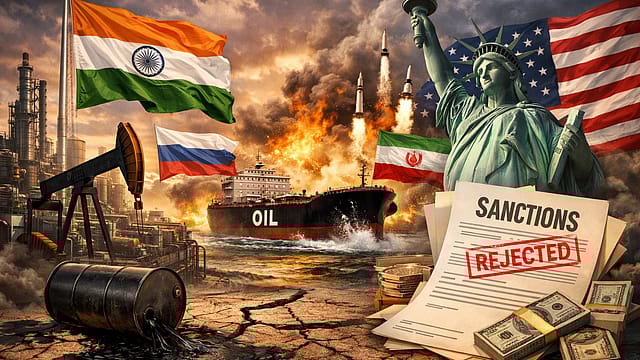
The United States has decided not to renew a general license that allowed limited transactions involving Russian and Iranian oil, signalling a shift in its approach to managing global energy supplies amid heightened geopolitical tensions.
United States Secretary of the Treasury Scott Bessent on Wednesday (US time) said the waiver, introduced as a temporary measure, had served its purpose and would not be extended.
"We will not be renewing the general license on Russian oil and Iranian oil. That was oil that was on the water prior to March 11th. All that has been used," Bessent said during a media briefing.

The Health and Wellness Issue
25 Sep 2026 - Vol 05 | Issue 39
India had emerged as a major beneficiary of the sanctions waivers, which enabled New Delhi to continue purchasing Russian oil even as disruptions around the Strait of Hormuz left several vessels stranded at sea.
The decision marks the end of the Donald Trump administration’s effort to use limited sanctions relief to stabilise global oil markets.
Energy prices have surged worldwide, including in the United States, following the escalation of conflict in West Asia.
How did the Strait of Hormuz crisis shape the US waiver policy on Russian crude?
The temporary waivers were designed to ease supply pressures by allowing transactions involving oil already loaded onto vessels before specific deadlines.
This ensured that shipments could reach global markets and help moderate price spikes during the conflict.
Following Iran’s move in March to place the Strait of Hormuz, a route that carries around 20 per cent of global crude and liquefied natural gas, under its control, Washington issued a 30 day licence permitting delivery and sale of Russian crude loaded before March 12. That waiver expired on April 11.
A similar relaxation for Iranian oil was introduced by the Treasury Department on March 20, allowing approximately 140 million barrels to reach global markets. The waiver is scheduled to expire on April 19.
The decision not to renew these measures comes as Washington reinforces a "maximum pressure" strategy on Iran amid the ongoing conflict.
Meanwhile, the United States Department of the Treasury’s Office of Foreign Assets Control has imposed fresh sanctions targeting what it described as "Iran's illicit oil transportation infrastructure."
The measures cover around two dozen individuals, companies, and vessels, according to a report by Al Jazeera.
The Treasury said the network was linked to Iranian oil shipping figure Mohammad Hossein Shamkhani, identified as the son of a senior adviser to Iran’s former Supreme Leader Ali Khamenei.
Bessent said the administration would continue to "cut off Iran's illicit smuggling and terror proxy networks."
The move underscores a broader push by the United States to intensify economic pressure on Iran, particularly targeting its energy sector, even as the region faces continued instability and supply disruptions linked to the conflict.
(With inputs from ANI)