2,000+ Flights Cancelled in One Day: How the US–Israel–Iran War Is Disrupting Global Travel
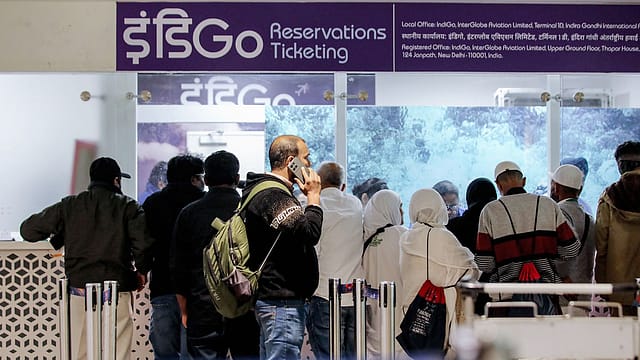
As the conflict between the United States, Israel, and Iran escalates to an unprecedented scale, the ripple effects have crashed into the global aviation system. From Delhi to Dubai, London to Doha, airlines are suspending flights, rerouting paths, and leaving thousands of travellers stranded mid-journey.
Here's a quick update on the crisis.
How bad are the global cancellations right now?
Over 2,000 flights to and from the Middle East were cancelled on March 1 alone, representing nearly 50% of the region's entire scheduled air traffic for that day. The Ministry of Civil Aviation (MoCA) confirmed that 350 flights operated by Indian domestic carriers were cancelled on March 1 alone. This followed 410 cancellations recorded the previous day, February 28.

Greening the Future
23 Jul 2026 - Vol 05 | Issue 30
Securing a sustainable India
Airlines are describing it as one of the most severe aviation crises in recent memory.
Which countries have closed their airspace?
The list is long and growing. Total or partial airspace closures are currently in effect across Iran, Israel, Iraq, Syria, Jordan, Kuwait, Qatar and Bahrain. Airlines receive these restrictions through NOTAMs - Notices to Airmen - and these NOTAMs are being extended on a daily basis as the ground situation remains dangerously fluid.
Are major international transit hubs affected?
Yes, and some of the world's busiest airports were physically impacted besides being shut down. Key international transit hubs, including Dubai (DXB), Doha (DOH), and Abu Dhabi (AUH) - which collectively handle tens of millions of passengers a month - have faced significant operational pauses. Strikes were reported near Dubai and Zayed International, with casualties and injuries.
Emirates has suspended all operations to and from Dubai until 3:00 PM UAE time today.
Which airlines have suspended their services?
The suspensions span across continents. Air India has extended its suspension of flights to the UAE, Saudi Arabia, Israel, and Qatar until midnight on March 2. Major international carriers including Lufthansa, Air France-KLM, and United Airlines have similarly halted services to the region, with Lufthansa’s suspension extending till March 8.
What happens to flights that are still operating? Are they taking longer routes?
Yes, significantly longer. To avoid active conflict zones, airlines are being forced onto extended alternative routes, reportedly increasing flight times by up to 3 hours and pushing fuel consumption up by nearly 29%. The cost implications are enormous, and those costs will inevitably trickle down to passengers.
Some Europe-bound flights from India are now requiring unscheduled technical stops in cities like Rome just to refuel before completing their journeys.
What about passengers who are already stranded?
Thousands of travellers are currently stranded at major hubs worldwide, with many unable to find connecting flights or re-routes. Indian carriers IndiGo and Akasa Air are reportedly offering full refunds or free rescheduling for impacted bookings through March 7. If you have a flight booked through the region, contacting your airline directly and checking their rebooking policies is now urgent.
Is this only a Middle East problem, or are other corridors affected too?
The crisis extends well beyond the Middle East. Asia-to-Europe travel routes are being squeezed from multiple directions simultaneously. Pakistan has extended its existing ban on Indian civilian aircraft until March 23, 2026, which has already been narrowing available flight corridors for months.
Now, with Middle Eastern airspace largely closed, the available paths for flights between South Asia and Europe have been dramatically reduced, pushing even more traffic onto fewer, longer routes.
How long could this disruption last?
Industry observers say the duration is entirely dependent on how quickly or slowly the geopolitical situation de-escalates. Given that NOTAMs are currently being extended day by day, there is no reliable timeline. Airlines are, for now, making decisions on 24 to 48-hour cycles, which makes advance planning for passengers extraordinarily difficult.
What should travellers do right now?
Anyone with upcoming travel through or to the Middle East should check their airline's website for the latest updates, look out for proactive rebooking offers, and avoid assuming their flight will operate as scheduled. Travel insurance that covers conflict-related cancellations is worth examining carefully. And if you're booked on a carrier that has issued a blanket suspension, reach out immediately - seats on alternative routes are filling up fast.
(This story was published at 1:35pm IST)
(With inputs from yMedia)