T20 World Cup: So Close, Again, New Zealand
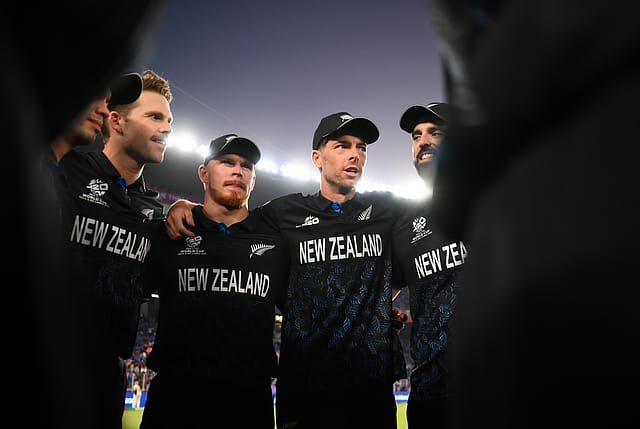
India had a plan for Mitchell Santner. They had a plan for Finn Allen. They had an almost plan for Tim Seifert.
New Zealand, on the other hand, faltered in their Plan A: countering Jasprit Bumrah.
There is a very particular kind of suffering that comes with watching New Zealand play (and lose) in the final of an ICC tournament. It is quiet and dignified. And by now, it is devastatingly familiar.
On Sunday night in Ahmedabad, inside a stadium roaring with 86,000 Indian supporters, the Black Caps walked off the field having lost their fifth ICC white-ball final in eleven years—this time to India by 96 runs. It was comprehensive. It was, in the brutally honest language of sport, a thrashing. But somehow, even in a thrashing, New Zealand managed to be the team you wanted to hug.

Zeroing In on ECI
09 Oct 2026 - Vol 05 | Issue 41
Constitutional legitimacy versus political opportunism
Because here is the complicated thing about being a neutral at a New Zealand game, or even a fan of the opposing side: you never really stop rooting for them. Even when you desperately want India to win — and a billion people in that stadium and across the subcontinent certainly did — there's a nagging voice in the back of your head whispering, "But wouldn't it be nice if New Zealand finally got one?"
They never do.
To understand the grief of New Zealand cricket is to understand something about the cruel nature of sport. You do not have to be the best team in the world to break hearts. You just have to keep getting there — and keep falling short.
2015 ODI World Cup final — lost to Australia.
2019 ODI World Cup final — lost to England. On a boundary count. After a Super Over. After a tied match.
2021 T20 World Cup final — lost to Australia.
2025 Champions Trophy final — lost to India.
2026 T20 World Cup final — lost to India.
Five finals. Zero trophies. Eleven years of reaching the very last step and still finding the door locked. And yet you cannot dislike them for it. New Zealand do not have a billion-dollar cricket board, a domestic T20 league generating hundreds of millions, or a 1.4-billion-strong support base turning every home game, and some away games, into a sea of blue. They have a country of five million people, and a group of cricketers who, tournament after tournament, somehow end up on the biggest stage looking like they belong there.
"I wouldn't mind winning a trophy," Mitchell Santner said at his pre-final press conference on Saturday, with the gentle understatement that defines his team’s entire identity.
He wasn't being sarcastic. He was telling the truth the way New Zealanders do—plainly, with just enough vulnerability to make you ache for them.
On Sunday, New Zealand won the toss and chose to bowl. For roughly two balls, it looked like a reasonable decision. But then Sanju Samson connected one that went flying over mid-on for a maximum. And soon after, Abhishek Sharma opened up to bring up his fifty off 18 deliveries—the fastest half-century of the entire tournament. And India’s batters did what they had been doing so marvellously in the past few games and plundered runs. And the evening soon looked less like the final of a World Cup cricket match and more like a highlight reel on power hitting by the Men in Blue.
By the end of the Powerplay, India were 92/0. By the time Sanju Samson was done—89 off 46 balls, the highest individual score in a T20 World Cup final—the game had a feeling to it. That specific, sinking feeling that New Zealand fans have learned to recognise as an old bad dream.
James Neesham gave them one extraordinary moment of life. Coming on in the 16th over with India at 203/1, he took three wickets in one over—Samson, Kishan and Suryakumar Yadav, gone. The stadium held its breath. For one over, New Zealand were back in a cricket match that they had so desperately been trying to catch up with since Samson’s first six in the first over. It was the kind of moment the New Zealand team specialises in—the defiant gesture that makes you believe, just briefly, that the story might end differently this time.
It didn't. Shivam Dube hit 24 off the last over. India finished at 255/5, the highest total in T20 World Cup final history. The match at the halfway stage more or less decided.
Chasing 256, New Zealand needed a miracle and got flashes of one. Tim Seifert smashed 52 off 26 balls, including five sixes, playing with the kind of reckless joy that makes fans briefly believe in impossible things. Santner himself— the captain, the man who just wanted a trophy—scored a composed 43, refusing to surrender even when the equation had become mathematical fiction.
But Jasprit Bumrah was waiting. He always is. Four wickets for 15 runs. The best figures ever recorded in a T20 World Cup final. New Zealand were bowled out for 159 in 19 overs. Short by 96 runs. Done in again at the last step.
“Everyone knows we are not the favourites, but we don't mind,” Santner had said the night before. “We know if we do the small things well, we will be in a pretty good position,” he added.
They did do the small things well. Neesham’s over was as brilliant as anything produced in the game. Seifert's batting was breathtaking. The effort was real. But on this night, India were simply on another level—and when India are on another level in Ahmedabad, with Bumrah in hand and 86,000 people cheering every delivery into the stumps, there is no amount of Kiwi grit in the world that closes the gap.
India deserved every bit of this. Suryakumar Yadav captained with authority, Samson was Player of the Tournament, and the scenes in Ahmedabad—fireworks, a trophy lifted on the same ground where the 50-over World Cup heartbreak happened in 2023—were genuinely joyful.
But somewhere in the middle of all that joy, there is a small, completely irrational voice that says: ”Couldn't they have let New Zealand have this one?”
It's not anti-India. It's not even really pro-New Zealand. It is simply the emotional tax of watching good people fail, repeatedly, with grace.
Finn Allen lit up this tournament with some of the most joyful hitting in modern T20 cricket. Rachin Ravindra, just 25, has a World Cup final on his CV before most players his age have a passport stamp from the subcontinent. Neesham—beloved by the internet for his self-deprecating wit—delivered his moment with that three-wicket over that threatened, briefly, to make the unthinkable thinkable.
They are, all of them, impossible not to like. That is the curse and the charm of this New Zealand side.
Somewhere on Sunday, a cricket fan who spent the whole match cheering for India will go to bed thinking: “I really hope New Zealand win something one day.” They won't be able to explain why. That's what these guys do to you.
The Black Caps will be back. And next time, just maybe, the universe will get the ending right.
It hasn't yet.