Let the Spectacle Begin
WHEN I WAS SEVEN OR EIGHT, I WAS SENT TO train at a fine institution in Kannur, my hometown, named Football Friend Free Coaching Centre, started by two footballers in 1978. Among its alumni are top-notch MNC executives, lawyers, engineers, doctors and luminaries, including Rediff’s Ajit Balakrishnan and former India football captain KV Dhanesh. They taught us “trainees” not only to play football like a pro, going by the standards of that time, but also theory and history, seated inside a small room the walls of which were adorned with larger-than-life, stunning photos of Pelé, Puskás, Garrincha, Bobby Charlton, Eusébio, Johan Cruyff and others as well as images from random World Cup matches from 1954 to1978. Occasionally, we were taken to a nearby hotel where we watched the 1958, 1966 and 1970 final matches on a projector in a darkened room. The year was 1982, the year of Paolo Rossi and the Spain World Cup in which Italy beat West Germany.
In theory classes, which we hated, the first sentence we were taught was this: football is a highly unpredictable game. Which sport isn’t? That was the question we asked ourselves, but never of the instructors whom we feared and respected.
In hindsight, they were right and so were those who had trained them. Data analysts now prove with great accuracy that football, especially the FIFA World Cup, is more unpredictable than most major team sports. This is primarily because the goals are rare compared with high-scoring sports like cricket, basketball, tennis, baseball and so on where more skilled teams have greater opportunities to assert themselves thanks to their quality—and as a result chance wins are fewer. In addition, single-match knockouts and penalties make World Cup matches more random, meaning luck plays a big role.
I began to believe this long ago, as early as 1990 when Cameroon, which unfairly marked and employed bone-rattling tackles against Diego Maradona, managed a great upset against world champions Argentina, beating them 1:0 in the opening match in Milan. Even during the last World Cup in Qatar, Argentina, which went on to win the World Cup, had lost to Saudi Arabia in the group match 1:2. Most of us also remember the humiliating defeat for Germany in the Russia World Cup in 2018 at the hands of South Korea. The Germans were defending champions, having won the trophy in the 2014 Brazil World Cup defeating Argentina, and they were eliminated from the tournament in the group stage in one of the biggest shocks in World Cup history. For me personally, the worst such setback, notwithstanding the absence of Zinedine Zidane in that match, was Senegal beating reigning champions France in 2002—which led to their exit from the Japan-South Korea World Cup after losing to Denmark in the group stage.
Football is unpredictable indeed, but then nothing is completely random—which is what makes the game the most watched and one of the most thrilling experiences for a sport aficionado or even someone who isn’t. We all know that elite teams have dominated the game although there has been a long chain of upsets in World Cup matches. It is often the best teams that make it to advanced stages and win the Cup. How else could we explain the feats attained by Pelé, Maradona, Zidane, Messi, the Italians, the Germans, the Brazilians, the Argentines, the French, the English, the Spanish and others?

But all this also means that, with the global governing body FIFA under Gianni Infantino expanding the teams to 48 from 32 earlier in this World Cup, there could be upsets as well as a bit of boredom until we advance into the later stages in the tournament co-hosted by the US, Canada and Mexico from June 11 to July 19.
Notwithstanding this “bloat”, from 64 matches earlier to 104 matches now, expectations about football are high. After all, the sport as well as the World Cup founded by Frenchman Jules Rimet have come a long way from Uruguay in 1930 where only 13 countries took part, to now, with the tournament being the most watched in history. As football historian Simon Kuper told me in an interview, the FIFA World Cup is the world’s biggest party and shall outlive the politics of host Donald Trump and FIFA.
Jonathan Wilson, author of The Power and the Glory: A New History of the World Cup, says that the tournament is not only about great players and great matches but also a tool for “self-projection”, influence peddling and nation-building. “From its inception, the World Cup has been a vehicle for far more than football.” He also adds something remarkable: “What Rimet began in 1930 has developed into a vast global spectacle, the final the most watched sporting event in the world. The Champions League may represent the highest level of football, but it is the World Cup that has the attention, that stirs the passions of nations, that confers lasting glory.”
IN THE PAST, FIFA enjoyed sweeping powers across the world—and it will continue to do so, except this time round. Since host countries are obliged to honour the global body for choosing them, there is hardly any question of quid pro quo. FIFA does things its way and host countries have to comply. When I travelled to South Africa for the 2010 World Cup along with my friend and artist Riyas Komu, we saw before us a country yielding every inch to please FIFA. Although the tournament’s official song by Colombian singer Shakira, ‘Waka Waka (This Time for Africa)’, dominated the scene, there were multiple other songs praising FIFA in stadiums. It was reported in local newspapers that it was FIFA that ran the rainbow nation during the World Cup. Crime rates fell, Afrikaners turned up to watch football contrary to claims made by a politician that the whites wanted to see the World Cup fail, and Nelson Mandela was wheelchaired to the final between Spain and the Netherlands on July 11 at Soccer City in Johannesburg, where in extra time, Andrés Iniesta scored the winning goal. The Dutch loss was seen as redemption by a large section of South Africans who cheered for Spain that employed the Barcelona tiki-taka style to win the trophy for the first time.
But things are changing and geopolitical storms are buffeting football as well. In recent World Cups, Russia and Qatar used the opportunity for sportswashing amid allegations of human-rights abuses. This time round, Trump’s one-upmanship has been accepted as business-as-usual by FIFA.
A major grouse against FIFA is that the venues across the three countries are too geographically dispersed, making it cumbersome for teams and fans who, if they wish to watch most matches, will have to travel to 16 cities. This World Cup, without doubt, is the most spread-out edition in its history. Adding to fans’ woes, this means expensive inter-country flights, hotel bills at multiple locations and long drives to venues located far from city centres. All this is in sharp contrast to the tournament in Qatar. In Qatar (‘Indian-origin IT head at FIFA World Cup gung-ho about AI’, December 19, 2022), things were so compact that organisers were able to arrange for 20,000 cameras to be placed inside all the venues, connected to a command-and-control room. Using AI, those in the control room could predict crowding 30 minutes or so in advance inside the stadiums.
Even as many pundits debate travel fatigue and logistics and whether such factors affect player quality, there are those who say the vast scale helps them collect more experience and therefore is of great appeal.
IT IS THAT TIME of the season when people choose their favourites among the likely champions as well as debate on players to watch out for.
Simon Kuper, who has given Open an exclusive interview in this issue, is perhaps the least romantic and most data-driven of football writers. His forecasts are delivered with the same deadpan precision that characterises his work, stripped of sentiment, grounded in evidence and presented with almost business-like certainty. He doesn’t place any bets but finds the French “front four” truly exceptional. “They have Mbappé probably coming from the left, Ousmane Dembélé in the middle, Michael Olise on the right wing, and then behind them, Rayan Cherki. It feels like Brazil 1970 kind of quality.” The coach, Didier Deschamps, is a very defensive, careful coach, he adds, emphasising that it doesn't mean they are going to win. He also says that Spain is “probably” the best team, especially if Lamine Yamal is halfway fit. What he says is that France, England and Spain are probably a cut above the rest.
Mumbai-based Riyas Komu, who has done several art exhibitions on football and is as clued-in about club football as he is about World Cups, says that he has been a loyal fan of Brazil ever since he started playing football as a teenager. He is thrilled about Neymar being finally included in the Brazilian squad, also known as Seleção, for the World Cup, after speculation that coach Carlo Ancelotti may not be able to include the 34-year-old leading goal scorer in the squad because he has been struggling with injuries. Komu’s attraction towards Brazil comes from a certain tragedy linked to the team: many of their extremely talented players have either self-destructed or failed to live up to expectations because of lack of self-restraint, starting from Garrincha to others who squandered away opportunities. This time, he is betting big on players like Real Madrid forward Vinicius Jr, Manchester United midfielder Casemiro, Barcelona’s Raphinha, Olympique Lyonnais’ Endrick, midfielder Éderson, Paris Saint-Germain’s Marquinhos, Gabriel Martinelli of Arsenal and others.
Personally, I am looking forward to the flair that the following players are expected to bring into the tournament: Mbappé, Vinicius Jr, Jude Bellingham, Lamine Yamal, Arda Güler, Gilberto Mora, Jamal Musiala, Erling Haaland and the like. I am also keen to see great saves by Belgium’s Thibaut Courtois (my personal favourite), Brazil’s Alisson, and Spain’s David Raya.
The FIFA World Cup is also an occasion to celebrate things beyond football itself: the music, especially the official anthems; the stories around players; the endless fascination with what they eat, where they dine, whom they befriend and how they live. To some, these are mere trivia. To millions of football obsessives like me, they are almost as important as the matches themselves. The World Cup, as they say, is a season pregnant with expectation, a month when the game spills beyond the pitch and into every corner of popular culture.
Among the tournament’s anthems and associated songs, my favourites remain ‘Waka Waka’, which carries the added memory of watching Shakira perform just a few metres from where I sat inside Johannesburg’s Soccer City Stadium in 2010; Ricky Martin’s ‘La Copa de la Vida’ from the 1998 World Cup in France; K’naan’s ‘Wavin’ Flag’ in 2010; and Pitbull’s ‘We Are One (Ole Ola)’, featuring Jennifer Lopez, in 2014. This year’s offering, ‘Dai Dai’ by Shakira and Burna Boy, pales somewhat in comparison, at least to my ears.
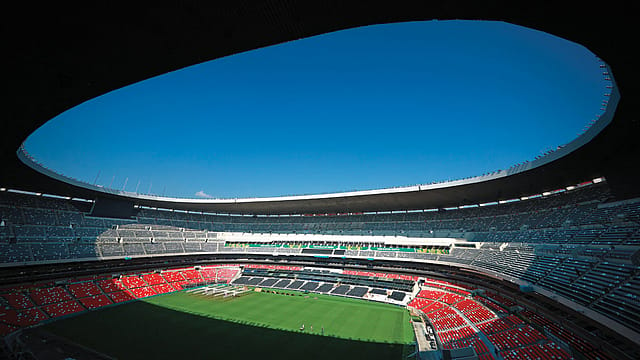
For those who cherish the romance of football, the season beginning on June 11 at Mexico’s iconic Azteca Stadium (Estadio Azteca) promises passion, rage, despair and euphoria, depending on whom they support. The suspense adds to the mystique and moments of footballing brilliance enhance the viewing pleasure. Azteca is where Pelé’s Brazil, after the tragedy of 1966, trounced Italy 4:1 in the 1970 final. It is also where a 25-year-old Diego Maradona attained near-divine status, leading Argentina past England in the quarter-final and West Germany in the final of 1986. The stadium witnessed both the Hand of God goal and the Goal of the Century, securing a coveted status in football lore. The Argentine legend also redeemed his nation from the humiliation of a lost war against Britain—a phenomenon that prompted Martin Amis to write that “1986 brought him his nationalist apotheosis”.
Tournaments like these are also occasions for thinking aloud about the future of football. The magic of football will live on although many football experts don’t see any meaningful reforms at FIFA as happened at the International Olympic Committee (IOC). To keep the flame of the game alive, Kuper says, “Instead of having countries bid for World Cups and offer bribes and inducements, I’d like for you (FIFA) to say, actually, okay, we want to develop football, right? So where can we develop football? Well, two obvious places are India and China. So, let’s go to India and China and say, we want to give you the World Cup. You need to build a lot of new stadiums and we’ll use a lot of the World Cup income to help you do that. And we’ll have a policy with India and China in the years before to promote soccer… Then you’re really developing soccer. So that is how I would like to see FIFA approach things.”
Given the World Cup’s inherent unpredictability, why not take a chance on India or China? FIFA might just discover a goldmine.