Trinamool became an organised crime racket akin to the Cosa Nostra, says Subhas Bose’s grandnephew Sumantra Bose
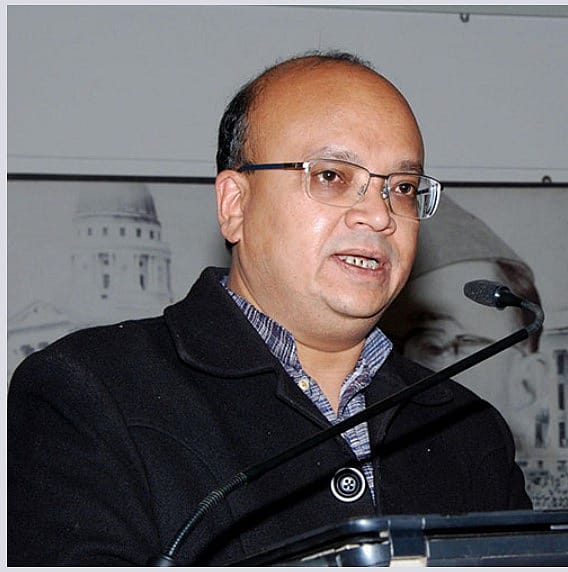
Bose, formerly Professor of International and Comparative Politics at the London School of Economics, currently holds a similar position at Krea University in Andhra Pradesh. An alumnus of Amherst College, Massachusetts, and Columbia University, Bose’s recent books include Secular States, Religious Politics: India, Turkey, and the Future of Secularism (Cambridge University Press, 2018) and Kashmir at the Crossroads: Inside a 21st-Century Conflict (Yale University Press, 2021). Edited excerpts:
Was the outcome of the elections in West Bengal in any way linked to the region's Hindu revivalist past?
No. Bengal's cultural and political heritage is defined principally by three figures: Rabindranath Tagore, Subhas Chandra Bose, and Swami Vivekananda (who significantly influenced the young Bose through his writings). Tagore represented a vision of enlightened cosmopolitanism grounded in inter-civilisational dialogue and a spirit of universalism. Vivekananda's life, and the moral philosophy he preached, were rooted in love of humanity transcending divides. Bose's creed of Indian nationalism was based on an uncompromising, even militant, secularist conviction. The pan-Indian nationalist par excellence, Netaji believed that Indian national identity must transcend any and all religion-based identities.

Zeroing In on ECI
09 Oct 2026 - Vol 05 | Issue 41
Constitutional legitimacy versus political opportunism
They were preceded by figures such as Raja Ram Mohan Roy and Ishwar Chandra Vidyasagar, who fought against some of the most retrograde practices within orthodox Hinduism in the nineteenth century. In the early 20th century, Deshbandhu Chittaranjan Das emerged as the leader of the anti-colonial struggle in Bengal, a Muslim-majority region of India. CR Das stood for building Hindu-Muslim unity on the basis of mutual respect and equality. He died tragically early in 1925 but his legacy lived on through his political disciples, the 'Bose Brothers'-- Subhas Chandra Bose and Sarat Chandra Bose.
In popular, subaltern culture, which is prevalent in the Bengal countryside among the farmers, the artisans, and the fisherfolk, syncretistic traditions rooted in centuries of Hindu-Muslim coexistence dominate.
In comparison to the giants mentioned above, Syama Prasad Mookerjee is a minor figure. A Hindu Mahasabha leader, he was an active ally of the British Raj and during World War II served as Bengal's home minister in a British-backed government led by the Muslim League. In 1951, he was poached from the Mahasabha by the young RSS activists instrumental in the founding of the Bharatiya Jana Sangh-- Deendayal Upadhyaya, Atal Bihari Vajpayee, and Kewal Ram Malkani, amongst others--who needed a senior person of some stature to be the first president of the new party. In a 1956 interview to the RSS mouthpiece Organiser, Madhav Sadashiv Golwalkar (Shri Guruji), the RSS sarsanghchalak, recalled that he summoned Mookerjee from Calcutta to Nagpur prior to approving the appointment. Golwalkar said: "I had to warn him [Mookerjee] that the RSS could not play second fiddle to any political party, because no organisation devoted to the wholesale regeneration of the Nation could function successfully if used as a handmaid of political parties."
How do you view the election results? What factors contributed to what appears to be a surprise verdict?
In an interview with you in January 2026, I highlighted the "pervasive rot" in West Bengal under Trinamool rule. I noted that "Mamata Banerjee is a deeply discredited figure in the state" and that "her nephew commands no currency beyond unlimited cash in hand and hired goon squads." I nonetheless said that at that time (January), Trinamool had a "definite edge" over the BJP due to the BJP's own limitations in waging a successful state-level campaign in West Bengal.
Those limitations notwithstanding, it turned out that Mamata Banerjee's unlimited licence to limitless corruption during her 15-year reign, which made the Trinamool Congress into an organised-crime racket akin to the Cosa Nostra (Sicilian Mafia), her arrogance of power which grew unbearable over time, and her sponsorship of the very dubious nephew as a dynastic successor, combined into an overwhelming liability. The BJP has reaped the dividends of the popular backlash.
The remarkable civil society uprising of August-October 2024 sparked by the RG Kar Hospital rape-murder incident in Kolkata was a portent Mamata Banerjee failed to heed. She has proved to be constitutionally incapable of any introspection and self-correction, and as I said in the January 2026 interview, over the decade and a half in power the Trinamool edifice became rotten beyond repair. In the just-concluded election, Trinamool's rigging tactics--copied from the erstwhile CPM model--were stymied for the first time since it came to power by draconian deployment of central security forces. That sealed Trinamool's fate.
In 2011, the people of West Bengal voted out the CPM after 34 years. Mamata Banerjee, the established challenger to CPM rule since the 1990s, was the beneficiary. In 2026, she was voted out and the BJP, which has since 2019 been the main opposition in West Bengal, is the beneficiary. For Trinamool, this is largely a self-inflicted disaster. Until a decade ago, the party had a sole authority and decision maker: Mamata Banerjee. Since then, two centres of power have emerged, the other being the nephew. These two individuals are solely responsible for the debacle.
How has the decline of the CPM contributed to the rise of the BJP in the state?
Politics abhors a vacuum. CPM hegemony in West Bengal traded on two cards: pro-poor populist posturing (garib-er sarkar, mehanati manush-er sarkar, etc), and appeals to injured Bengali pride and the penchant for self-pity, especially resentment of a domineering and unjust Centre in New Delhi. Post-2011, Mamata Banerjee appropriated both cards, leaving the CPM without a plank. Nonetheless, the floundering CPM continued to be the main opposition in West Bengal until 2016, when it made a singularly ill-advised, opportunist alliance with the Congress in a short-cut bid to oust Mamata Banerjee from power. The gambit failed miserably and paved the way to the terminal decline of the CPM and the rise of the BJP as the major opposition.
Even in defeat in 2011, the CPM-led Left Front polled 41 percent of the popular vote--exactly the same percentage polled by the defeated Trinamool Congress in 2026--and elected 62 MLAs in the 294-strong West Bengal legislative assembly. In 2021, the CPM's vote share fell to the lower single digits and it failed to elect a single MLA (it polled 4.5 percent and elected one MLA in 2026). The near-extinction of the CPM made the BJP--hitherto an inconsequential, fringe party in West Bengal--the only alternative to Mamata Banerjee's degenerate regime.
Mamata Banerjee has faced, in 15 years, what it took 34 years for the CPM to encounter. Do you think Bengalis’ tolerance for prolonged single-party rule has reduced significantly over the decades?
Yes, I think it has. Tamil Nadu has an established pattern of ousting incumbents after one or at most two terms, as do Andhra Pradesh, Kerala and even Telangana in the south and until recently, Uttarakhand and Himachal Pradesh in the north. The outcomes in Tamil Nadu and West Bengal in 2026 have one common denominator that serves as a warning to one-state parties run as family fiefdoms: father-son and aunt-nephew outfits, even if rolling in money, are vulnerable and possibly unsustainable.
What are your thoughts on the high levels of religious polarisation in West Bengal?
It is extremely worrying, and rife with destabilising and even destructive possibilities. The BJP has now achieved in West Bengal the level of consolidation of the "Hindu" vote needed to win, which was its strategic objective since 2019. This replicates the formula successfully implemented earlier in Uttar Pradesh and Assam. But the post-2016 Assam model of governance or the post-2017 Uttar Pradesh model of governance may not work in West Bengal. The only ideological antidote to the communal virus lies in reviving the nationalist political legacy of Deshbandhu Chittaranjan Das, Netaji Subhas Chandra Bose, and Sarat Chandra Bose. That is a tall order in the conditions that prevail in West Bengal and India today.
The just-concluded election has seen an all-time high turnout--93 percent--in a traditionally high-turnout state. Yet, in any democratic country worth the name, the 2026 state election in West Bengal would be declared null and void. That is because the legitimate voters disenfranchised by the Special Intensive Revision (SIR) number in the hundreds of thousands (lakhs), at the very least, and possibly in the millions (tens of lakhs) The BJP has polled 3.2 million (32 lakh) more votes than the Trinamool Congress: 29.2 million to 26 million, 45.8 percent versus 40.8 percent. Meanwhile, as many as 3.4 million (34 lakh) appeals remain pending and unaddressed, of which the vast majority are appeals for inclusion by disenfranchised persons. I personally know many such persons, whose bonafides I can vouch for as genuine citizens of the country.
In any democratic country worth the name, the disenfranchisement of even one legitimate voter would render an election invalid, as it blatantly violates the principle of universal adult franchise. My point is not that a full and fair electoral roll would have led to a different outcome. It may have closed the gap between BJP and Trinamool, it may have had little or no effect, or it may even have propelled a bigger BJP victory. But the exclusion of legitimate voters is intolerable in any electoral democracy.