Subhas Bose’s grandnephew Sumantra Bose on why Trinamool holds the edge in West Bengal
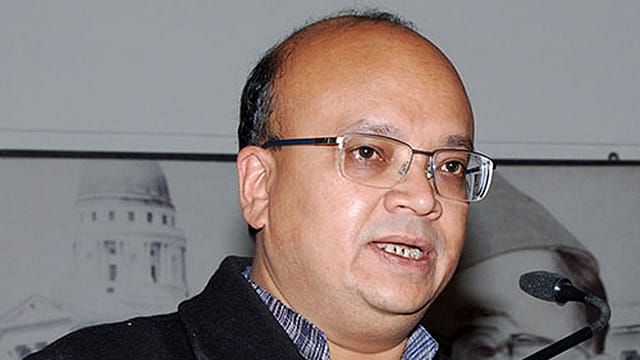
In an interview with Open, Netaji Subhas Chandra Bose’s grandnephew Sumantra Bose, a noted political scientist who has authored many books on conflict areas, including Kashmir, Sri Lanka, Bosnia, and about nationalism, predicts that West Bengal voters heading to the polls this year may just “stay with the known – and homegrown – devil,” referring to the incumbent All India Trinamool Congress (TMC).
Bose, who was formerly Professor of International and Comparative Politics at the London School of Economics, currently holds a similar position at Krea University in Andhra Pradesh. His brother Sugata Bose was earlier a Lok Sabha member representing the Trinamool Congress and mother Krishna Bose a three-term Lok Sabha MP, representing the Congress in her first term and Trinamool Congress in the subsequent two terms.

Zeroing In on ECI
09 Oct 2026 - Vol 05 | Issue 41
Constitutional legitimacy versus political opportunism
An alumnus of Amherst College, Massachusetts, and Columbia University, Bose’s most recent books include Secular States, Religious Politics: India, Turkey, and the Future of Secularism (Cambridge University Press, 2018) and Kashmir at the Crossroads: Inside a 21st-Century Conflict (Yale University Press, 2021).
He also speaks to Open about the challenges for Chief Minister Mamata Banerjee, prospects of the Bharatiya Janata Party (BJP), the Left parties, especially the Communist Party of India (Marxist), or CPM, which was in power in the state for 34 long years until 2011, and the Congress.
Edited excerpts:
After more than 14 years in power in the state, and nearly 17 years after weakening the CPM’s grip, do you see the All India Trinamool Congress (TMC) facing significant anti-incumbency ahead of this year’s state polls, driven by a range of factors including the rise of the Bharatiya Janata Party (BJP) in the state?
At this point of time – the first half of January – I would, on balance, give Trinamool a definite edge in the April-May assembly election.
This prognosis is paradoxical. Mamata Banerjee is a deeply discredited figure in the state, and her nephew commands no currency beyond unlimited cash in hand and hired goon squads. When the people finally booted out the CPM in 2011, they had hoped for a different, much better West Bengal. Instead, the dismal stagnation of CPM rule has been replaced with pervasive rot under Trinamool.
The everyday life and politics of the state resembles a vast organised-crime racket run by the ruling party – not unlike Maduro's Venezuela, minus the oil. Any semblance or pretence of morality has disappeared from public life, and the remnants of Bengal's traditions of shikhsha-sanskriti (education and culture) that survived the CPM era have been decimated.
The narrative of 15 years of development (unnayaner panchali) that Mamata Banerjee is peddling –and which amounts largely to multiplying dole schemes – has to be weighed against the ruinous consequences of Trinamool rule.
The BJP, however, is not a compelling alternative, and to many it’s not even a credible alternative. Its organisation in the state remains mostly ramshackle, and it lacks a state leadership that’s plausible and effective.
Modi does excite some enthusiasm among BJP supporters, but he alone can’t compensate for these weaknesses. And Modi himself is a cultural 'outsider', as his 'Bankim-da' gaffe in parliament revealed, and that limits his potency with the electorate. It's much the same constellation of factors that sank the BJP's armada-style 2021 campaign, which struck many locals as an invasion.
Unable to make up for these deficiencies, the BJP relies far too much on stoking communal hatred and polarisation. This has some traction but the hounding, forced deportations, and lynching of West Bengal people in BJP-ruled states – even next door in Odisha – enables Trinamool to play the ethno-linguistic and victim card to some effect.
There are three imponderables, in descending order of importance. First, what effect the deletion of names from the voters' list under SIR (Special Intensive Revision) will have on the outcome in May is hard to tell.
Second, the extent to which Trinamool will be able to carry out rigging in the forthcoming election is uncertain. Compared to BJP, Trinamool has a relatively well-oiled grassroots machinery for elections copied from the CPM model, but the rot within Trinamool is very deep.
Yet, deployment of central paramilitary forces has proved inadequate to check Trinamool's rigging. Only the resistance of the people and effective grassroots activism by the opposition, which the BJP in West Bengal is largely not capable of, can achieve that.
A third imponderable is the impact, if any, of the anarchic situation in Bangladesh, and especially the escalating plight of its Hindu minority.
All told, West Bengal may in the end stay with the known – and homegrown – devil.
You had said earlier in an interview to me that the voters of West Bengal tend to show prolonged tolerance towards ruling parties. Do you sense a shift now in public perceptions and political priorities?
West Bengal would not be in the dismal condition it is in today if its electorate had had the good sense to alternate parties and blocs in government – the longstanding pattern in Kerala and Tamil Nadu, and even Uttarakhand and Himachal Pradesh. But old habits die hard.
I should mention there's one other feature of West Bengal that has proved enduring: the bipolar nature of its politics. For two decades after 1977, the state's politics was polarised between the CPM-dominated Left Front and the Congress. From 1998, that was replaced by bipolar competition between the CPM and Trinamool, with the rump Congress relegated to an also-ran alongside BJP, a fringe player.
Following the CPM's further decline after 2011 and near-implosion after 2016, the bipolarity has manifested itself, since 2019, as a direct contest between Trinamool and BJP.
Do you see any chances of CPM or the Congress showing gains in this year’s assembly polls?
No. Neither CPM nor Congress have a single MLA in the 294-member West Bengal legislative assembly. Both scored a duck in 2021. The CPM is likely to stay at zero. The Congress may at best aspire to pick up a few seats in Malda and Murshidabad districts, but even this is by no means assured. Due to the absence of leadership, strategy and organisation, both parties are near-extinct and condemned to irrelevance.
The self-inflicted fate of the long-dordandapratap (all-powerful) CPM should serve as a warning to Trinamool, of just how far the once-mighty can fall. But it won't, as the Trinamool edifice is too rotten to permit any self-rectification or repair. So, the most probable post-election scenario is that West Bengal will continue to wallow chaotically in the mud and stench of a rotten government.