Induction Cooktop Sales Jump 30X as LPG Concerns Rise; Govt Says No Crisis, PNG Supply Secure
As the Iran–US conflict disrupts energy flows through West Asia, the effects are beginning to surface in unexpected corners of India’s economy. Restaurants have reported tighter LPG availability in several cities, commercial cylinder supply has turned uneven, and concerns around cooking fuel have begun to influence household decisions.
One visible outcome has been a sudden spike in demand for electric cooking appliances.
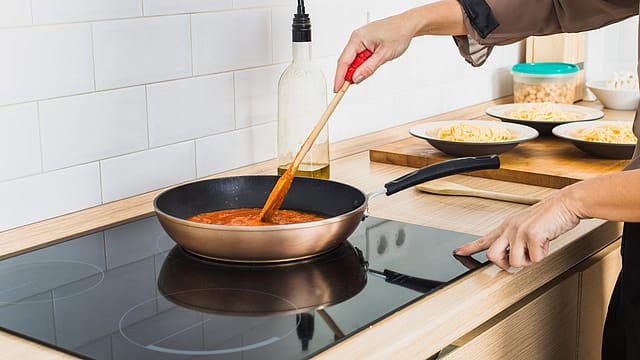
Online retail platforms have reported a sharp increase in purchases of induction cooktops and other electric cooking devices as households quietly prepare for the possibility of LPG disruption.

The Identity Project
11 Sep 2026 - Vol 05 | Issue 37
Amit Shah leads the mission for a national demographic correction
“Over the last two days, sales of induction cooktops have increased over 30X, while rice cookers and electric pressure cookers are seeing a 4X increase. Air fryers and multi-use kettles are also seeing a 2X increase in sales over a regular day. Customers are using Amazon Now to get similar products within minutes in parts of Delhi-NCR, Mumbai and Bengaluru,” an Amazon India spokesperson said.
The surge is notable because induction cooktops have historically remained a secondary appliance in Indian kitchens. While widely available, they are usually used for convenience cooking rather than as a primary substitute for gas stoves. The scale of the current spike suggests consumers are approaching them differently.
The broader context lies in India’s reliance on LPG for household cooking. A significant share of the country’s LPG supply is imported, much of it originating in Gulf countries and transported through the Strait of Hormuz. As tensions escalate between Iran and the United States, shipping disruptions and higher freight costs have begun to tighten energy supply chains across the region.
Commercial kitchens have been the first to feel the pressure. Restaurants and catering businesses rely heavily on commercial LPG cylinders that operate on tighter supply cycles than household connections. In several markets, operators have reported delays in cylinder deliveries or sharply higher prices.
There are also indications that shortages may be partly amplified by market behaviour. In some cities, commercial LPG cylinders are reportedly being sold in the black market at significantly higher prices, suggesting that supply anxiety itself may be driving opportunistic price increases.
For households, the response has taken a different form. Instead of reducing consumption, many appear to be building alternatives that allow cooking to continue even if LPG supply becomes uncertain.
Induction cooktops allow stovetop cooking without LPG, while electric pressure cookers and rice cookers can replace several common gas-based cooking processes. Smaller appliances such as electric kettles and air fryers provide partial substitutes for everyday meals. The surge in purchases therefore appears to reflect precautionary behaviour rather than routine appliance upgrades.
The speed of purchases also highlights how quickly consumers can respond today. According to Amazon, customers in cities such as Delhi-NCR, Mumbai and Bengaluru are ordering these appliances through quick-delivery services and receiving them within minutes.
Even as consumer anxiety rises, the government has sought to reassure the public that the situation remains under control.
Petroleum Minister Hardeep Singh Puri told Parliament that India’s crude supply position remains secure despite the geopolitical tensions. “Despite having no role in causing the conflict in West Asia, India has to navigate through its consequences,” he said in the Lok Sabha.
Prime Minister Narendra Modi has also urged calm, stating that there is “no need to panic” about LPG availability.
There has been some positive news on the energy front as well. Indraprastha Gas Limited has assured consumers that supplies of Piped Natural Gas for households and Compressed Natural Gas for vehicles will remain uninterrupted. Under the Natural Gas (Supply Regulation) Order, 2026 issued on March 9, domestic PNG and CNG have been classified as the highest priority sector for gas allocation.
For households connected to PNG networks, the order provides a degree of insulation from the LPG market’s volatility.
For appliance manufacturers and retailers, the surge in induction cooktops and electric cookers could translate into an unexpected demand cycle. The induction category has historically grown slowly in India due to cookware compatibility issues and a cultural preference for flame-based cooking. However, crisis-driven purchases often introduce appliances into households that later become part of everyday routines.
The current spike therefore reveals more than a short-term retail anomaly. It shows how geopolitical disruptions travel through supply chains and eventually reshape everyday consumer behaviour.
In this case, the adjustment is visible in India’s kitchens, where households appear to be quietly adding electric cooking options alongside LPG as a hedge against uncertainty.