What Is Subotnik? Russian Tradition Meets India’s Swachh Bharat Mission
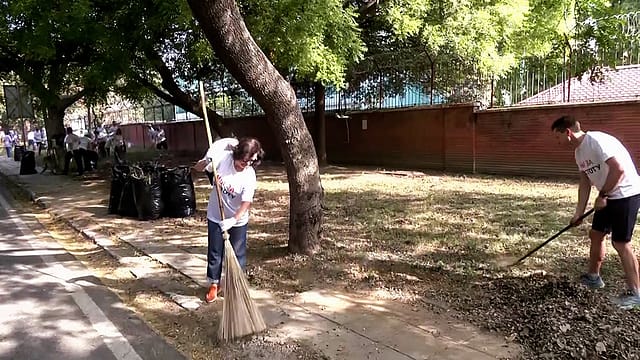
In a symbolic show of civic cooperation, the Russian Embassy in India organised a volunteer cleanup drive in Delhi, drawing inspiration from Russia’s traditional “Subotnik” and aligning it with India’s Swachh Bharat Abhiyan.
The event saw Russian diplomats, staff, and volunteers stepping out to clean areas around the embassy, underscoring both environmental responsibility and diplomatic goodwill.
What is ‘Subotnik’ and why is it significant?
The initiative was rooted in the Russian concept of Subotnik—a long-standing practice where citizens voluntarily engage in public service, especially cleaning and maintenance activities.
Explaining the idea, Russian Ambassador to India Denis Alipov said, "Yes, we came en masse this morning to do some cleaning around the embassy. You know, we have a laudable volunteer movement in Russia generally doing some public work, helping public workers. So-called Subotnik, so we thought it would be great to organize one in Delhi."
How does this connect with Swachh Bharat Abhiyan?
The event was also framed as a tribute to India’s nationwide cleanliness campaign launched by Prime Minister Narendra Modi on October 2, 2014.
Highlighting the overlap between the two traditions, Alipov said, "And it very much correlates with the Swachh Bharat Abhiyan that India has launched. Partly we dedicate this event today to the movement India also has. And I think that's great and we do some cleaning around the embassy compound, but it looks like NDMC has not left much for us to do. But anyway, it's great to be together with colleagues this morning and do some useful work and make a contribution to the Swachh Bharat Abhiyan and to our great tradition that we have in Russia."

Open Minds 2026
26 Jun 2026 - Vol 05 | Issue 26
The power of ideas and arguments in 50 portraits
What did participants say about the initiative?
Volunteers expressed enthusiasm about contributing to India’s cleanliness mission and strengthening bilateral ties.
One participant said, "That's right and we are very happy that we make our own contribution to the cleanliness movement and we in this way also feel that we could make the Indian government and the Indian public and the Prime Minister happy."
Another volunteer emphasised the scale of the campaign, stating, "I wish that the whole of Indian society would join this drive and we see that this movement in India, this Swachh Bharat Abhiyan, has taken mass dimensions and has been undertaken all over the country and that's great. This is something that makes a very good example for the whole of the world."
How does this reflect India-Russia friendship?
Beyond cleanliness, the drive was also seen as a gesture of friendship and cooperation.
A volunteer noted, "We can do a lot of good things. So let's try to show this country, to show our friendship in the best way. So we believe that this type of communication will help our friendship to become closer. So we are looking forward to deepen our cooperation. And this is one of the gestures. So today we would like to support India."
What impression did first-time visitors take away?
For some participants visiting India for the first time, the experience went beyond the cleanup activity.
One volunteer shared, "I would like to say that this is the first time for us that we are in this country. I can say that this is a great experience because India is a beautiful country and we like Delhi very much because it is beautiful city. This is very good experience because we are here for the whole world and this country too. So I think that for us, for everyone and for the whole world, this is a very good and big work."
Another added, "I think that those who live in India should go because I think that every person in his life, only once, I think we should take part because it is very good experience and very good experience because we see our own work and everything."
Why does this matter?
The event reflects how civic initiatives can double as diplomatic bridges. By merging Subotnik with Swachh Bharat, the Russian Embassy showcased how shared values like cleanliness, volunteerism, and public participation can transcend borders and strengthen international ties.
(With inputs from ANI)