Supreme Court on firecrackers: Why awareness, not just bans, could shape Diwali celebrations in Delhi-NCR
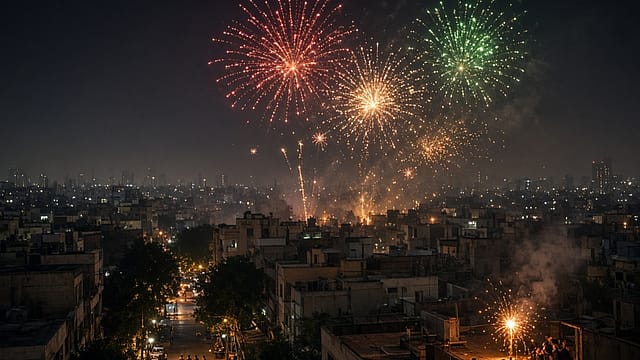
Can India’s festival celebrations become less polluting without turning into a battle over religious traditions? That question was at the heart of the Supreme Court’s latest hearing on firecrackers in Delhi-NCR, where the bench called for greater public awareness rather than restrictions that may prove difficult to enforce.
On October 12, Chief Justice of India Surya Kant, along with Justices Joymalya Bagchi and V Mohana, said the court wanted a balanced approach. The bench emphasised that people should be encouraged to understand the health risks of firecrackers and voluntarily adopt safer alternatives.
The discussion comes as Delhi-NCR approaches Diwali, when firecracker emissions can add to an already challenging winter pollution season.

Zeroing In on ECI
09 Oct 2026 - Vol 05 | Issue 41
Constitutional legitimacy versus political opportunism
Why the Supreme Court is resisting a blanket firecracker ban
The court said it was wary of issuing orders that might be difficult to implement on the ground. Senior advocate Aparajita Singh, assisting the court as amicus curiae, pointed out that police officers could not monitor every street throughout the festive period. The bench discussed educating people about the relative harm caused by different firecrackers, restricting highly polluting varieties and encouraging alternatives such as sparklers and traditional lamps.
Justice Bagchi also questioned whether bursting firecrackers was essential to religious observance. During the hearing, the amicus argued that the suffering of children and other vulnerable people should not be justified in the name of religion.
The court has not, however, issued a final decision permitting unrestricted firecracker use. Its latest observations form part of the ongoing proceedings.
What happened before the latest hearing?
The Supreme Court addressed the issue on September 30, saying it would neither impose a complete ban nor permit firecrackers to be used throughout the day. According to The Indian Express, the bench indicated that a workable solution could involve specifying the types of firecrackers permitted and the hours during which they could be used.
The debate reflects a recurring problem for Delhi-NCR: how to protect public health while respecting established festival practices. Firecracker smoke can worsen particulate pollution, while children, older people and those with respiratory conditions can be particularly vulnerable to polluted air.
The challenge is not limited to Diwali. Pollution levels in the capital are affected by several sources, including vehicle emissions, industrial activity, construction dust, waste burning and seasonal crop-residue burning.
Why stubble burning remains part of the case
During the October 12 hearing, the Supreme Court also discussed measures to curb stubble burning. The Centre agreed to submit an updated status report detailing action taken so far and plans to address the problem.
Farm fires in neighbouring states have repeatedly become part of Delhi’s winter pollution debate. However, they are one contributor among several, and their impact varies with weather conditions and the movement of pollutants.
The court is also examining broader questions involving air pollution and solid-waste management, rather than treating firecrackers as the sole cause of the capital’s poor air quality.
What happens next for Delhi-NCR residents?
The Supreme Court is scheduled to hear the matter again on October 15. Until further directions are issued, residents should not interpret the latest remarks as permission to disregard existing restrictions.
For households, the immediate message is to follow applicable rules and consider lower-pollution ways to celebrate. The larger question is whether public awareness, effective enforcement and action against multiple pollution sources can deliver cleaner air without making every festive season a contest between health concerns and religious sentiment.
(With inputs from ANI)