Delhi pollution: CM Rekha Gupta orders tougher crackdown as AQI stays ‘poor’
A few days of cleaner air do not necessarily mean Delhi has escaped its annual pollution crisis. The capital's air quality has improved from the severe levels recorded earlier this month, but the latest readings offer little reason to relax. On November 18, Delhi's AQI stood at 214 at 7 am, remaining in the poor category, according to Central Pollution Control Board data.
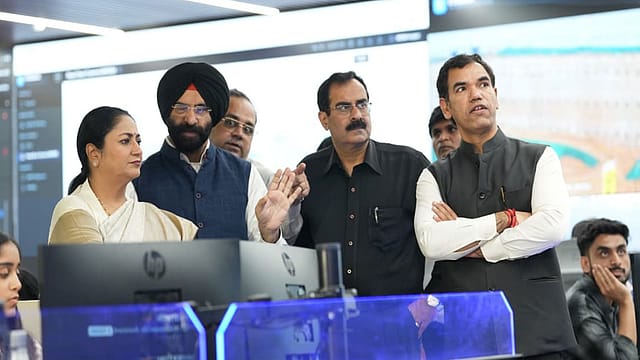
Against this backdrop, Chief Minister Rekha Gupta chaired a high-level review meeting at the Delhi Pollution Control Committee's Integrated Command and Control Centre on Wednesday. Her message to officials was that pollution control cannot be reduced to paperwork and periodic inspections. Departments must show measurable results on the ground.

The Wealth Issue 2026
06 Nov 2026 - Vol 05 | Issue 45
Portraits of Dreamers and Doers under 35
Why has Rekha Gupta ordered stricter pollution checks in Delhi?
Gupta asked the Municipal Corporation of Delhi and the Public Works Department to step up mechanised road sweeping, water sprinkling and road washing. Removing accumulated dust and silt from roads, footpaths and central verges was identified as a priority.
The scale of the backlog is significant. According to the Delhi government's meeting statement, agencies received 68,137 complaints, of which 61,507 had been resolved. The Chief Minister directed officials to clear the remaining complaints, particularly those involving potholes and unpaved roads that can contribute to dust pollution.
Inspections have also been intensified. Between November 2 and 17, district nodal officers carried out 41 inspections, while MCD zonal deputy commissioners inspected 301 locations.
How many construction sites have faced action for pollution violations?
Construction dust remains a major concern during Delhi's winter pollution season. Between November 1 and 17, officials inspected 8,874 construction and demolition sites and detected violations at 554 locations.
The government issued closure directions to 112 sites, served 462 show-cause notices and imposed environmental compensation exceeding Rs 2.65 crore. Gupta told officials that green nets, barricades and windbreakers must be properly installed and maintained rather than treated as formalities.
The action comes as the Commission for Air Quality Management (CAQM) continues to monitor compliance with pollution-control restrictions across Delhi-NCR.
What is Delhi doing to tackle vehicle emissions and road pollution?
Transport enforcement was another focus of the review. Between November 1 and 17, authorities issued 25,610 challans to vehicles without valid pollution-under-control certificates. At Delhi's borders, 1,81,548 non-Delhi vehicles below BS-VI standards were checked, excluding CNG and electric vehicles. Of these, 30,742 were turned back, 2,817 challaned and 189 seized. Fines exceeding Rs 5.42 crore were imposed.
The government is also expanding public transport. Of the 2,395 electric buses planned for addition in 2026, 1,703 had joined the fleet by October 30. The remaining 692 are expected by December.
Has Delhi's air quality improved, and are GRAP restrictions still in force?
There has been some relief, but the situation remains delicate. On November 17, CAQM revoked Stage III of the Graded Response Action Plan after Delhi's daily average AQI improved to 204. Stage I and Stage II restrictions remain in force. The separate October 30 order restricting dust-generating construction and demolition activities also continues through November 20, while sites facing specific closure orders cannot resume work without permission.
Environment Minister Manjinder Singh Sirsa said, "Delhi had not recorded a severe pollution day so far this year and the AQI had not crossed 400". He added, "The average AQI during the first half of November was around 170, while the number of clean-air days had reached 220. The government aims to bring down pollution levels by 10-15 per cent every year."
Health and Transport Minister Pankaj Kumar Singh said, "Government hospitals had been directed to ensure adequate beds, doctors and medical facilities for patients suffering from respiratory illnesses, particularly during winter. ₹5 crore had been approved to modernise PUC centres, with authorised centres across 500 locations set to be upgraded."
Can Delhi sustain the improvement in air quality?
The government is also addressing congestion and waste management. Improvement work has been completed at 43 of 62 identified traffic bottlenecks, while land reclamation at the Bhalswa, Okhla and Ghazipur landfill sites has reached 100 acres.
But Delhi's experience shows how quickly favourable weather can change the pollution picture. With the AQI still poor and winter conditions capable of trapping pollutants, the real test for the administration will be whether enforcement continues after the immediate crisis eases.
(With inputs from ANI)