India should launch an AI for Energy Mission to accelerate clean energy transition: Saurabh Kumar
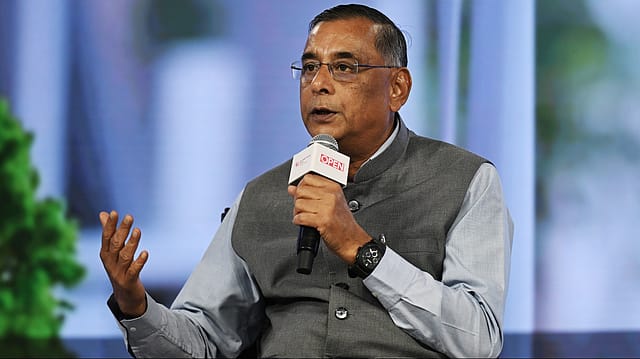
India should launch a dedicated AI for Energy Mission to help modernise its electricity grid and accelerate renewable energy integration, according to Saurabh Kumar, former vice president of Global Energy Alliance for People & Planet (GEAPP), India, who believes artificial intelligence could become one of the country's most powerful tools for achieving its long-term decarbonisation goals.
Speaking at OPEN Green Shift, Kumar said India's clean energy transition has entered a new phase where the challenge is no longer expanding renewable energy capacity alone, but ensuring the electricity system can absorb and manage it efficiently. He argued that AI-powered grid management, large-scale energy storage and financially stronger electricity distribution companies would determine whether India can meet its long-term net-zero ambitions.

Losing Memory
16 Oct 2026 - Vol 05 | Issue 42
The making of a medical and social emergency
Kumar described India's rapid expansion of solar energy over the past decade as one of the country's biggest policy successes, pointing to the sharp decline in solar tariffs and the institutional reforms that helped scale renewable energy deployment. He also highlighted the nationwide rollout of smart meters under electricity distribution reforms as another milestone, saying it demonstrated that private investment could successfully participate in modernising the power sector.
However, he warned that the transition now faces new bottlenecks. Renewable energy projects worth nearly 40 GW remain stalled, while storage capacity and grid flexibility are yet to keep pace with the scale of renewable energy expected over the coming decades. Strengthening the financial health of DISCOMs, he added, remains equally important because utilities ultimately finance the purchase of clean electricity.
Kumar said artificial intelligence could fundamentally change the way India's electricity system operates by integrating multiple streams of operational data, improving demand forecasting, optimising renewable energy dispatch and helping utilities take real-time decisions. Drawing on his experience of digitising a distribution utility, he said AI had already demonstrated its ability to improve renewable integration and optimise storage deployment. Rather than focusing only on the additional electricity demand created by AI, policymakers should also recognise its potential to make the energy system significantly more efficient, he said.
Looking ahead, Kumar argued that India has an opportunity to move beyond incremental improvements and adopt a mission-mode approach that places AI at the centre of power sector modernisation. Such an initiative, he said, could accelerate renewable energy integration while helping the country build a more resilient, flexible and intelligent electricity system capable of supporting its net-zero ambitions.