Polling Begins for 28 Legislative Council Seats in Bihar, Karnataka, Maharashtra and UP
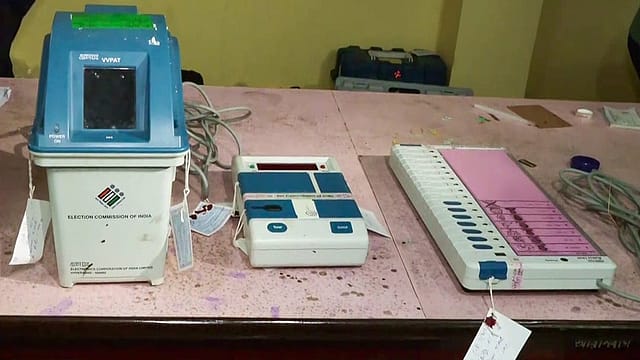
Voting began at 8 am on Friday for biennial elections to the Legislative Councils of Bihar, Karnataka, Maharashtra and Uttar Pradesh, in the Graduates’ and Teachers’ constituencies. Polling in all four states runs until 4 pm.
The Election Commission of India (ECI) called the elections because the terms of sitting members are ending. In all, 28 seats are involved: eight in Bihar, four in Karnataka, five in Maharashtra and 11 in Uttar Pradesh.
Votes will be counted on Tuesday, October 27, and the whole process is to be completed by October 31.
WHO VOTES, AND HOW
These are not ordinary elections. Graduates’ and teachers’ constituencies are special electoral districts that Article 171 of the Constitution sets aside for these voters alone. Only registered graduates and teachers living in each constituency can vote. Unlike the Assembly voter list, the roll for these constituencies is prepared afresh before every biennial election.

Losing Memory
16 Oct 2026 - Vol 05 | Issue 42
The making of a medical and social emergency
The voting method is also different. Voters use paper ballots under a system of proportional representation by single transferable vote, in which they mark preferences among candidates.
BIHAR: 8 SEATS
Polling is under way in four Graduates’ constituencies, Patna, Darbhanga, Tirhut and Kosi, and four Teachers’ constituencies, Patna, Darbhanga, Tirhut and Saran. The sitting members’ terms expire on November 16. A total of 150 candidates are in the fray, with about 5.32 lakh eligible voters.
The Patna Graduates’ seat is the one to watch. Senior JD(U) leader Neeraj Kumar is up against Anant Singh, the Mokama MLA, who has backed Jan Suraaj candidate Anuj Singh. The Congress and the RJD, partners in the opposition alliance, are also contesting against each other in several constituencies. The polls are among the first big electoral challenges for the ruling government in Bihar.
KARNATAKA: 4 SEATS
The two Graduates’ constituencies are Karnataka South-East and Karnataka West, and the two Teachers’ constituencies are Karnataka North-East and Bangalore. The sitting members’ terms expire on November 11.
MAHARASHTRA: 5 SEATS
The three Graduates’ constituencies are the Aurangabad (Chhatrapati Sambhajinagar), Pune and Nagpur Divisions, and the two Teachers’ constituencies are the Amravati and Pune Divisions. The terms of the sitting members expire on December 6, 2026.
A total of 182 candidates are contesting, with 10.68 lakh registered voters and 2,419 polling stations. Pune’s graduates’ seat has the largest field, with 47 candidates, and the biggest electorate, 3,88,019 voters.
In Nagpur, there are 38 candidates, and the main contest is between Sudhakar Kohale of the BJP and Abhijit Vanjari of the Congress.
Deputy Chief Minister Eknath Shinde has said the Pune Teachers’ seat will see a “friendly contest,” because his party is backing independent candidate Sachin Sanap, while the Mahayuti says it is confident of winning all five.
UTTAR PRADESH: 11 SEATS
Voting is being held in five Graduates’ constituencies, the Lucknow, Varanasi, Agra, Meerut and Allahabad-Jhansi Divisions, and six Teachers’ constituencies, the Lucknow, Varanasi, Agra, Meerut, Bareilly-Moradabad and Gorakhpur-Faizabad Divisions. The 11 members’ tenures expire on December 6.
Of the 11 seats, five are in western Uttar Pradesh, two in the Lucknow region, one in Bundelkhand and three in Purvanchal.
Held ahead of the 2027 Assembly elections, the polls are being seen as a significant political test. Samajwadi Party MP Ram Gopal Yadav said both his party’s candidates in Aligarh would win, including teachers’ candidate Akash Agarwal.
WHAT IS A LEGISLATIVE COUNCIL?
A Legislative Council, or Vidhan Parishad, is the upper house of a state legislature, the state-level counterpart of the Rajya Sabha. Only six states have one: Andhra Pradesh, Telangana, Karnataka, Maharashtra, Bihar and Uttar Pradesh. It is never dissolved. One-third of its members retire every two years, which is why these elections are called biennial.
Its members come from five sources. Around one-third are elected by MLAs, one-third by local bodies, one-twelfth by graduates and one-twelfth by teachers, and about one-sixth are nominated by the Governor. That mix is meant to give educated professionals a voice in lawmaking that a purely popular vote might not.
The council is the weaker house. It can suggest changes and delay legislation, but the Assembly has the final say, and it has limited powers over money bills. That is why the graduates’ and teachers’ contests matter more as political signals than as a source of power. Parties use them to gauge their strength among educated and salaried voters.
With inputs from ANI