Budget 2026: Govt to Set Up Panel to Assess AI’s Impact on Jobs
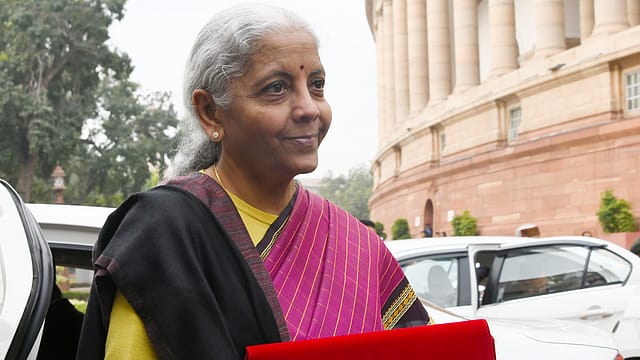
The government will set up a high-powered Education to Employment and Enterprises Standing Committee to strengthen job outcomes and assess the impact of emerging technologies, including artificial intelligence, on India’s labour market, Finance Minister Nirmala Sitharaman announced while presenting the Union Budget 2026–27.
The committee will focus on aligning education, skilling and enterprise creation, with a special emphasis on the services sector, which the Finance Minister described as a core engine of economic growth and employment. India, she said, is targeting a 10% share of the global services market by 2047, and the proposed panel will recommend measures to optimise growth, exports and job creation in the sector.
A key mandate of the committee will be to assess how AI and new technologies are reshaping jobs and skill requirements, and to propose interventions that ensure India’s workforce remains adaptable and future-ready. “To provide a pathway to fulfilling the aspirations of a youthful India,” Sitharaman said, the panel will help create clearer transitions from education to employment.

Losing Memory
16 Oct 2026 - Vol 05 | Issue 42
The making of a medical and social emergency
As part of this push, the government will expand skilled career pathways for young Indians, including a major boost to allied health education. Existing allied health institutions will be upgraded, and new ones will be set up across the public and private sectors. Covering ten disciplines—such as optometry, radiology, anesthesia, operation theatre technology, applied psychology and behavioural health—the initiative is expected to add one lakh allied health professionals over the next five years.
Sports goods, textiles and legacy clusters
Beyond services and skilling, the Budget unveiled a strong manufacturing push.
Sitharaman announced a dedicated initiative for high-quality sports goods manufacturing, covering research, innovation, equipment design and material sciences, positioning India as a potential global hub for affordable, high-quality sports equipment. To support this, the government will also revive 200 legacy industrial clusters through infrastructure upgrades and technology modernisation to improve competitiveness and efficiency.
Building on the Khelo India programme, the Finance Minister proposed launching a Khelo India Mission to transform the sports sector over the next decade, leveraging sports as a source of employment, skilling and entrepreneurship.
Coconut, cashew, cocoa and high-value agriculture
The Budget also sharpened its focus on high-value agriculture and rural livelihoods.
Sitharaman proposed a Coconut Promotion Scheme to increase production and productivity, particularly in major coconut-growing states, including the replacement of
old, non-productive trees with high-yielding varieties. She also announced a dedicated programme for Indian cashew and cocoa, aimed at making India self-reliant in raw material production and processing, enhancing exports, and building premium global brands by 2030.
Recognising its cultural and economic value, the Finance Minister said the Centre will partner with states to promote focused cultivation and post-harvest processing of sandalwood, seeking to restore the Indian sandalwood ecosystem.
Additional measures include a dedicated programme to rejuvenate low-yielding orchards and expand high-density cultivation of walnuts, almonds and pine nuts, with a focus on value addition and youth engagement. In animal husbandry, the government will roll out a credit-linked subsidy programme to modernise livestock enterprises, create integrated dairy and poultry value chains, and generate quality employment in rural and peri-urban areas.
Taken together, the initiatives signal a Budget that links jobs, skills, industry and agriculture into a single growth arc—aimed at preparing India’s workforce and enterprises for a technology-driven future while strengthening traditional economic foundations.
(With inputs from ANI)