Reform Express Will Maintain Momentum: Sitharaman Maps India’s Next Growth Phase in Union Budget 2026
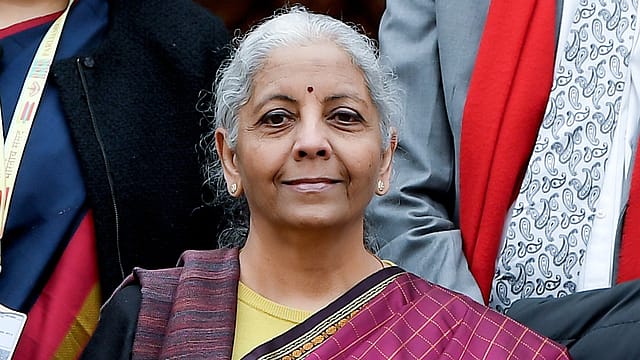
Union Finance Minister Nirmala Sitharaman, presenting her ninth consecutive Union Budget, said the Narendra Modi-led government’s “Reform Express” is firmly on track and will continue to gather momentum as India advances towards Viksit Bharat.
Addressing Parliament, Sitharaman framed the Budget as a continuation of deliberate, reform-driven choices made over the past decade—choices that, she said, have delivered stability, fiscal discipline, sustained growth and moderate inflation, even amid global disruptions.
“The Reform Express is well on its way and will maintain its momentum to help us fulfil our duties,” she said, adding that India’s economic trajectory since 2014 reflects conscious policy decisions taken in times of uncertainty.

Losing Memory
16 Oct 2026 - Vol 05 | Issue 42
The making of a medical and social emergency
Atmanirbharta, she stressed, remains the guiding principle—shaping domestic manufacturing, energy security and reduced import dependence—while ensuring that growth translates into tangible gains for citizens through employment, productivity and household purchasing power.
Rare earth corridors: Securing strategic minerals
A key structural reform announced in the Budget is the creation of rare earth corridors across mineral-rich states including Odisha, Kerala, Andhra Pradesh and Tamil Nadu.
The initiative aims to promote mining, processing, research and manufacturing of rare earth materials, critical for clean energy, electronics and advanced manufacturing. It builds on the ₹7,280-crore scheme approved in November 2025 to establish 6,000 MTPA of integrated Rare Earth Permanent Magnet manufacturing, positioning India as a serious global player in the sector.
Biopharma Shakti: A ₹10,000-crore push
Sitharaman also announced Biopharma Shakti, a ₹10,000-crore programme over five years to develop India as a global biopharma and biosimilars manufacturing hub.
With non-communicable diseases such as diabetes on the rise, the programme is designed to build a robust ecosystem spanning research, manufacturing and innovation—marking a strategic bet on healthcare as both a growth engine and a public good.
Capex rises to ₹12.2 lakh crore
Reinforcing infrastructure-led growth, the Finance Minister raised capital expenditure for FY 2026–27 by about 9% to ₹12.2 lakh crore. Public capex, she noted, has risen sharply from ₹2 lakh crore in 2014–15 to ₹11.2 lakh crore in 2025–26, reflecting a
decade-long focus on building roads, railways, logistics and urban infrastructure. The coming year’s increase is aimed at sustaining this momentum, particularly in tier-2 and tier-3 cities, which are emerging as new growth centres.
To encourage private participation, Sitharaman proposed an Infrastructure Risk Guarantee Fund, offering partial credit guarantees to lenders to reduce construction-phase risks and unlock financing.
SMEs as growth champions
Positioning MSMEs as engines—not bystanders—of growth, Sitharaman announced a ₹10,000-crore dedicated SME Growth Fund to create future champions, alongside a ₹2,000-crore top-up to the Self-Reliant India Fund.
She outlined a four-point reform plan centred on TREDS, including mandatory use by CPSEs, credit guarantee support for invoice discounting, data-sharing via the Government e-Marketplace, and the creation of a secondary market for TREDS receivables.
More than ₹7 lakh crore has already been extended to MSMEs through liquidity support, she said, underlining the government’s intent to scale enterprises, not just sustain them.
Balancing ambition with inclusion
Against a backdrop of global trade stress, supply-chain disruptions and rapid technological change, Sitharaman said India will continue to take confident steps towards Viksit Bharat, balancing ambition with inclusion.
“Our government has consistently chosen action over ambivalence and reform over rhetoric,” she said, pointing to structural reforms, fiscal prudence, monetary stability and sustained public investment as the pillars of India’s growth strategy.
Taken together, the Budget positions the Reform Express not as a burst of speed but as a long, steady journey, built on discipline, scale and strategic self-reliance.
(With inputs from ANI)