When Corporate India Goes to War
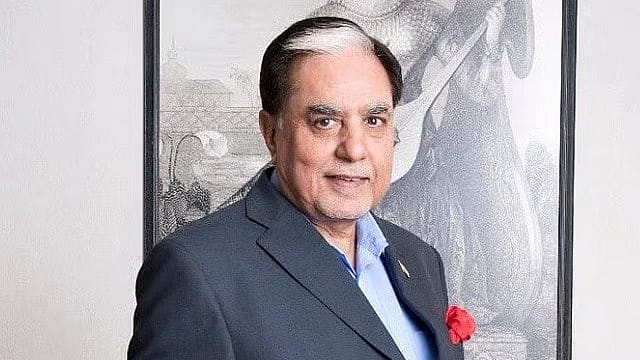
Recently, Dr Subhash Chandra, Chairman of the Rs 21,000-crore Essel Group, went live on Zee News and Instagram to address what he described as a widespread misinformation campaign regarding his ongoing NCLT insolvency proceedings. He was, in effect, putting his side of the story across after receiving considerable negative press.
What surprised denizens of the corporate world was that, in the course of his live address, Chandra openly accused Reliance Industries Ltd Chairman Mukesh Ambani and RIL-owned media entities of orchestrating stories claiming that the NCLT had reduced his personal debt liability from Rs 22,000 crore to a mere Rs 6.5 crore. He did not stop there. Chandra went further, alleging that Ambani and Manoj Modi had worked against him during Zee's financial crisis in 2019 to hammer down Zee's share price.

Losing Memory
16 Oct 2026 - Vol 05 | Issue 42
The making of a medical and social emergency
By openly naming names, Chandra has brought the issue of business rivalry to the fore. Seasoned business journalists and corporate watchers will vouch that business rivalry has always existed, but rarely did protagonists openly talk about their rivals. Attacks were usually oblique, couched in metaphors or conveyed through intermediaries. Chandra did the opposite. He left little room for ambiguity or speculation. To that extent, his candour must be admired.
Chandra's outburst took me back to the eighties and nineties, when business rivalries were intense, sensational, dramatic and personal, and occupied the front pages of business newspapers and covers of magazines almost every other day. Business journalists had a field day. For PR guys, however, it was a nightmare. Every morning, they would have butterflies in their stomachs until they had browsed through all the newspapers to check for stories attacking their group.
There are any number of stories about business rivalries, but for want of space, I have cherry-picked two and mentioned others in passing to give you the flavour. The longest battle, to my mind, was fought in the polyester industry in the 1980s.
The protagonists were Dhirubhai Ambani of Reliance Industries and Nusli Wadia of The Bombay Dyeing Co Ltd. This was considered the mother of all Indian corporate wars.
Those were the days of the Licence Raj. The Ambanis secured clearances from the Union government to set up a PTA (Purified Terephthalic Acid) plant at Patalganga in Maharashtra. PTA was considered a more modern and efficient intermediate for manufacturing polyester.
In Wadia's case, the green signal for his DMT (Dimethyl Terephthalate) plant, a different raw material to make polyester, was deliberately delayed. This gave Reliance a head start.
A peeved Wadia did not keep quiet. Here, he was helped by his close friend Ramnath Goenka, owner of The Indian Express, which ran a series of investigative stories against Reliance. Many of the stories were written by Goenka's Man Friday, S Gurumurthy, a chartered accountant by profession who is now Editor of the Tamil weekly Thuglak.
It became a daily ding-dong battle. Reliance, for its part, played on the front foot, countering the Express-Wadia offensive through legal challenges, political manoeuvring and counter-attacks.
The conflict between the two tycoons, which ran broadly through the 1980s, intensified sharply between 1985 and 1988 before petering out towards the end of the decade.
The rivalry did not end with a formal corporate handshake or settlement. Instead, it was effectively overtaken by market dynamics, changing technologies and shifting political winds. By the 1990s and 2000s, the fierce animosity had faded into corporate folklore, with Wadia focusing on other major business interests, including Britannia.
Britannia itself became the centre of another bitter battle—this time involving two friends, Nusli Wadia and the so-called Biscuit King, Rajan Pillai, who eventually turned rivals over control of the company.
Reportedly, Wadia felt betrayed by his good friend Pillai, whom he had asked to help negotiate with Britannia's then overseas owner –the Nabisco. Instead of helping Wadia, Pillai bypassed him, teamed up with Nabisco executives (and later the French giant Groupe Danone) and took control of Britannia himself.
Wadia, a corporate Samurai who felt betrayed, went all out to gain control of Britannia. The battle became increasingly bitter. Unfortunately for Pillai, a few years down the line, his global business empire ran into heavy debt and serious financial trouble. His relationship with French food giant Danone also deteriorated amid allegations and disputes over financial matters.
The battle eventually swung Wadia's way. Pillai died in Tihar Jail in 1995. Years later, in 2009, the Wadia Group secured complete control of Britannia after buying out Danone's stake.
Then there were battles in the telecom space.
Bharti Airtel's Sunil Mittal battled Anil Ambani's Reliance Communications in the 2000s and, later, Mukesh Ambani's Reliance Jio after its commercial launch in 2016.
The spectrum battle became so intense that Anil Ambani wrote to Prime Minister Manmohan Singh in 2007, accusing Airtel and Vodafone of hoarding spectrum.
Then the battlefield changed completely.
Mukesh Ambani entered telecom with Jio, embarking on massive capex and resetting the mobile industry's economics by offering cheap data and initially free voice and data services.
The disruption was brutal. Several players rolled down their shutters, merged with rivals or sold out.
To a large extent, some of India's most bitter business rivalries have occurred within family-run businesses. Then come battles between competitors—polyester, telecom and cola, for instance—and those between estranged business partners.
In family businesses, the causes are invariably control of assets, succession and division of the spoils. Some examples that come to mind are Mukesh versus Anil Ambani (Reliance); disputes involving Rahul, Shishir and Kushagra Bajaj (Bajaj Group); Cyril versus Shardul Shroff (Amarchand Mangaldas law firm); the KK Modi family feud (Godfrey Phillips); Kalanithi vs Dayanidhi Maran (Sun TV Network); Vadilal Ice Cream family feud and the Oberoi family (hotels).
Globally, too, business rivalries have been legendary. The fight between the two cola giants—Coca-Cola and Pepsi—is perhaps the ultimate never-ending commercial war. So was the rivalry between Steve Jobs and Bill Gates over operating systems, personal computing and competing philosophies of technology.
Every time one discusses business rivalry, one cannot help but bring up the book, Barbarians at the Gate, written by Bryan Burrough and John Helyar. It is the true story of the battle for control of food and tobacco giant RJR Nabisco in 1988, involving CEO F Ross Johnson, Henry Kravis's KKR and rival financiers.
The roughly $25-billion leveraged buyout was unprecedented in its scale at the time. The book offers a fascinating account of corporate egos, excesses, deal-making and greed in corporate America. It was later made into a television movie that premiered on HBO in 1993.
Finally, business rivalry is a given. How an owner or CEO deals with it is what matters. Here, the heart cannot be allowed to rule the head. Ego can destroy a business.
That is why many business families in India try to divide assets among siblings amicably. When two powerful outsiders fight, there are bound to be casualties. But that's part of the game. Business is not a fairy tale guaranteed to have a happy ending.
Many moons ago, when the Ambani brothers split, a senior journalist wrote in his column: "Two Ambanis are better than one." What he meant was that both brothers would try to grow rapidly and, in the process, stakeholders would benefit. He was spot on—at least initially. The market capitalisations of both groups grew by leaps and bounds.
But somewhere along the way, Anil Ambani's group lost steam and ran into a series of financial problems, while Mukesh Ambani's empire continued to grow from strength to strength.
Perhaps therein lies the ultimate lesson of corporate rivalry: winning the battle is one thing; surviving the war is quite another.