Ahimsa to Nuclear Deterrence: India’s Long Argument with Peace
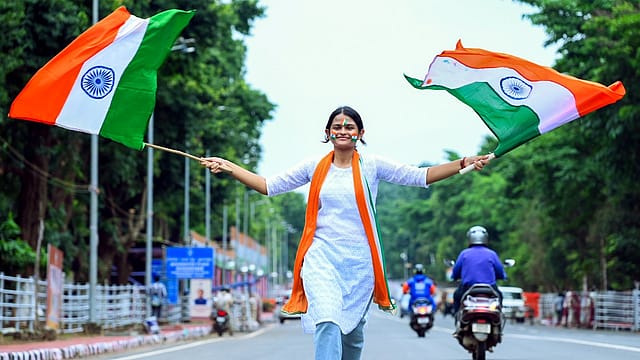
On September 21, the world observes the International Day of Peace, established by the United Nations in 1981 and dedicated since 2001 to non-violence and ceasefire. The occasion is marked by familiar appeals for harmony, but the harder question is what makes peace possible in the first place. For India, that question has an unusually long history. Peace has never been merely the absence of war in its political imagination. Nor can India's history be presented honestly as an uninterrupted story of non-violence. The subcontinent has witnessed conquest, dynastic warfare, religious conflict, partition and, in independent India, episodes of communal violence as well as the prolonged ethnic conflict and devastating violence witnessed in states.
These episodes are not marginal to the country's story; they are reminders of how fragile social peace can be even within a constitutional democracy with a long intellectual tradition of pluralism. India's contribution to the idea of peace therefore lies not in any claim that Indians have historically been more peaceful than others, but in the recurring attempt, sometimes successful, sometimes profoundly unsuccessful, to construct restraint in the exercise of power, coexistence among competing traditions, freedom from domination, economic progress and, increasingly, the capacity to prevent conflicts from becoming wider catastrophes.

Zeroing In on ECI
09 Oct 2026 - Vol 05 | Issue 41
Constitutional legitimacy versus political opportunism
India's contribution to the idea of peace therefore deserves neither civilisational self-congratulation nor historical dismissal. The Indian experience is more complicated, and consequently more instructive. It contains Ashoka and Kautilya, Buddha and Mahavira, Gandhi and Nehru, non-alignment and nuclear deterrence, UN peacekeeping and military power. Its distinctive contribution lies not in having escaped violence, but in repeatedly asking whether power can be restrained by principle without leaving society defenceless.
Ashoka remains an important early example. The Kalinga war in the third century BCE produced a remarkable change in the Mauryan state. His inscriptions speak of remorse over the suffering caused by conquest and place unusual emphasis on dhamma, tolerance among religious communities and the welfare of subjects. Ashoka did not abolish the state or pretend that political authority could survive without power. What changed was the standard by which power was judged. Conquest was no longer presented as the highest achievement of the ruler; ethical conduct and the welfare of the governed acquired political significance.
The Buddhist and Jain traditions developed powerful arguments against violence, while the wider Indian philosophical tradition repeatedly explored restraint, duty and coexistence. Yet India also produced the Arthashastra, one of antiquity's most sophisticated works on statecraft, diplomacy, intelligence and war. The juxtaposition is important. India's intellectual history never established a simple opposition between morality and power. It recognised that a political community required both ethical limits and practical security.
Gandhi transformed this inheritance in a radically modern direction. Ahimsa became not merely a personal virtue but a method of political mobilisation. Satyagraha proposed that resistance could be powerful without reproducing the violence of the oppressor. Gandhi's importance to the history of peace lies less in the proposition that Indians are inherently non-violent than in his insistence that the means used to achieve political freedom shape the society that follows. The United Nations' decision to observe October 2 as the International Day of Non-Violence reflects the international influence of this political experiment.
Independent India carried this tradition. Jawaharlal Nehru's foreign policy sought to protect India's strategic autonomy while avoiding subordination to either side of the Cold War. Panchsheel, articulated in the 1954 India-China agreement, emphasised mutual respect for sovereignty and territorial integrity, non-aggression, non-interference, equality and mutual benefit, and peaceful coexistence. The Non-Aligned Movement subsequently gave newly independent countries a collective diplomatic space between competing power blocs.
But contemporary India cannot simply reproduce non-alignment. The Cold War is over, China has become a major strategic competitor, the United States is an increasingly important partner, Russia remains significant, and conflicts in Europe and West Asia have demonstrated how quickly distant wars can affect food, energy, finance and security in Asia. What has survived from non-alignment is therefore less its original institutional form than the principle of strategic autonomy: India seeks relationships with multiple centres of power without allowing any one relationship to dictate all its choices. This is visible in India's contemporary diplomacy.
The same strategic autonomy becomes more complicated in neighbourhood. The events surrounding Operation Sindoor in May 2025 demonstrated that India's conception of peace cannot be separated from its security concerns. Following the Pahalgam terrorist attack, India undertook military action against terrorist infrastructure, emphasising that the response was targeted and intended to avoid escalation. The episode illustrates a fundamental difficulty in contemporary peace politics: a state may regard deterrence or limited military action as necessary to prevent a larger conflict, even while describing peace as the ultimate objective.
This is particularly consequential because India is a nuclear-armed state. Its official doctrine continues to emphasise credible minimum deterrence and a no-first-use posture, while India simultaneously maintains its commitment to universal, non-discriminatory and verifiable nuclear disarmament. It reflects a central reality of nuclear politics: India regards deterrence as a security necessity in the existing international system while maintaining that nuclear weapons should ultimately disappear from it. The credibility of the latter argument depends, however, on whether major powers can move beyond selective approaches to disarmament.
India has participated in UN peacekeeping since 1948, contributing nearly 300,000 personnel to more than 53 missions, the largest cumulative contribution of any country, with 184 Indian peacekeepers losing their lives in service. India also deployed the UN’s first all-female formed police unit, to Liberia in 2007. In 2026, Major Abhilasha Barak received the UN’s Military Gender Advocate of the Year Award for 2025 for advancing gender-responsive peacekeeping during her deployment in Lebanon.
Currently, India’s conception of peace is increasingly connected to the Global South. Its Voice of Global South Summits have sought to bring developing countries’ concerns over conflict, debt, food and energy security and unequal representation in global institutions to the international agenda. During India’s G20 presidency in 2023, the African Union was admitted as a permanent member of the G20, giving the world’s developing regions a stronger institutional voice. India’s 2026 BRICS chairship has extended this emphasis, with New Delhi placing reform of global governance and multilateral institutions at the centre of the grouping’s agenda. BRICS itself now represents a substantially expanded grouping of emerging and developing economies, making it an important forum for a more representative international order.
This matters because peace cannot be separated from the distribution of economic opportunity. Wars fought elsewhere can raise food and energy prices, deepen debt pressures and disrupt trade far beyond the battlefield. India’s contemporary diplomacy consequently increasingly treats development, connectivity, technology and capacity-building as instruments of stability. Its MAHASAGAR vision—“Mutual and Holistic Advancement for Security and Growth Across Regions”—places trade, sustainable growth, technology sharing, capacity-building, mutual security and concessional finance at the centre of its engagement with the Global South. Whether these initiatives develop into durable institutions remains an open question, but the underlying proposition is significant: lasting peace is difficult to sustain when economic insecurity and unequal representation remain embedded in the international system.
The Indian contribution to peace should therefore not be reduced to the Sanskrit phrase Vasudhaiva Kutumbakam, the moral authority of Gandhi, or the diplomatic history of Nehru. Those are vital parts of the story, but they are insufficient for the world India now inhabits. India is simultaneously a democracy of more than 1.4 billion people, a nuclear power, a major military actor, one of the world's largest contributors to UN peacekeeping, an advocate of Global South representation and a consequential economic and technological power.
Its peace philosophy consequently has to answer harder questions than it did in the twentieth century. How should a state respond to terrorism without allowing retaliation to become permanent escalation? How can deterrence coexist with disarmament? Can strategic autonomy remain meaningful in an era of rival power blocs? Can international institutions claim legitimacy while their most powerful bodies still reflect the geopolitical realities of 1945? And can development itself become an instrument of peace over a measure of national power?
There may be no perfect answer to these questions, and India’s own contradictions should not be concealed. Yet that is precisely what makes its experience instructive. Its history suggests that peace is neither passive surrender nor simply the absence of power. It requires limits on power, institutions capable of managing disputes, space for diplomacy and an international order in which economic progress is not confined to a few states.
India’s most valuable contribution to the idea of peace, therefore, is not the claim that it is an ancient civilisation of peace, but the more demanding proposition that a civilisation and a modern state must continually negotiate the relationship between morality and power.
Ashoka confronted the question of restraining conquest; Gandhi, of resisting injustice without reproducing violence; Nehru, of preserving strategic autonomy amid rival power blocs. Contemporary India faces the next iteration: how can a rising power exercise influence without becoming captive to the logic of power itself? That is the question worth asking on the International Day of Peace. Peace is not a finished inheritance, but an ongoing political project.