The Bibi Factor: Is Netanyahu’s political longevity good for India?
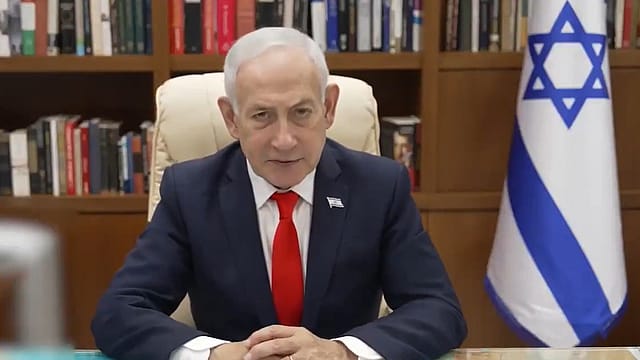
A deadlock in Israel’s parliamentary election may perversely benefit Benjamin Netanyahu. The opposition bloc led by former Israeli army chief Gadi Eisenkot can only form a government with the help of Palestinian-Arab parties which have performed exceptionally well. Both Netanyahu and Eisenkot blocs have refused their support. The Palestinian-Arab parties, however, are a pointer to Israel’s long-term political future.
Israel remains as polarised electorally, and as fractured socially, as before. Never in its tortured 78-year history has a single party won a majority in Israel’s Parliament, the Knesset. Netanyahu has been prime minister across three separate terms since he first took office in 1996. Of Polish descent, Netanyahu is among the most controversial leaders in Israel’s short and violent history.
For India, Netanyahu’s political longevity is a double-edged sword. Prime Minister Narendra Modi’s visit to address Israel’s Knesset three days before Israel and the US began bombing Iran on February 28 has been a source of embarrassment. Intelligence from Western agencies of an imminent Israel-US attack on Iran was available. Why did Modi go ahead with the official visit? Was he misled by Netanyahu that an attack on Iran was not imminent?
Both Israel and the wider Middle East remain crucial to India’s geopolitical and economic interests. Iran’s Chabahar port gives India a trading route to Central Asia, bypassing Pakistan. The Gulf sheikhdoms are a source of oil and gas and an estimated $60 billion in remittances every year.
Israel is central to India’s interests in West Asia as part of the proposed India-Middle East-Europe Economic Corridor (IMEEC). The corridor will provide India a sea, rail and land route cutting through the Gulf sheikhdoms and Israel’s Haifa port to a landing in Cyprus, an entry point into the 27-nation European Union (EU).
The Netanyahu-Trump relationship has soured over the past few months. Trump holds Netanyahu responsible for misleading him over the Iran war. Netanyahu had lobbied hard to convince Trump that bombing Iran on February 28 and assassinating its key leaders would lead, in a matter of days, to the overthrow of the Khamenei regime. A popular street uprising would install a US puppet administration. Eight months later, Netanyahu’s miscalculations have dragged America into a war it didn’t need nor want.
Trump will have to build a new relationship with Israel, a country still traumatised by the Hamas attack on October 7, 2023. Israel’s brutal retaliation in Gaza, killing over 74,000 people, many bodies still buried under rubble, has made it an international pariah.
With the Congressional midterms over, Trump has no elections left to fight before he leaves office for the last time in two years. Will that embolden him to join Israel in yet another attack on Tehran? India is in the embarrassing position of being pariah Israel’s most ardent supporter. Netanyahu publicly cited India’s support to deny that Israel was isolated internationally. Prime Minister Modi wisely said nothing.
The brutal attacks by illegal Jewish settlers in the West Bank have drawn global condemnation. Israel itself has moved increasingly towards becoming an apartheid state. Earlier this year, Israel’s parliament passed a new law. According to Al Jazeera, the law “makes death by hanging the default punishment for Palestinians convicted of deadly attacks. The law is written so that it cannot apply to Israelis convicted of the same crimes.
“The measure passed with 62 of the Knesset’s 120 members voting in favour, including Prime Minister Benjamin Netanyahu. It was championed by National Security Minister Itamar Ben-Gvir, head of the far-right Jewish Power party who has a history of violence and incitement against Palestinians. Ben-Gvir and his supporters wore gold lapel pins shaped like nooses on the floor of the legislature to show their support for the bill. ‘Soon we will count them one by one,’ Ben-Gvir said of the executions to come, while celebrating with champagne.”