Beyond the Northern Lights: The Sweden Tourists Rarely See
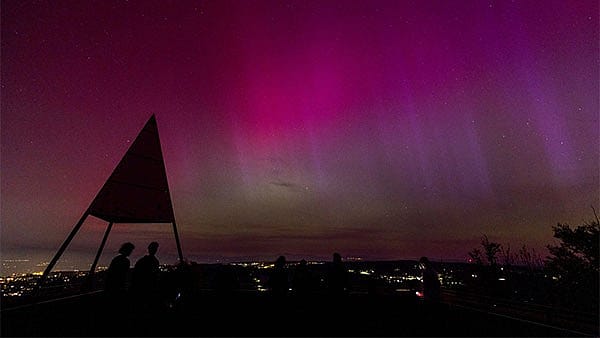
Well, blame it on all the wrong things I’ve been reading, but I thought the Swedes were a rather stodgy lot, with broad, fair features, clean nails and unsmiling visages, with the girls pneumatic, and all capable of giving the famous massage.
Well, Swedish massage, it turns out, does not quite exist in Sweden, just as Indian Chinese does not exist in China. And the Swedes are a lovely people - quiet, forthcoming, courteous and generous. They will not necessarily volunteer their services, but they will be beside you when they see you need them. There is something rather endearing about that discretion.
Par, our erudite cab driver, was a case in point. He is well-to-do, with considerable land holding, some of which has been leased for mining and some of which are optioned. He owns hunting guns, which he uses once in a while to hunt reindeer and moose. He has an Indian wife, Reema, and three daughters. And, most unexpectedly for a cab driver ferrying tourists around Kiruna, he is deeply interested in history and politics.

The Era of Forever Wars
30 Oct 2026 - Vol 05 | Issue 44
Coping with an explosive Middle East
As conversations between strangers are wont to do, ours inevitably turned to politics.
His biggest bugbear is Russia, the “big evil empire”. But he detests Trump almost as much, and considers China the third member of an imperialistic triumvirate. He is puzzled by India’s closeness to Russia. I tried to explain the historical co-dependence behind that relationship, the legacy of the Soviet Union, and the very different way in which India views its strategic interests. He was very indignant about Russia’s invasion of Ukraine. I gently brought up the complexities of geopolitics here - NATO's assurance of not expanding eastwards after German reunification, of what Russia believed to be an honourable commitment, and what NATO said was never agreed to. Clearly, this was not a conversation that could be wrapped up in a cab ride.
He also considered the war involving Iran to be a manufactured one. Whether one agreed with his conclusions or not, it was striking how closely he followed the affairs of a world far removed from his own.
I asked him whether Swedes in general were as well-read and politically aware as he was. He swung his head and said that they cared about a great many things, certainly, but - then came the familiar lament - “Nobody reads now. It’s all reels and Insta Shorts.”
Sounded suspiciously like anywhere else.
Par worries about legacy. He talks about leaving his wealth behind for his children, so they could live lives of dream fulfilment. He admires India. “You are the font of all religion and philosophy,” he told me. And then, with a laugh he added: “And I think we taught Indians to become dentists! There are so many of them!”
I am not sure how we got from the wellsprings of philosophy to dentistry, but the conversation had a life of its own.
It was when I asked him about crime, and the discontent that seemed to lie beneath the surface, that Par spoke from his heart, even as the narrative turned uncomfortable.
“It’s all the Arabic people,” he said, referring broadly to people he associated with Muslim backgrounds.
According to him, the first wave of immigrants had included murderers, prostitutes and rapists, and the country was now sending people back when they were caught committing crimes. He was, of course, describing his own understanding of a complicated history, rather than offering a verifiable account of how Sweden’s immigration policy had evolved. But his conviction was unmistakable.
He also acknowledged a contradiction. Sweden needs people. Its population is ageing, and they are just not enough babies being created. And it was a problem which was putting immense strain on the continuum of basic services, and the labour market in general. The country needed workers, including people from abroad, to sustain its economy and public services. What the country wanted, he said, was the right kind of immigrants - people with the skills and professions the country needed.
It was a familiar argument, and one that is becoming increasingly common across Europe - "We need immigrants, but we do not necessarily want immigration. We want their labour, but not always their lives, their habits, their differences. We want the contribution without the complications."
I wondered whether the contradictions were as apparent to the Swedes themselves as they were to an outsider.
Hanna, our wise guide in the Northern Lights run, spoke of the many Indians who were coming north to see these. They were nice people, she said, though not all of them. Just as not all Swedes were nice. She smiled, as she regaled us with stories of Indians who had been insensitive, inconsiderate or simply tone-deaf to their surroundings. We were both familiar with the type.
“The tragedy,” I said, “is that we sometimes forget that each Indian is actually an ambassador for his country. Because sometimes he might be the only Indian some people will ever meet.”
It is a thought worth carrying home, particularly in a world in which our impressions of entire peoples are so often formed by one encounter, one photograph, one news report, or one badly behaved tourist.
This beautiful country, I began to realise, is not necessarily a heady place for its own denizens. We, as outsiders see the forests, the lakes, the extraordinary skies, the snow and the almost implausible quiet. The Swedes see the taxes, the bills, the mixed opinions on the immigrants, and the everyday business of making a life.
“You pay thirty per cent tax on your first job,” Par explained, “and when you earn more, the tax goes up to fifty per cent. Then add all the taxes on everything else, and it comes to seventy per cent or more!”
He was speaking with the understandable frustration of someone who sees a substantial portion of his earnings disappear into the public exchequer. As I figured out, with more conversations and some study, the actual picture is more complicated. Sweden’s income tax is broadly around thirty per cent, while higher earners pay additional national income tax on income above a threshold. These are marginal rates, not necessarily the percentage deducted from every krona earned. Consumption taxes, property-related charges and other levies add to the overall burden, but the oft-repeated figure of seventy per cent is not a universal tax rate on Swedish earnings.
I countered with the usual argument - at least you have universal healthcare.
Par shook his head.
The problem, he said, was that demand for healthcare outstripped the system’s ability to deliver it. There are long waits for specialist consultations and planned surgeries, sometimes stretching beyond waiting-time guarantees. This is not merely a complaint made by disgruntled taxpayers. Swedish health authorities actually publish waiting-time data, and the problem varies considerably across regions and specialities.
In fact, I remember Hanna telling us that Kiruna did not even have a hospital capable of providing all the services people needed, and patients sometimes had to travel to Stockholm for specialist treatment. In a vast country with a small population, geography itself was becoming a challenge.
It is a peculiar paradox. A country can offer a comprehensive public healthcare system and still struggle to deliver care in time. The promise may be universal, but the experience need not be uniform.
And that brought me to mental health, which we heard was a deep-rooted problem in Sweden.
Was it the long, dark winters, I asked? Or the months when daylight refuses to leave, when the sun seems to disappear behind a curtain, and the landscape becomes a study in white, grey and blue? (For me, the film Insomnia is like a template for this!)
Par guffawed.
“If somebody told you that, laugh!”
According to him, the real problem was alcohol. People drank too much, he said, and did not know when to stop. Because of which Sweden has actually taken a rather different approach to the sale of alcohol via-a-vis countries where it is freely available in every supermarket. The state-owned Systembolaget has a monopoly on retail sales of most alcoholic beverages above a alcohol content, with stringent opening and closing hours, and restrictions designed to limit excessive consumption.
The idea is that making alcohol less convenient to buy will help reduce alcohol addiction - it is a long-standing feature of Swedish public health policy, not an incidental bureaucratic quirk.
And yet, Par insisted, the problem persisted. It was grim.
I would be wary of accepting his explanation of mental health in its entirety. Seasonal darkness, alcohol consumption, isolation and mental health are complex subjects, and one cannot explain a nation’s psychological wellbeing through any single factor. But his response was revealing in another way: Swedes, too, have their own explanations for what ails them, their own frustrations with the social compact, their own suspicion that the system is not quite delivering what it promised.
During our limited time in Sweden, it was clear that this was not a closed society but one which embraced cultural homogeneity. We encountered people from Spain, Germany, Poland, Lithuania and elsewhere, many of whom had come to study, found work, or simply decided that Sweden offered a life they wanted to build.
We befriended an Afghan boy who had arrived in Sweden, all alone, ten years earlier, without knowing the language. He was now learning Swedish and working towards the educational qualifications that might eventually allow him to enter university. He was receiving support to help him navigate the system, and his future, he told us with a smile, remained an open question. University was one possibility. Or perhaps not.
There was something moving about his determination, and something sobering about the length of the journey he had to make. To leave one’s country alone, learn an entirely new language, understand unfamiliar institutions and then begin the process of acquiring the qualifications needed to move ahead: it is a considerable undertaking.
We also met someone from Somalia who was studying at university. He reminded me of the many Somalis I had encountered in various cities in Minnesota, in the United States. I had met young people there who seemed remarkably untroubled by whether they completed their education, even when public support was available to help them do so. I remember the Rolexes they wore, the easy confidence, the sense that formal education was not necessarily the central leitmotif of their lives. And I mulled on how the good which was being done by countries for refugees, was also being gamed by the latter.
But perhaps I was drawing too much from too few encounters. A person’s watch tells us little about their circumstances, and even less about an entire community. What looks like indifference from the outside may conceal a different set of priorities, difficulties or ambitions.
Still, the question stayed with me.
Beneath the beauty and the prosperity and the ostensible serenity, was another society taking shape? Were there people and communities that felt detached from the mainstream, and others who resented their presence? Was this the subcutaneous layer of discontent that Par and Hanna had been talking about?
Or was I, like so many visitors before me, trying to make a grand theory out of a handful of conversations?
The other issue is that of the indigenous people, the Sámi.
Long before modern national borders divided the northern reaches of Scandinavia, the Sámi inhabited the region known as Sápmi, which stretches across what are now northern Norway, Sweden, Finland and parts of Russia. Their traditional livelihoods included reindeer herding, fishing, hunting, all done on land which was just available, without need for ownership or claim.
But now that same land had become valuable to everyone else.
Forestry, mining, energy projects, roads and all kinds of developments had started competing for the very same territory. Add climate change to exacerbate the uncertainty to the conditions on which reindeer herding depended.
The fact is simple. Behind the present-day disputes lies a long history of state policies that restricted Sámi rights, displaced communities, undermined their languages and culture, and treated their relationship with the land to be subordinate to the interests of society at large.
Whilst seeing Sami art in Kinn Museum of Contemporary Art inside the golden Town Hall in Kiruna, the curator Lena Ylipaa told us that Sweden recognises the Sámi as an indigenous people and as one of its national minorities. Alas, recognition is not the same as an absence of conflict.
Their situation is not simply one of a vanishing people reluctantly being absorbed into modernity. Many Sámi live contemporary lives, and participate in the wider economy whilst maintaining their cultural identities. Some continue to herd reindeer; others do not. Yet the pressures on traditional livelihoods are real.
There are difficult questions which the tribal communities are facing even in India - about who controls the land, who profits from its resources, and whose interests must yield when development is proposed.
As outsiders, we may find ourselves watching a few Sámi in traditional dress, listening to their stories, perhaps purchasing a souvenir, and feeling that we have encountered an ancient culture. But the Sámi are not museum exhibits. Their culture is alive, and their future depends increasingly on decisions made by governments and businesses.
It is a familiar story all over: indigenous people, whose relationship with the land predates the state, find themselves negotiating for the right to continue living as they have always done.
The particulars differ, of course, from those of Native Americans in the United States or the Māori in New Zealand, which I have also encountered first hand. But the underlying tension between a people’s historical relationship with its land and the modern state’s appetite for its resources is difficult to miss.
And so, Sweden was no longer the cut-and-dried country of bliss and cold that I had imagined it to be. How could it be?
Every society has its fault lines. Some are peculiar to its history and geography; others are shared with much of the world. The politics of immigration, the anxieties of an ageing population, the cost and delivery of public services, the relationship between taxation and entitlement, the unease about cultural change, and the fear that the world’s problems are arriving faster than a society can absorb them: Sweden has its share of all of these.
There is also the familiar question of trust. Can citizens continue to trust the institutions to which they surrender so much of their income and so much of their individual discretion? Can a generous welfare state, which Sweden was, remain generous while meeting the increasingly conflicting and competing demands placed upon it? Can a society welcome newcomers without pretending that integration is effortless, or insist on integration without turning difference into suspicion?
These are not questions with easy answers. Nor are they necessarily evidence that a society is failing. They may simply be the questions that arise when a country attempts to reconcile prosperity, fairness, freedom and belonging.
Par’s and Hanna's views were only one part of perception or reality. They were not a survey of Sweden, and they certainly did not constitute the last word on Russia, immigration, alcohol or the welfare state. But that was precisely the point. A conversation with a stranger is not a research paper. It is a window, sometimes clear, sometimes distorted, into the way another person sees the world.
We had arrived in Sweden expecting beauty, silence, snow and the Northern Lights. We found all of those, in abundance. But we also found people negotiating the same fundamental questions that occupy people everywhere: how to make a living, how to raise children, how to preserve what matters, how to live with those who are different from us, and how to leave something worthwhile behind.
The landscape may be spectacularly different. The human predicament is not. A beautiful country, then, with not-so-beautiful problems.
And perhaps that is the most remarkable thing about Sweden - that beneath the postcard perfection lies a country of ordinary people, trying, as we all are, to work things out.
(Sunil Bhandari, the author, is a poet based in Kolkata)