Noel Tata's Dilemma: When Allies Turn Adversaries, What Are His Options?
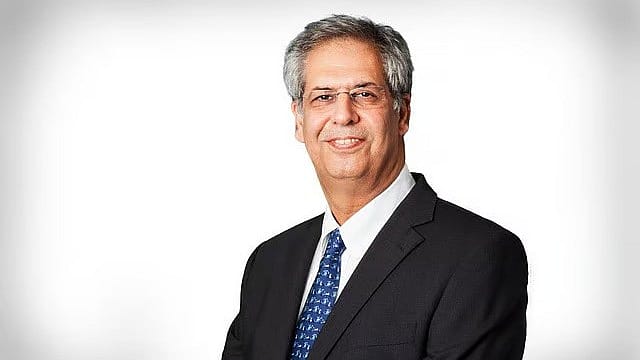
Until Ratan Tata passed away in October 2024, his half-brother Noel Tata maintained a deliberately low profile within the $180-billion Tata Group. He let his companies' exemplary performance do the talking. A case in point is Trent. But two days after Ratan Tata's death, on October 11, 2024, Noel Tata took over as chairman of Tata Trusts, which collectively hold a 66% stake in Tata Sons, the group's holding company.
In his new role, Noel Tata appears to be shedding his old, media-shy image and raising his public profile by attending high-visibility events. Recently, he attended the NDTV Profit Business Leadership Awards 2026 in Mumbai. Incidentally, he was also a member of the jury.
Similarly, he attended the Republic TV Summit in Mumbai and agreed to be interviewed by Arnab Goswami. During the interview, Noel Tata came across as an extremely charming and articulate person. He played a straight bat and, in his own way, kept the audience entertained and informed. For once, I found Arnab rather subdued, considering that Noel Tata is at the centre of a battle for control. Arnab simply did not go there.

Losing Memory
16 Oct 2026 - Vol 05 | Issue 42
The making of a medical and social emergency
Noel Tata was also seen with Maharashtra chief minister Devendra Fadnavis at the launch of an integrated digital platform for industrial development in the state.
Optics matter. And when you carry a surname that signifies trust, they matter even more.
Now for the reality check.
When Noel moved centre stage, he faced resistance from Mehli Mistry, a close confidant of Ratan Tata. Mistry opposed several of his decisions and challenged the legality of the Trusts' board.
Noel did not flinch. He played his cards well. With the support of other trustees — Venu Srinivasan, Chairman Emeritus of TVS Motor, and Vijay Singh, former Defence Secretary — he blocked Mistry's reappointment as a ‘trustee for life’ on October 28, 2025.
That move saw Mistry's supporters, including Pramit Jhaveri, former CEO of Citibank India, legal eagle Darius Khambata and philanthropist Jehangir H C Jehangir, lose ground. Reportedly, all four had opposed the reappointment of Vijay Singh to the Tata Sons board.
Ironically, in his fight against Mehli Mistry and others, Noel was supported by Tata Sons Chairman N Chandrasekaran, Venu Srinivasan and Vijay Singh.
But less than a year later, Noel Tata and the Venu Srinivasan-Vijay Singh-Chandrasekaran combine find themselves on opposite sides of major decisions concerning the listing of Tata Sons and Chandrasekaran's third term.
The allies have turned adversaries! What changed the equation at Bombay House?
It may be recalled that at the Tata Sons board meeting held on February 24, 2026, Noel Tata, in his capacity as chairman of Tata Trusts, the largest shareholder in Tata Sons, raised concerns about several of the group's businesses, including aviation, automobiles and digital services.
A couple of days later, Noel reportedly proposed a shorter, two-year extension for Chandrasekaran beyond 2027, instead of the five-year term extending to 2032 that had earlier been approved by the Tata Sons board.
My guess is that this was perhaps the turning point in their relationship.
Since then, Noel Tata has been facing a fusillade of questions from Venu Srinivasan and Vijay Singh. They have questioned his proposal to reorganise Tata Sons by merging Tata Electronics Systems Solutions and Tata Consulting Engineers with it, ostensibly to avoid its listing.
Both Venu and Vijay, vice-chairmen of the Sir Dorabji Tata Trust and Sir Ratan Tata Trust, have reportedly argued that the proposal was mooted without consulting the other trustees. They have also approached Maharashtra's Charity Commissioner over the matter.
Where does this leave Noel Tata? Do Venu Srinivasan, Vijay Singh and the other directors have the heft and gravitas to keep Noel Tata at bay? What is the general perception of Noel Tata? In a popularity contest, who would win?
The kind of Spanish Inquisition Noel Tata is facing raises another question: Was his earlier alignment with Venu, Vijay and Chandra based on a shared vision for the Tata Group, or was it merely a temporary arrangement to resolve the Mistry issue?
Clearly, the dispute is no longer merely about whether Chandra should get a third term or whether Tata Sons should be listed.
It is now about the authority of the chairman of Tata Trusts and the extent of his influence over Tata Sons.
The larger question is whether Noel Tata can act on behalf of the Trusts without the collective approval of the relevant trustees. Equally important, can Tata Sons proceed with major decisions when the Trusts' nominee directors disagree? There are no clear answers yet.
The regulatory complaints, engagement of legal luminaries and objections to Noel's restructuring proposal all suggest that this is fundamentally a battle over authority.
There is another issue that deserves attention. Can a charitable trust that is the largest shareholder in Tata Sons maintain a clear distinction between its responsibilities as a shareholder and those of the company's board?
Venu and company may have valid points, but instead of resolving their differences internally, why take the battle outside the boardroom? After all, Brand Tata is taking a beating. Surely, there must be a way to resolve these differences through dialogue.
As things stand, this intense battle looks set to become a long-drawn-out affair.
Meanwhile, hundreds of stories, articles and expert opinions on the subject have appeared in print and digital media. Having read most of them, one question comes to my mind: What are the options before Noel Tata?
To my mind, there are four.
Seek reconciliation. Noel could extend an olive branch to the dissenting trustees and work towards a common position in Tata Sons. This could include allowing Chandra to complete a third term.
Consolidate support. Noel could play the numbers game, win over more trustees and build a consensus in favour of his agenda. But would this resolve the underlying governance issues or merely postpone another confrontation?
Pursue legal remedies. The legal process is already underway on certain issues. Legal luminaries on both sides will have to interpret the Articles of Association and the Trusts' governing documents. Much will depend on the merits of their arguments and how the relevant authorities interpret the provisions.
Negotiate a governance settlement. In many Western corporations, ownership and professional management operate within clearly defined boundaries. Can Tata Trusts and Tata Sons establish a similar framework that respects the rights of shareholders without undermining the authority of the board?
There is no gainsaying the fact that Noel's position as chairman of Tata Trusts and his position as a director of Tata Sons are legally distinct. A challenge to one does not automatically affect the other. Nor can he be dislodged merely because some trustees disagree with his decisions. Any such move would have to follow the applicable legal and governance procedures.
Finally, is what we are witnessing at the 158-year-old Tata Group a clash of egos, a moral issue or a corporate governance battle? Or is it a bit of everything?
In the end, who wins and who loses may matter less than the collateral damage to investors and Brand Tata.
For a group that has built its reputation on trust, transparency and ethical governance, the continuing public spectacle is particularly unfortunate.
It would be in the larger interests of all concerned to sit across the table and thrash out their differences before it is too late.
After all, the House of Tata is bigger than any individual — whether his surname is Tata or not.