Inside Pakistan’s ambitious critical minerals gamble
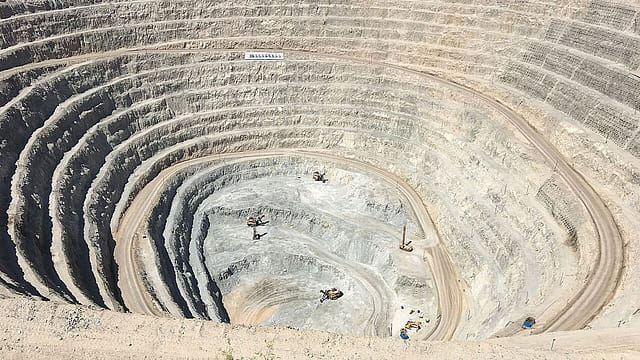
On September 8, 2025, Pakistan’s Frontier Works Organization and Missouri-based US Strategic Metals signed a landmark $500 million agreement in Islamabad to develop Pakistan's critical minerals sector, including a poly-metallic refinery. The deal followed up on Washington and Islamabad’s trade agreement from the previous month, which revived Pakistan’s hopes for more American investment in its minerals and oil reserves. US Strategic Metals is focused on producing and recycling those critical minerals that the US Department of Energy defines as essential in various technologies related to advanced manufacturing and energy production. The move ostensibly signals a strategic shift towards greater US-Pakistan cooperation. In October 2025, Pakistan dispatched its first shipment of rare earth elements and critical minerals to US Strategic Metals, marking a symbolic breakthrough for both governments and a historic first for Pakistan’s mineral sector. Despite the fanfare with which these moves were greeted, numerous questions loom over the durability of this and related deals and their transformative capacity.
First, Pakistan’s rare earth sector is limited almost entirely to raw mineral extraction, with virtually no functioning midstream processing infrastructure. Pakistan lacks the advanced separation or purification technologies required to convert mined ore into marketable rare earth oxides or refined compounds. Mining projects in Pakistan’s remote regions face far more than equipment shortages; they are constrained by deep structural infrastructure gaps that hinder the development of the rare earth sector. Key obstacles include limited power capacity for energy‑intensive processing, inadequate transport networks for heavy industrial logistics, scarce water resources needed for hydrometallurgical operations, and a shortage of specialized metallurgical engineers. With no integrated value chain, Pakistan remains reliant on basic ore extraction rather than higher‑value processing, preventing it from capturing downstream margins. The absence of modern mining and processing technologies further reduces efficiency and complicates environmental compliance, despite their potential to boost recovery rates and lower ecological impact.

Zeroing In on ECI
09 Oct 2026 - Vol 05 | Issue 41
Constitutional legitimacy versus political opportunism
Second, the partnership’s financing and legal structure remain opaque. Neither side has clarified whether the investment is equity‑based, debt‑financed, or arranged as a public–private partnership, nor whether entities such as the US Development Finance Corporation, EXIM Bank, or Pakistan’s sovereign funds are providing guarantees. It is also unclear whether the September agreement has since been converted into a binding commercial agreement. Without this transparency, it is difficult to discern whether the initiative represents a viable industrial project or primarily a strategic signal.
Third, Pakistan’s ambitions hinge on establishing a coherent domestic policy framework. Although officials frequently cite an estimated $6 trillion in untapped mineral wealth, the mining sector contributes only 2–3% to GDP and accounts for just 0.1% of global exports. The widely repeated $6–8 trillion figures are speculative and lack technical credibility, reflecting theoretical in‑ground valuations of unverified mineral occurrences rather than proven, economically recoverable reserves.
Fourth, Pakistan has no JORC (Joint Ore Reserves Committee Code )‑ or NI 43‑101 (a mandatory Canadian reporting standard that governs how mining companies disclose information about mineral exploration, resources, and reserves)‑compliant resource data. Current estimates conflate geological potential with commercial viability. By contrast, Reko Diq (in the Chagai District of Pakistan’s insurgency-riven Balochistan province) contains proven and probable reserves—copper, gold, silver, molybdenum, cobalt, and trace rare earths (Cerium, Lanthanum, Neodymium, and Praseodymium )—valued at roughly $60–74 billion. Much of the country remains underexplored and poorly mapped for critical minerals. While genuine potential exists in Balochistan, Khyber Pakhtunkhwa, and Gilgit‑Baltistan, realistic assessments place total recoverable value at $100–300 billion over several decades. The trillion‑dollar narrative persists largely for political and promotional purposes, obscuring the need for credible geological surveys, institutional reforms, and modern exploration to establish verifiable, economically viable reserves.
Fifth, Pakistan still lacks a coherent national strategy for critical minerals, and its regulatory framework remains fragmented. Integrating the emerging US partnership with Chinese‑backed projects under the China–Pakistan Economic Corridor (CPEC) will require careful political balancing—especially in Balochistan, where foreign actors have long dominated large‑scale mining. The Reko Diq copper‑gold project, jointly operated by Barrick Gold and the Government of Balochistan, is being revived after years of legal disputes and represents one of the world’s largest undeveloped deposits, with estimated resources exceeding 40 million tons of copper and 50 million ounces of gold.
Saindak, also in Pakistan’s restive Balochistan province near the border with Iran, by contrast, is an older, fully operational mine run by the Metallurgical Corporation of China under a long‑term lease, producing roughly 20,000 tons of copper, 1.5 tons of gold, and 2.5 tons of silver annually. Together, these projects highlight the ongoing tension between attracting foreign investment and maintaining national control over mineral revenues. Incorporating the new US partnership into this landscape will test Islamabad’s ability to navigate competing strategic and economic interests without alienating Chinese investors or reigniting provincial grievances. While establishing Special Economic Zones or offering tax incentives for downstream processing could help draw investment and facilitate technology transfer, no such measures have yet been introduced.
Sixth, Pakistan’s geological potential is real, though modest in scale compared with established global producers. Rare earth occurrences are found across Balochistan (Cerium, Lanthanum, Neodymium, Thorium, and Uranium), Khyber Pakhtunkhwa (Cerium, Neodymium, Praseodymium, and Samarium), and the northern regions (Cerium, Neodymium, Yttrium, and Dysprosium), with the Chagai district, the Swat–Dir belt, and the Makran coastal zone representing the most promising areas for future exploration. However, many of these areas, especially in Balochistan and Khyber Pakhtunkhwa are riven with insurgencies.
As noted above, sites of potential extraction are insurgency-riven. The insurgency in Balochistan is a long‑running ethno‑nationalist conflict driven by political marginalization, resource grievances, and demands for greater autonomy or independence. Armed groups such as the Baloch Liberation Army (BLA), Balochistan Liberation Front (BLF), and Baloch Republican Guards conduct attacks on Pakistani security forces, infrastructure, and increasingly Chinese interests linked to CPEC. Violence has escalated in recent years, including suicide bombings and complex assaults. The conflict persists despite repeated military operations, fueled by local discontent and the region’s strategic and resource significance.[1] Over the past decade, more than 47 Chinese nationals have been targeted in terrorist attacks in Pakistan, resulting in at least 30 deaths and 17 injuries. These incidents are largely driven by militant and separatist groups who view the development projects involving Chinese personnel as conflicting with their objectives. The US mining deal with Pakistan risks escalating this conflict.
Barrick Gold’s 2022 agreement to revive the Reko Diq copper‑gold project was hailed as a breakthrough for Pakistan, promising jobs and development in impoverished Balochistan. Yet past experiences, such as the Saindak mine, fuel fears that locals will again see few benefits. International financing is lining up, but the project faces escalating violence and political instability. Baloch insurgent groups—including the US-designated terrorist organization BLA, responsible for severe harm and human rights abuses—oppose the project and have intensified attacks. With rising militancy, weak local governance, and deep distrust of Islamabad, Reko Diq’s future hinges less on profitability than on security and legitimacy.
The Islamist insurgency in Khyber Pakhtunkhwa is led chiefly by Tehreek‑e‑Taliban Pakistan (TTP), a violent Islamist extremist group responsible for significant civilian and security‑force casualties. Formed in 2007, the TTP aims to dismantle the Pakistani state’s authority in Pashtun areas and enforce its own interpretation of Islamic law. Operating from sanctuaries in eastern Afghanistan and Pakistan’s former Federally Administered Tribal Area districts, the group carries out bombings, ambushes, and targeted killings. Its activities have intensified since the Taliban’s 2021 takeover of Afghanistan, with attacks rising sharply across Khyber Pakhtunkhwa. Repeated negotiations have failed, leaving the insurgency as one of Pakistan’s most persistent internal security threats.[2] Since 2000, the TTP has killed more than 10,000 people.[3]
Additionally, the Islamic State Khorasan Province (ISKP) has widened its footprint in Pakistan, carrying out lethal attacks, stepping up recruitment, and amplifying propaganda aimed at undermining the state. Since the Taliban’s return to power in Afghanistan, the group has expanded its media presence and cross‑border activity. Its messaging increasingly targets Pakistan, seeking to exploit instability. ISKP’s violence is concentrated in Khyber Pakhtunkhwa and Balochistan, where it attacks civilians, political events, and security personnel in areas with the most promising mineral and rare earth deposits.
Seventh, in addition to security risks, severe infrastructure gaps pose major obstacles. Years of underinvestment have left road and rail links underdeveloped, water and power supplies unreliable, waste‑management systems limited, and telecommunications insufficient. Building and consistently maintaining this supporting infrastructure—especially given harsh environmental conditions—must become a government priority. Without it, frequent operational disruptions are unavoidable and will undermine the viability of mining projects in the area.
Finally, firms extracting minerals in Pakistan require a suite of high‑risk insurance products, including terrorism and political‑violence insurance, due to frequent attacks on energy and mining assets. Companies also need kidnap‑and‑ransom coverage. Political risk insurance—covering expropriation, contract frustration, and currency inconvertibility—is essential. Additionally, construction all‑risk and business‑interruption insurance is required to mitigate infrastructure failures and operational disruptions.
Thus, while the newest US gambit in Pakistan seems alluring, there are numerous political, infrastructural, legal, and financial impediments to its success over the near or long term.
------------------------------------------------------------------------------------------------------------
[1] Fair, C. Christine, Parina Patel, and Gunjan Maheshwari. "Looking for individual-level evidence for the ethnic security dilemma revisited: A study of Balochistan." Studies in Conflict & Terrorism (2024): 1-34.
[2] US Directorate of National Intelligence, “Tehrik-e-Taliban Pakistan,” as of October 2022. https://www.dni.gov/nctc/terrorist_groups/ttp.html?utm_source=copilot.com.
[3] South Asia Terrorism Portal, “Pakistan: Incidents and Statements involving Tehreek-e-Taliban Pakistan (TTP),” updated May 2, 2026. https://www.satp.org/terrorist-groups/fatalities/pakistan_tehrik-e-taliban-pakistan-ttp.