A Half-Hearted Protest
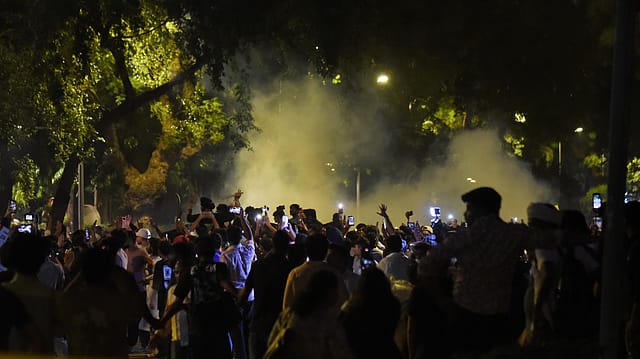
Dharmendra Pradhan has finally resigned as Union education minister. But what have we achieved as a result? Are we witnessing genuine democratic mobilisation—or merely a cycle of protests, celebrations, media debates and political opportunism?
The resignation followed weeks of youth-led protests over alleged irregularities in competitive examinations. The Cockroach Janta Party (CJP), which led much of the agitation, has described itself as a pressure group rather than an electoral party and has announced plans to campaign for examination reform, transparency and student welfare. These developments deserve serious attention. They also raise an important question: do the ongoing Gen Z movements—and the opposition parties supporting them—have a clear and visionary roadmap for the future of education in India?
From the actions, rhetoric and plans articulated by CJP, one may get the impression that protest has become an end in itself. Protest is an essential democratic right, and it can make institutions accountable. However, a movement that does not clearly articulate its long-term programme, institutional demands and proposed solutions risks reducing politics to pressure tactics.

Losing Memory
16 Oct 2026 - Vol 05 | Issue 42
The making of a medical and social emergency
The state may be willing to respond to the demands emerging from these movements. But the movements themselves must also explain what they want the state to do next. A protest cannot remain limited to slogans, social media campaigns, fashionable reels and the celebration of political victories.
If protest movements cultivate a permanent protest mentality without connecting it to vision, ethics and constructive action, they may unintentionally push society towards disorder. This is where we need to understand the “grammar of anarchy”—a phrase associated with BR Ambedkar in a different context. The concern is not with protest itself, but with protest that lacks a clearly defined democratic and institutional destination.
The celebrations at Jantar Mantar have now subsided. Politicians who were already critical of Pradhan have had their moment of political satisfaction. Some coaching centre operators and other actors who helped intensify the agitation have appeared before television cameras, smiling in celebration. The time has therefore come to ask a fundamental question: What exactly have we achieved after Dharmendra Pradhan’s resignation?
First, the movement has strengthened the politics of protest in India. This is not necessarily negative. Protest, when guided by constitutional values and a positive outlook, can make democracy more vibrant. Some of the current and future student and youth movements may develop into effective pressure groups capable of correcting weaknesses in education and governance.
However, social media-driven Gen Z movements can also become festivals of protest. If such movements are built mainly around dramatic visuals, slogans and viral content, they may deepen public dissatisfaction without producing durable solutions. The current agitation may represent a genuine culmination of several forms of frustration among young people—unemployment, examination uncertainty, coaching-related exploitation and the absence of institutional accountability. But these concerns must be placed within an ethical framework and connected to broader national and social responsibilities.
Second, the controversy has brought several important issues in education into the national spotlight. The demand for the education minister’s resignation was largely framed around the failures of institutions such as the National Testing Agency. Yet, the Jantar Mantar movement often displayed more stubbornness than comparative reasoning. Neither the opposition nor a section of the Gen Z leadership made a sufficiently balanced assessment of Pradhan’s tenure, achievements and failures as education minister.
It is possible to demand accountability while also acknowledging a minister’s contribution. In fact, public opinion appears to have become more nuanced after his resignation. During a recent visit to Banaras Hindu University, I heard several faculty members speak appreciatively of Pradhan’s sensitivity, understanding of society and interest in education. Some faculty members and research scholars even remarked, “We miss him now.”
His role in implementing the National Education Policy, 2020, strengthening infrastructure in schools and higher educational institutions, and promoting the internationalisation of Indian education continues to be discussed among academics, teachers and educated citizens across ideological boundaries. These contributions should not be erased simply because serious administrative failures occurred during his tenure.
Third, Congress, the Left and other opposition parties have gained confidence from the government’s decision to accept the resignation. They have demonstrated that sustained political pressure can force the government to become defensive. This is why they are now raising other issues, including demands for an apology from Home Minister Amit Shah over the Jantar Mantar violence, concerns over E20 fuel, and allegations related to donations for the Ram Janmabhoomi movement.
The image of the BJP government as an administration that never yields to opposition pressure has undoubtedly been affected. However, the opposition should not underestimate BJP’s ability to absorb a crisis, reorganise itself and return with renewed political energy. The resignation of one minister may create a temporary political opening, but it does not automatically transform the balance of power.
Fourth, the episode has created a major challenge for BJP and the government: India needs an examination system that is credible, secure and beyond suspicion.
The committee led by Nandan Nilekani may offer an opportunity to develop a comprehensive plan for strengthening examination security, improving oversight and restoring public confidence. Any reform must address the entire chain—from question-paper preparation and printing to transportation, digital security, invigilation, evaluation and the declaration of results.
The government must also ensure that students receive timely information, meaningful grievance redressal mechanisms and compensation where negligence has caused serious harm. Accountability cannot end with the resignation of a minister. It must extend to institutions, officials, contractors and systems responsible for failures.
At the political and organisational levels, BJP and its allied organisations will also need to become more effective in responding to opposition campaigns. They must develop a stronger public mobilisation strategy around education, healthcare and employment instead of treating these issues merely as political threats.
The opposition, civil society groups and youth organisations are likely to continue challenging BJP by politicising issues that are otherwise administrative or social in nature. Such politicisation is not inherently illegitimate; every major public issue eventually enters the political domain. The real question is whether political mobilisation produces better public policy.
The youth movement now faces its own test. It has succeeded in demonstrating the power of collective action and in forcing the government to respond. But its credibility will ultimately depend on what it proposes after the protest.
A serious student movement must go beyond demanding resignations. It must present a detailed agenda for examination reform, institutional accountability, student welfare, coaching centre regulation, mental health support, employment and parliamentary oversight of examination authorities. The reported proposals around a new Public Examinations Act, reform of examination bodies, a students’ rights charter and a national aspirant welfare fund indicate that the movement has begun discussing such issues.
The resignation of Dharmendra Pradhan may therefore be viewed either as the end of a protest or as the beginning of a larger democratic conversation. If the movement remains trapped in celebration, anger and permanent agitation, it may contribute to a long durée of political disorder. If it develops a constructive, ethical and inclusive roadmap, it can become a meaningful pressure group for educational reform.
The central question is no longer whether the protest succeeded. It is whether the protesters, the opposition and the government are prepared to convert that success into a credible future for Indian education.